|
Coaching Stock of British Railways
Rolling Stock -
Contemporary railway carriages and Heritage Line coaching stock - maybe
authorised to run on Network Rail lines, exhibits in museums too.
Trainspot locations
*
TOPS class links
My Main Railways Index
*
Nostalgic Steam Train Photos from the 1960s
A history of railway carriage development on British
Railways *
Email:
chem55555@hotmail.com
Use FIND in your browser to search for rolling stock items, it a long page! My Main Railways Index * Nostalgic Steam Train Photos from the 1960s
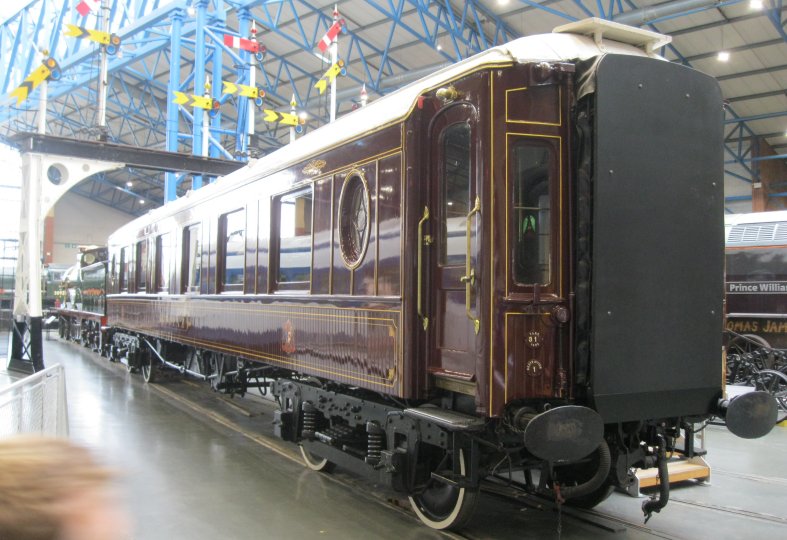
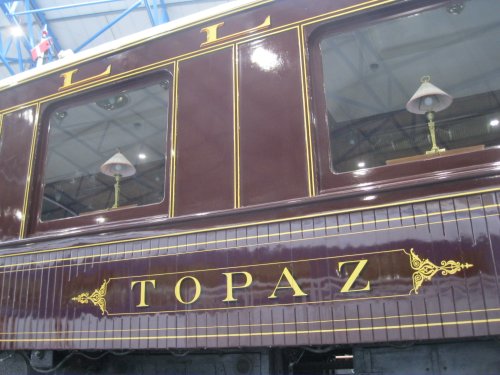
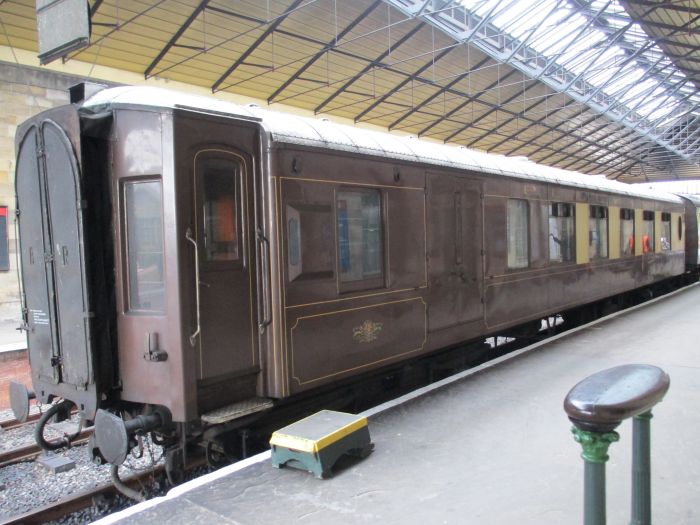
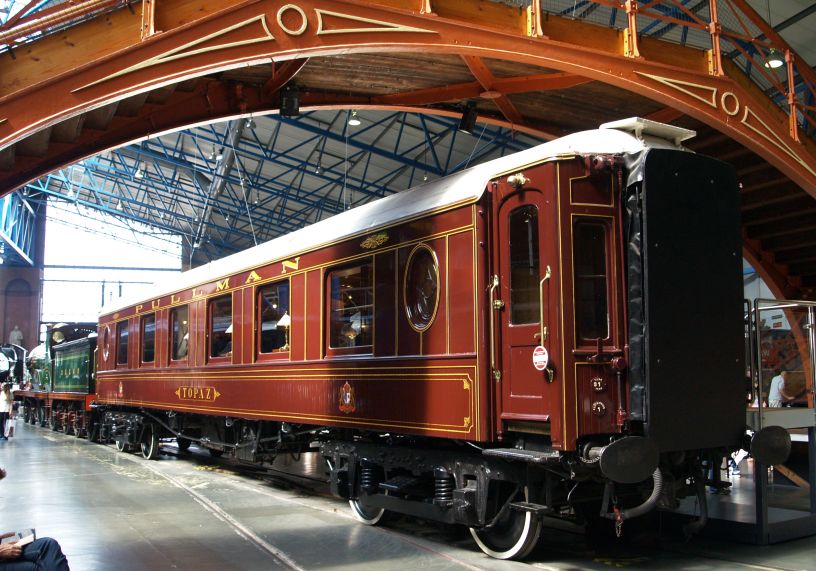
First Class Pullman Parlour Car TOPAZ built by the Birmingham Carriage & Wagon Co Ltd in 1913 York NRM (2024)
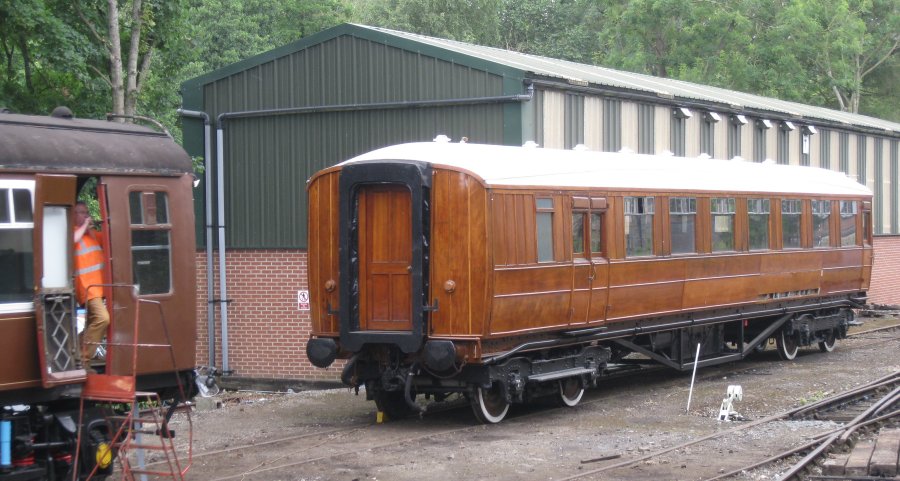
One of the LNER teak passenger coach under restoration at Pickering on the North Yorkshire Moors Railway.
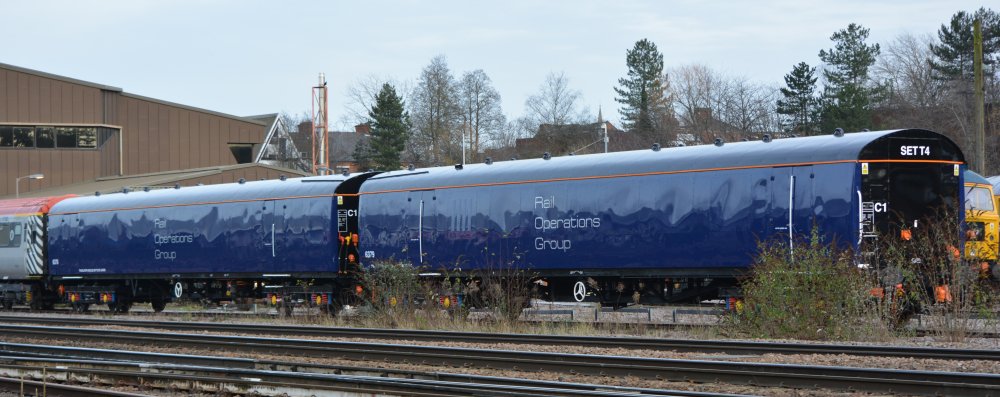
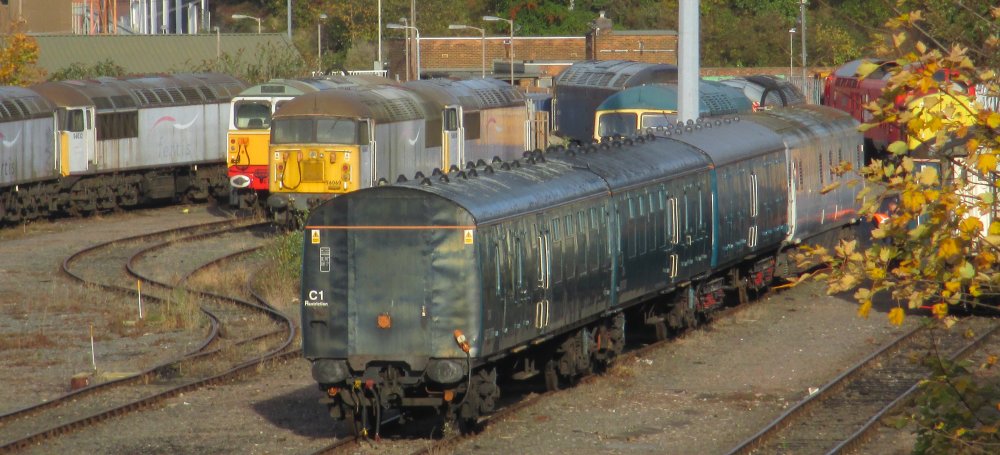
Two carriage Mk1 translator vehicles (barrier coaches) SET T4 numbers 6378 6379 Converted from Mk1 RUO 1054/975971 and Mk1 RUO 1059/975972 for the Rail Operations Group
A pre 1923? coach from the Continental Express Newhaven - Dieppe, Keighley & Worth Valley Railway
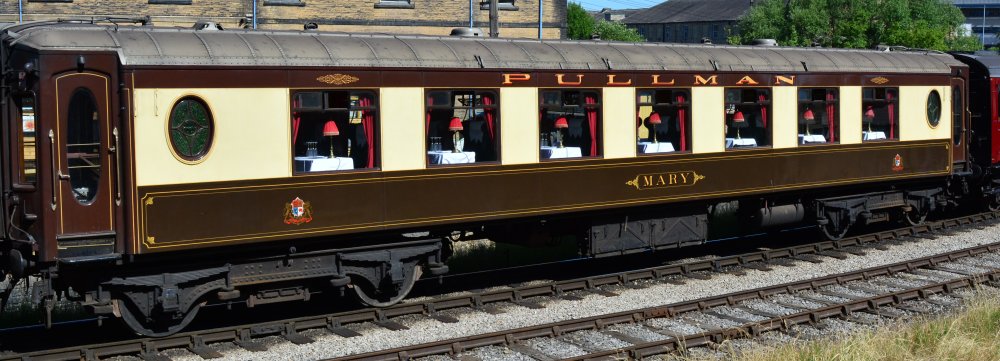
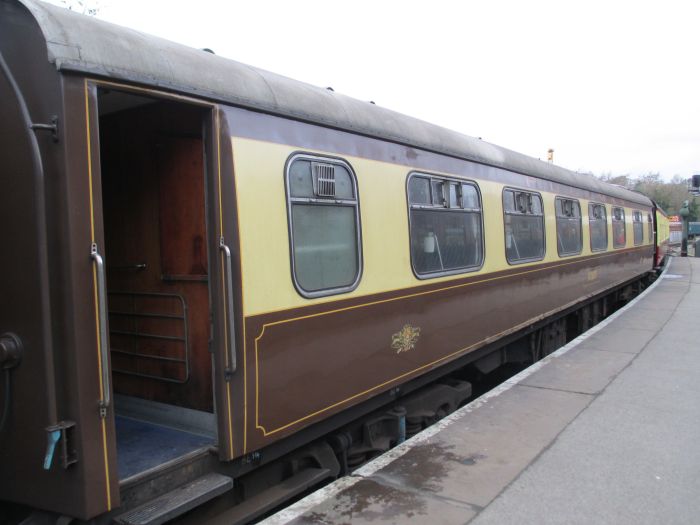
Pullman coach Mary, Keighley & Worth Valley Railway
Pullman coach ANN, Keighley & Worth Valley Railway
(p31) Mark 2F Open First air conditioned carriage no. 3309 an old British Railways carriages from the days of the new 'INTERCITY' express trains, built by BR at Derby in 1973.
(p37) Mark 2D Open Standard air conditioned carriage no. 9489an old British Railways carriages from the days of the new 'INTERCITY' express trains, built by BR at Derby in 1972.
(Newcastle, Feb 2014) East Coast trains rolling stock - The Class 91 electric locomotive (91106) that haul the East Coast railway carriages numbered somewhere between 10300 and 12538, all of the different 'classes/types/mark are illustrated below.
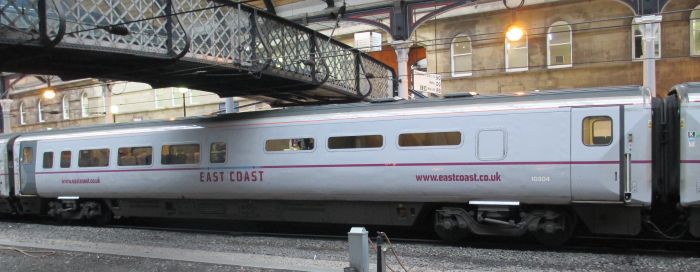
(p41 Newcastle, Feb 2014) East Coast trains rolling stock - coaching stock railway carriage no. 10304, Kitchen Buffet Standard coach H, Mark 4 design coach, built by Metro Cammell from 1989-1992, rebuilt from First to Standard Class with bar, East Coast livery of silver/grey with purple stripes. See also Class 91 electric locomotives/driving brake van
Greater Anglia trains Mark 3B Driving Brake Van of Class 90 powered trains.
Greater Anglia trains Mark 3B Open First carriage 11082, typical rolling stock coach of the Class 90 hauled trains.
(p44 Newcastle, Feb 2014) East Coast trains rolling stock - coaching stock railway carriage no. 11281 (was passenger coach 12418), Open First coach K, Mark 4 design coach, air conditioned, rebuilt with new interior by Bombardier Wakefield in 2003-2005, originally built by Metro-Cammell from 1989-1992, East Coast livery of silver/grey with purple stripes. See also Class 91 electric locomotives/driving brake van
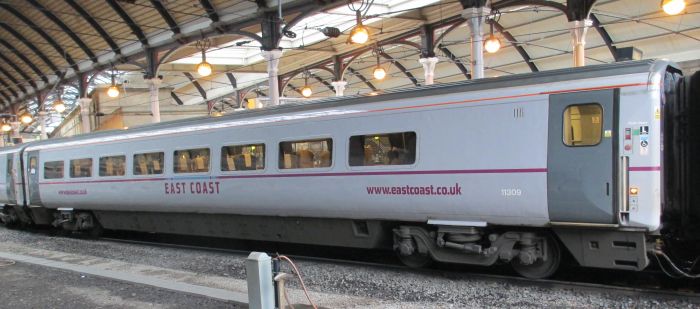
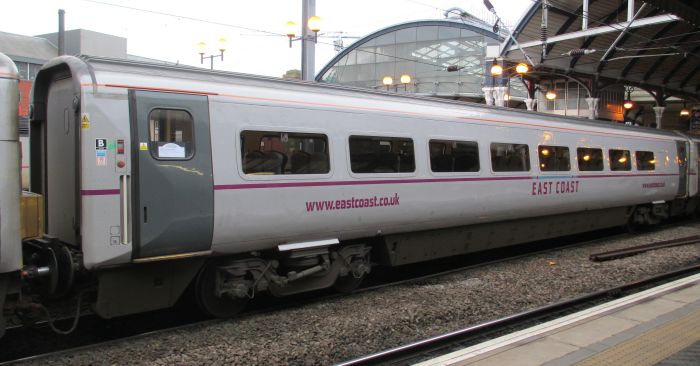
(p44 Newcastle, Feb 2014) East Coast trains rolling stock - coaching stock railway carriage no. 11309 (was 11259), Open First (Disabled) Coach L, Mark 4 design coach, air conditioned, rebuilt from Open First by Bombardier Wakefield in 2003-2005, originally built by Metro-Cammell in 1989-1992, East Coast livery of silver/grey with purple stripes. See also Class 91 electric locomotives/driving brake van
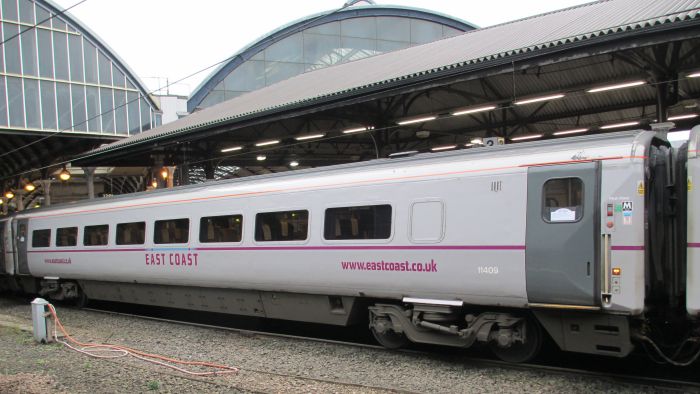
(p45 Newcastle, Feb 2014) East Coast trains rolling stock - coaching stock railway carriage no. 11409 (was 11262), Open First Coach M, Mark 4 design coach, air conditioned, rebuilt from Open First by Bombardier Wakefield in 2003-2005, originally built by Metro-Cammell in 1989-1992, East Coast livery of silver/grey with purple stripes. See also Class 91 electric locomotives/driving brake van
(p47 Newcastle, Feb 2014) East Coast trains rolling stock - coaching stock railway carriage no. 12230, Open First (End) passenger Coach B, Mark 4 design coach, air conditioned, rebuilt with new interior from by Bombardier Wakefield in 2003-2005, originally built by Metro-Cammell in 1989-1992, East Coast livery of silver/grey with purple stripes. See also Class 91 electric locomotives/driving brake van
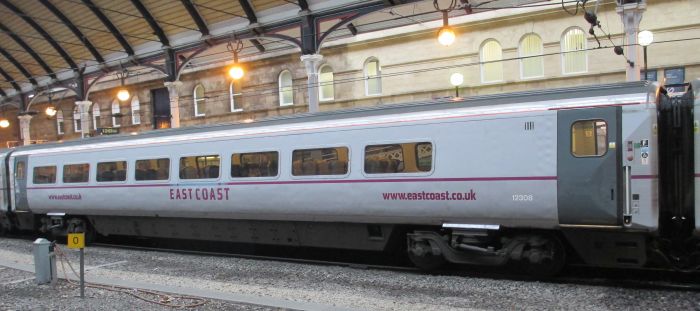
(p48 Newcastle, Feb 2014) East Coast trains rolling stock - coaching stock railway carriage no. 12308, Open Standard (Disabled) Coach F, Mark 4 design coach, air conditioned, rebuilt with new interior from by Bombardier Wakefield in 2003-2005, originally built by Metro-Cammell in 1989-1991, East Coast livery of silver/grey with purple stripes. See also Class 91 electric locomotives/driving brake van
(p49 Newcastle, Feb 2014) East Coast trains rolling stock - coaching stock railway carriage no. 12483, Open Standard passenger Coaches C, D & E, Mark 4 design coach, air conditioned, rebuilt with new interior from by Bombardier Wakefield in 2003-2005, originally built by Metro-Cammell in 1989-1992, East Coast livery of silver/grey with purple stripes. See also Class 91 electric locomotives/driving brake van
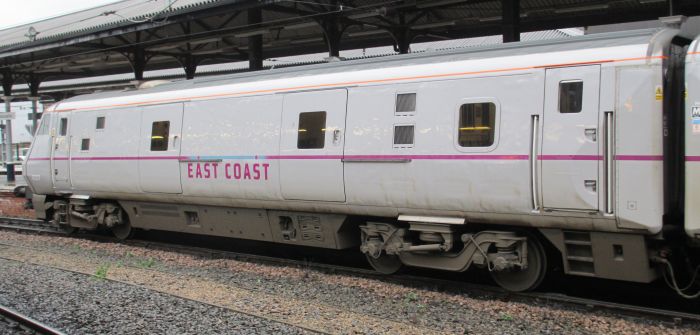
(p54 Newcastle, Feb 2014) East Coast trains rolling stock - At the other end of the 9 railway carriages and electric locomotive is the Driving Brake Van.(82217, from 82200 to 82231, Mark 4 design, air conditioned, built by Metro-Cammell in 1988). See also Class 91 electric locomotives/driving brake van
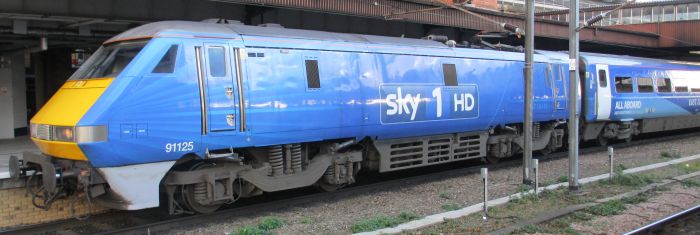
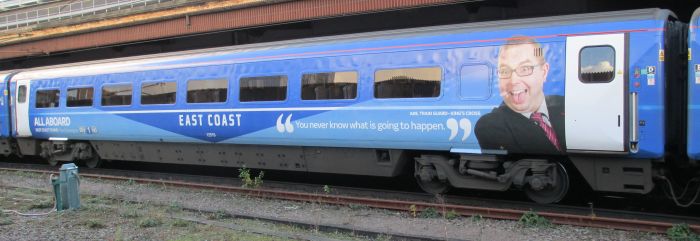
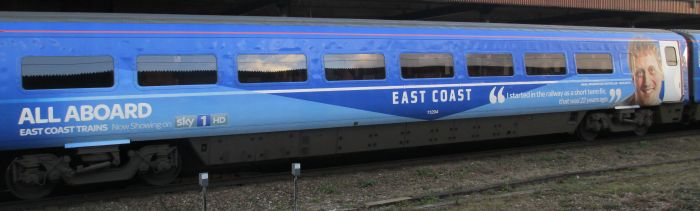
A Class 91 East coast train set all advertising sky 1 HD (91125, York, Feb 2014)
railway carriage 12217, Coach B, Open standard (End), Metro-Cammell 1989-1992
Carriage 12446, Coach C, Open Standard, Metro-Cammell 1989-1992
railway carriage 12519, Coach D, Open Standard, Metro-Cammell 1989-1992
railway carriage 12464, Coach E, Open Standard, Metro-Cammell 1989-1992
railway carriage 11294, Coach ?, Open First, Metro-Cammell 1989-1992
p55: Kitchen Car converted from corridor First Mark 1 coach in 2008, original carriage built at Swindon in 1961. It now carries the carriage number 99316 (once 13321) and operated by West Coast Railways.
A fine set of Pullman coaches including ex Western Region Pullman car W5198 (W 5198), an Open Standard Mark 2 design, part of a set of coaches built at Derby in 1965-1967.
(p56 NYMR Pickering Feb 2014) Pullman Car Company Series - M324 M 324 JOS de CRAU Pullman Restaurant First, built at Swindon in 1961 for the British Railways West Coast Mainline services. Pullman Car Company livery of umber & cream with gold lettering lined out in gold. This coaching stock is used on the North Yorkshire Moors Railway.
(p56) Open standard Mark 1 E 3801 (NYMR, Grosmont), built York 1953
BR Mark 1 Open standard coach E 3872 British Railways livery of blue & grey lined out in white (NYMR coaching stock March 2014).
(p56) Open standard Mark 1 E 4286 (NYMR rolling stock, Grosmont), built Crewe Works 1956, livery BR carmine & cream
(p56 NYMR Pickering Feb 2014) British Railways Mark 1 Open standard passenger coach E 4198 (E4198) in BR carmine and cream livery, built at York in 1956. This railway carriage was used on the Eastern Region of British Railways. This coaching stock is used on the North Yorkshire Moors Railway.
(p56 NYMR Pickering Feb 2014) British Railways Mark 1 Open standard coach E 4252 (E4252) in BR carmine and cream livery, built at York in 1956. This railway carriage was used on the Eastern Region of British Railways. This coaching stock is used on the North Yorkshire Moors Railway.
(p56) Open standard Mark 1 E 4597 (NYMR, Grosmont), built Crewe/York? Works 1956/7?, livery BR carmine & cream
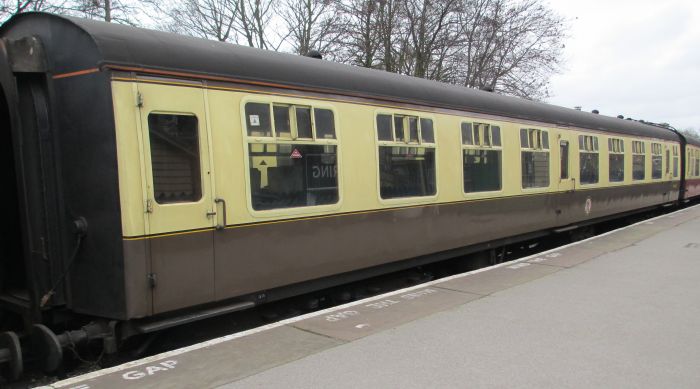
(p56 NYMR Pickering Feb 2014) British Railways Mark 1 Open Standard coach W 4786 (W4786) built at York in 1957. The railway carriage livery is that of British Railways BR Western Region of GWR chocolate & cream lined out in gold. This coaching stock is used on the North Yorkshire Moors Railway.
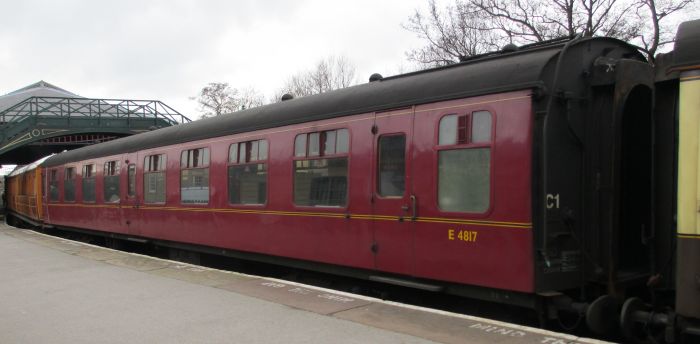
(p56 NYMR Pickering Feb 2014) British Railways Mark 1 Open Standard passenger coach E 4817 (E4817) built in 1959 by Birmingham railway carriage & Wagon Works (BRCW) and was used on the Eastern Region of British Railways. The railway carriage livery is BR Maroon lined out in straw and black. This coaching stock is used on the North Yorkshire Moors Railway.
(p56 NYMR Pickering Feb 2014) British Railways Mark 1 Open Standard coach E 4839 (E4839) built in 1959 by Birmingham railway carriage & Wagon Works (BRCW) and was used on the Eastern Region of British Railways. The railway carriage livery is BR carmine & cream. This coaching stock is used on the North Yorkshire Moors Railway.
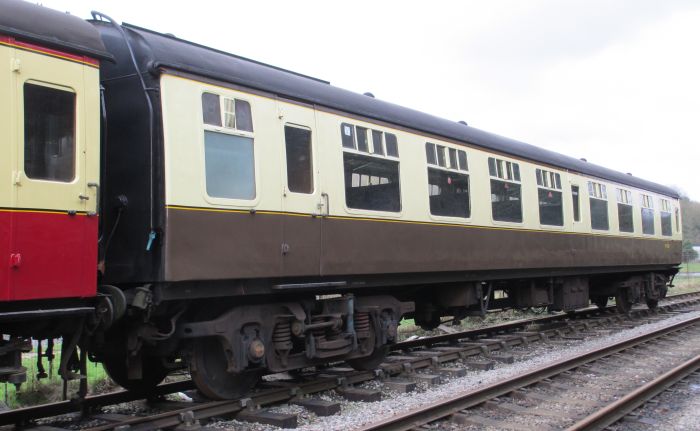
(p56 NYMR Pickering Feb 2014) British Railways Mark 1 Open Standard passenger coach W 5029 (W5029) built at Wolverton railway carriage Works in 1961-1962 with aluminium window frames. The railway carriage livery is that of British Railways BR Western Region of GWR chocolate & cream lined out in gold. This coaching stock is used on the North Yorkshire Moors Railway.
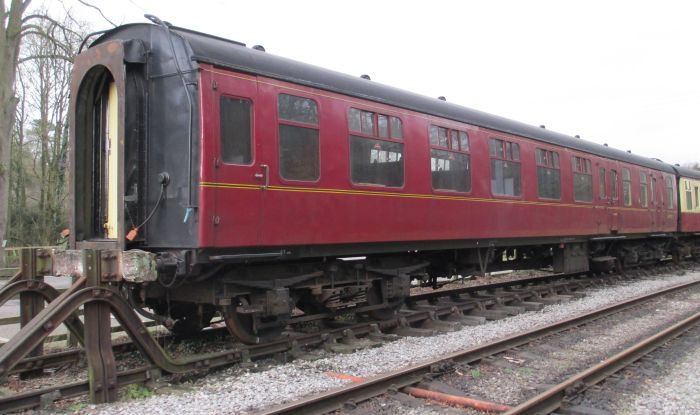
(p56 NYMR rolling stock Pickering Feb 2014) British Railways Mark 1 Open Brake Standard coach NE 9225 (E9225) built in 1956 at Doncaster, and was used on the North Eastern Region of British Railways. The railway carriage livery is BR Maroon lined out in straw and black. This coaching stock is used on the North Yorkshire Moors Railway.
Corridor Brake Composite First & Second Class carriage E 21100 built by Metro-Cammell in 1956 (NYMR rolling stock, Grosmont), livery BR carmine & cream.
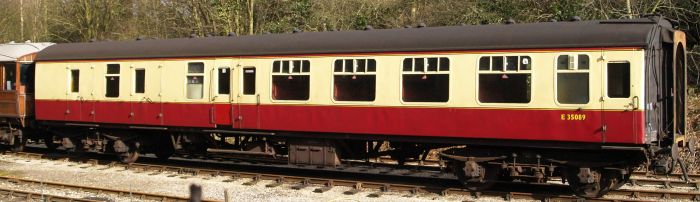
Corridor Brake Standard coach E 35089, built at Gloucester in 1957 (NYMR coaching stock carriages, Grosmont, March 2014), livery BR carmine & cream.
(p57 NYMR Pickering Feb 2014) Pullman Car Company Series - Car No. 79. Pullman Parlour First coach 232 was built in 1928 by the Metropolitan railway carriage Wagon and Finance Company of Birmingham. It was eventually used on the British Railways East Coast Mainline services. Pullman Car Company livery of umber & cream with gold lettering lined out in gold. This coaching stock is used on the North Yorkshire Moors Railway.
(p57 NYMR Pickering Feb 2014) Pullman Car Company Series - E 318 ROBIN Pullman Kitchen First/Second, built by Metro-Cammell for the British railways East Coast Mainline services in 1960-1961. Pullman Car Company livery of umber & cream with gold lettering lined out in gold. This coaching stock is used on the North Yorkshire Moors Railway.
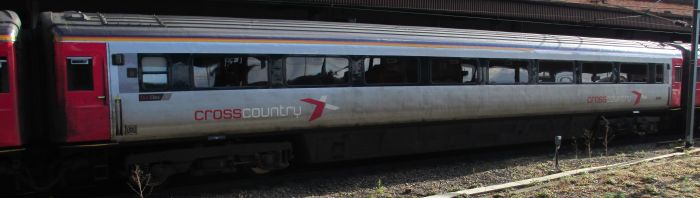
Class 43 CrossCountry train at York station (Feb 2014). The CrossCountry livery of two tone silver with deep crimson ends & pink doors. A selection of CrossCountry railway carriages illustrated below from 7-car formations. See also Class 43 diesel-electric locomotives
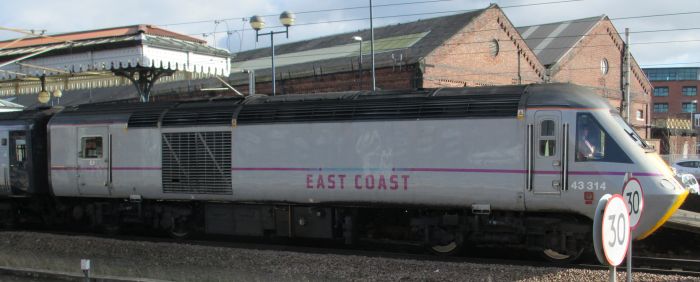
Profile of a Class 43 locomotive in East Coast livery, York, Feb 2014) See also Class 43 diesel-electric locomotives
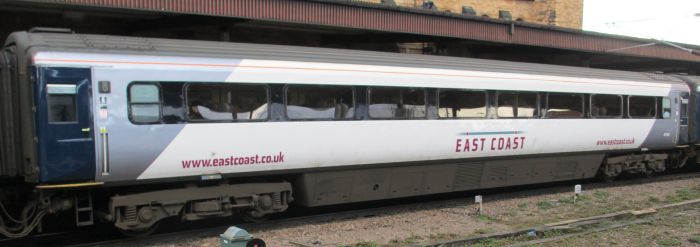
(p61, York/Doncaster, Feb 2014) railway carriage 40748 (above), 40702 (below), Coach J, Trailer Kitchen Buffet First (TFKB), built at BR Derby Works 1980-1981, refurbished for East Coast mainline trains rolling stock.
(p64, York, Feb 2014) railway carriage 41150 (above), 41165 (below) passenger Coach L, Trailer First, built at BR Derby Works 1980, refurbished for East Coast mainline trains coaching stock.
(p66 York, Feb 2014) railway carriage 42051 Coach C, trailer standard car, built at BR Derby works 1976-1977, refurbished for CrossCountry trains operator.
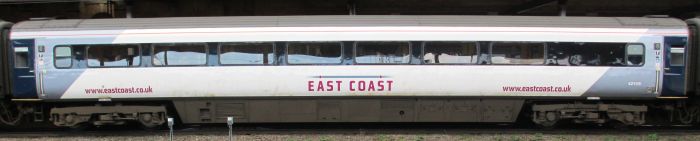
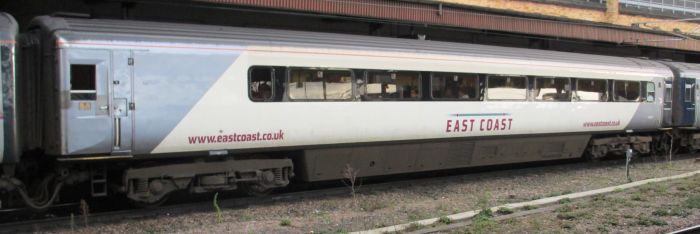
(p67, York Feb 2014) railway carriage 42160 Coach E (above), railway carriage 42159 Coach F (below), Coaches C, D and G are similar, Trailer Standard TS, built at Derby 1976-1977, refurbished for East Coast train services on the East Coast mainline.
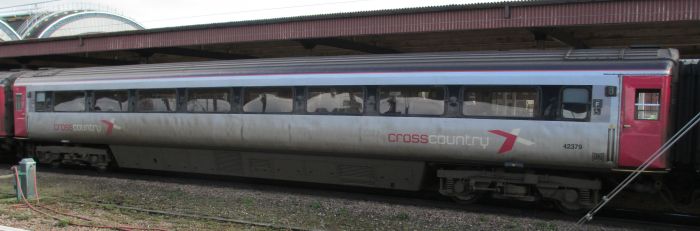
(p69 York, Feb 2014) railway carriage 42379 (was 41036) Coach F, trailer standard car, built at BR Derby works 1975-1977, converted from Mark 3A Open standard coaches, refurbished for CrossCountry trains operator.
(p71, York, Feb 2014) railway carriage no. 44057, coach B, Trailer Guard's Standard, built at Derby in 1980-1982, refurbished for East Coast vehicles (EC livery silver/grey, white and purple stripes).
(p71 York, Feb 2014) railway carriage 45005 (was 12080) Coach B, trailer composite kitchen car, built at BR Derby works 1975-1977, converted from Mark 3A Open Standard, refurbished for CrossCountry trains operator.
Class 43 hauled GRAND CENTRAL train at York Station (Feb 2014),
Carriage 42409 (was 12088), Trailer Standard built at Derby 1977-1978, converted from loco-hauled Mark 3 standard coaches for use on Grand Central services.
Carriage 42407 (was 12044), Trailer Standard built at Derby 1977-1978, converted from loco-hauled Mark 3 standard coaches for use on Grand Central services.
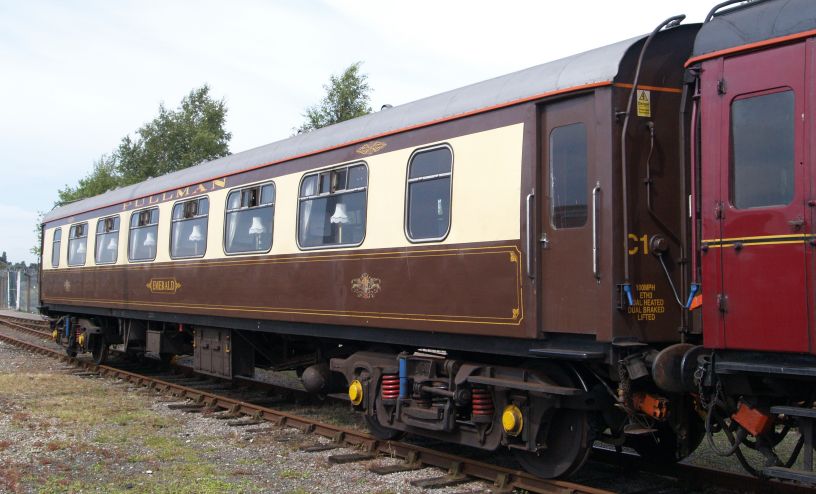
p81: Pullman Parlour First coach 326 'EMERALD' in York NRM, built 1960-1961 by Metro-Cammell for East Coast Main Line services
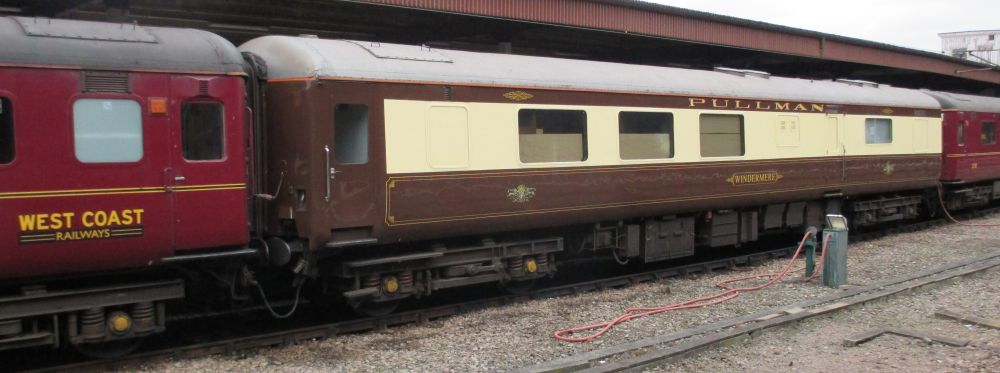
Mark 2 Pullman Kitchen car "WINDERMERE", built at Derby in 1966, and is part of the 'vintage' coaching stock used by West Coast railways.
On the right Pullman Car "BUTTERMERE" with other Pullman coaches on the "The Esk Valley Pullman", between Danby and Castleton Moor, April 2017.
(p82, Shildon Locomotion NRM, Feb 2014) Mark 1 InterCity passenger coach, carriage no. 21274. This is an example of British Railways first standard design passenger carriage (based on a 1950s design). The coach was built at Derby Carriage & Wagon Works in 1964 and saw service until 1995. The carriage provided for 1st and 2nd class seating, accommodation as well as space for a guard and parcel space.
(p79) Network Rail carriage 9714
(p83) Carriage 35317 (Shildon Locomotion NRM Feb 2014), a Mark 1 Corridor Brake Standard coach used as a support rolling stock for LNER locomotive 60019 (livery BR carmine and cream)
Other miscellaneous historic rolling stock - coaching stock railway carriages
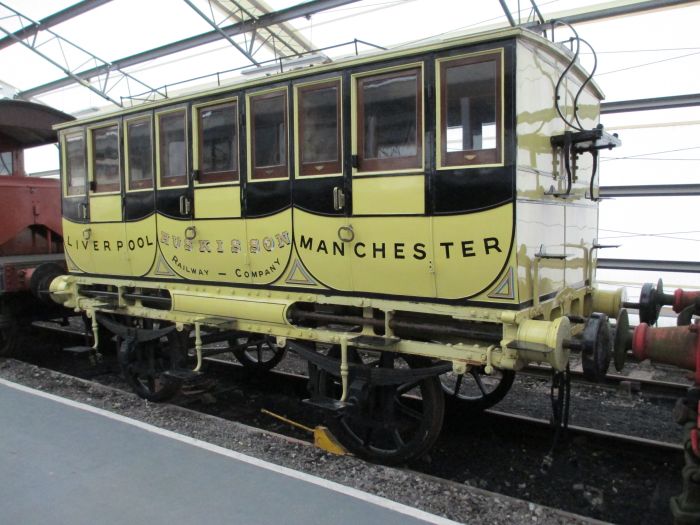
Railway carriage from the Liverpool & Manchester Railway Company, the coach is named after HUSKISSON, a politician tragically killed in an accident at the famous Rainhill trials (replica, York NRM).
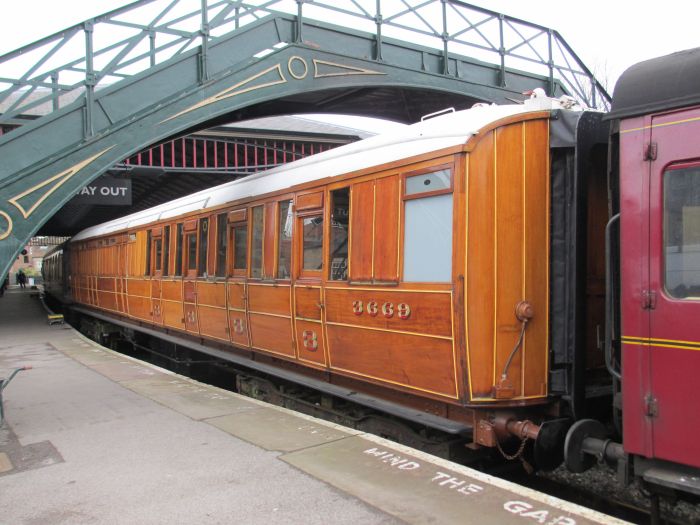
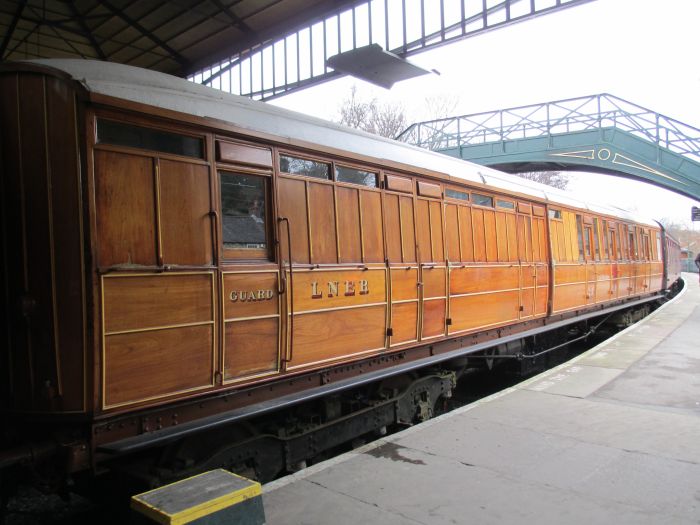
(NYMR Pickering Feb 2014) above/below: Ex LNER guard's coach no. 3669, beautifully restored teak railway carriage on the NYMR. This coaching stock is used on the North Yorkshire Moors Railway.
Pullman car TOPAZ in York NRM. This carriage Pullman Car Company First Class Parlour Car "TOPAZ" was built 1913.
Mark 2 Mark 2D TSO blue liveried PULLMAN coach, railway carriage 5669 (York NRM, Feb 2014)
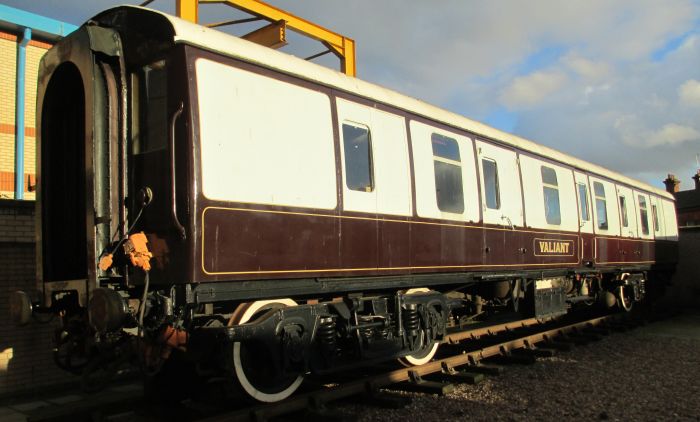
Carriage 81025, Mark 2 rolling stock design, Pullman coach VALIANT, chocolate and cream livery (York NRM, Feb 2014)
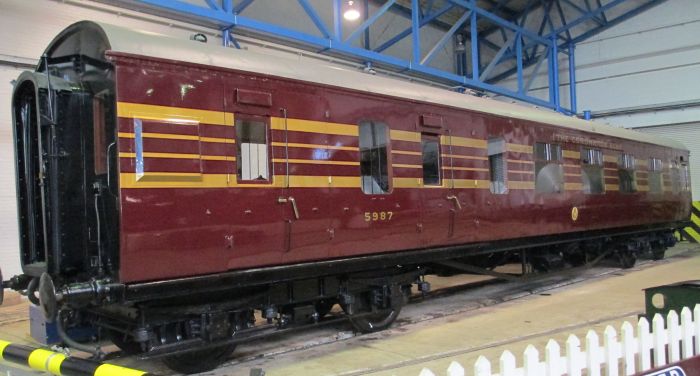
London Midland Railway carriage 5987, with the maroon and yellow stripe livery, the coach is entitled THE CORONATION SCOT from the famous LMS west coast mainline express. LMS corridor brake 3rd class, built at Derby in 1937.
Ex British Railways Western Region carriage W 80974 W, once an inspection saloon coach (NYMR rolling stock, Grosmont March 2014), built at Swindon Carriage Works in 1948.
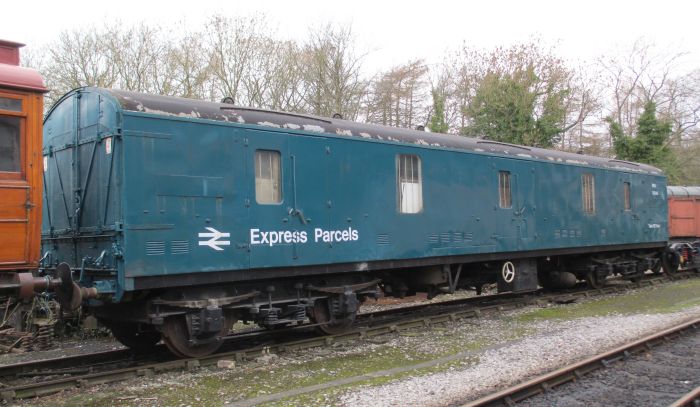
(NYMR Pickering Feb 2014) Express Parcels Van NKV 93545 (Tare 30 tons) in BR blue livery. Built as BR MK1 GUV (General Utility Van) in 1959 at York. This parcels van was restored by the North Yorkshire Moors Railway.
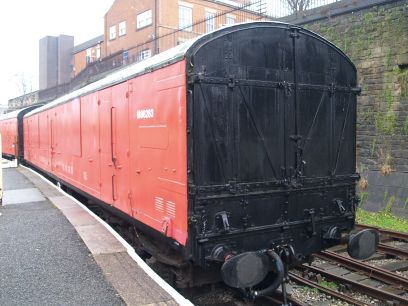
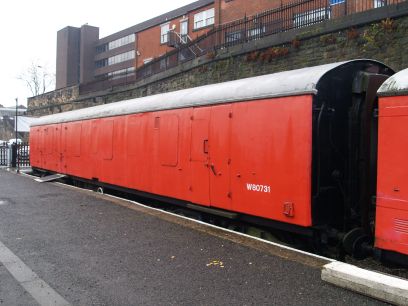
Some old 'Royal Mail'? vans on the East Lancashire Railway at Bury Bolton Street station Left: Carriage no. M 86283 (also numbered 93283) general utility van Right: Carriage no. W 80731 (also numbered 95210) passenger brake van (gangwayed)
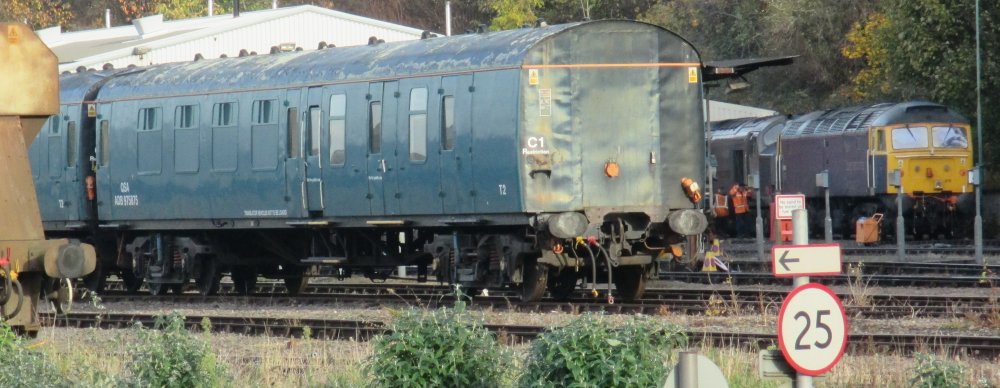
IC 225 Barrier Vehicle, Mark 1 carriage number 6390. A barrier vehicle (BV), barrier wagon, match wagon or translator coach is used to connect non-matching railway coupler types. A barrier vehicle allows locomotives to pull railway vehicles or parts of a train with a different type of coupler. Barrier coaches are often found on empty coaching stock moves where freight locomotives need to transport coaching stock fitted with Scharfenberg couplers and other automatic couplers. The use of barrier coaches has evolved with a general move from conventional passenger trains consisting of locomotive-hauled coaches, to trains consisting of multiple units.
Translator coach, EMU barrier coach QSA ADB 975875 at Leicester (Oct0ber 2017)
A history of railway carriage development on British Railways Below is a full, structured,
deeply detailed history of British railway carriage development,
from the earliest 19th‑century origins to the present day. British railway carriage design evolved from wooden, stagecoach‑inspired vehicles in the 1830s to today's lightweight, air‑conditioned, high‑speed, crashworthy, modular units. The story is one of materials, comfort, safety, technology, and the changing expectations of passengers. 1. The Origins (1825–1870)Early Stagecoach‑Style Carriages
Key Features
Technological Shifts
2. The Victorian Maturity (1870–1910)The Corridor Revolution
Materials & Construction
Railway Company Styles
3. The Grouping Era (1923–1947)The “Big Four” (GWR, LMS, LNER, SR) each developed distinctive carriage philosophies. GWR
LMS
LNER
Southern Railway
Technical Advances
4. British Railways Standardisation (1948–1970)Mk1 Carriages (1951–1974)The first truly standard national design. Key Features
Mk1s became the backbone of BR and remain the backbone of heritage railways today. 5. The Modernisation Era (1960s–1980s)Mk2 Carriages (1964–1975)A major leap in comfort and safety. Innovations
Mk3 Carriages (1975–1988)The high‑water mark of BR carriage design. Innovations
Mk3s remain in service today on multiple operators. 6. The Multiple‑Unit Revolution (1980s–2000s)From the 1980s, BR shifted from locomotive‑hauled trains to multiple units. Key Drivers
Notable Families
Carriages became integrated vehicles, not standalone coaches. 7. 21st‑Century Carriage Design (2000–Present)Intercity
Regional & Suburban
Design Priorities
8. The Future (2025–2050)Likely Trends
Summary Timeline
MY HERITAGE RAILWAY PAGE buttons below
My Archive Steam Photos from the 1960s Nostalgic Steam Train Photos from the 1960s Rail holidays in Continental Europe Luxury train travel bookings Railway tours in France Germany Austria Switzerland America USA Canada Trans-continental journeys by luxury train great steam trains of Europe railway steam tours in Europe Great Railway Journey Holidays to France, Italy and Spain from carriages coaches coaching stock express Pullman trains Booking tickets for Great Railway Journey luxury Rail Trip holidays Train travel in Europe Rail holidays from carriages coaches coaching stock express Pullman trains to the USA & Canada luxury train through the Rocky Mountain Canadian rail railway holidays through the Rockies US Cities by train from carriages coaches coaching stock express Pullman trains Continental rail holidays to France Germany Italy Austria Switzerland Glacier Express Treyn Holidays from carriages coaches coaching stock express Pullman trains from Eurostar to Paris Brussels Avignon Turin Turino Rome Roma Florence Firenze TGV fast trains Railway travel holidays special steam excursions from carriages coaches coaching stock express Pullman trains great steam heritage line and offers luxury Pullman coach dining trains carriages coaches coaching stock express Pullman trains Travelling by train always seems a pleasure, especially if through wonderful scenery to carriages coaches coaching stock express Pullman trains in England, Scotland, Wales or on holiday in the rest of Europe! The railway trip from carriages coaches coaching stock express Pullman trains involves seeing or travelling behind a 'real' steam locomotive in action and there is nothing like the sight and sounds of a steam train to invoke feelings of nostalgia in some of us to carriages coaches coaching stock express Pullman trains even more luxury by having a special trip out on a steam dining train! England Scotland Wales Northern Ireland top class hotels in carriages coaches coaching stock express Pullman trains dining out travel tours top tourist destinations tourist information on carriages coaches coaching stock express Pullman trains weekend breaks mini-breaks family holidays restaurants touring coach trips from carriages coaches coaching stock express Pullman trains continental tours cruise ships pleasure cruises summer breaks spring breaks continental winter breaks European winter holidays spring holidays summer holidays European Rail tours Railway travel holidays special steam excursions from carriages coaches coaching stock express Pullman trains A great steam heritage line and offers luxury Pullman coach dining trains European Rail tours US and Canadian Railway travel holidays special steam excursions to carriages coaches coaching stock express Pullman trains A great steam heritage line and offers luxury Pullman coach dining trains Travelling by train from carriages coaches coaching stock express Pullman trains always seems a pleasure, especially if through wonderful scenery either in England, Scotland, Wales or on holiday in the rest of the railways of Europe! The railway trip involves seeing or travelling behind a 'real' steam locomotive or heritage diesel in action on a special trip from carriages coaches coaching stock express Pullman trains Booking Eurostar Continental Rail Travel Tour Tickets Stuttgart Brussels Eurostar Brussels from carriages coaches coaching stock express Pullman trains by TGV to Ebbsfleet International, Ashford International Stratford International, St Pancras International Paris Gare du Nord Paris Gare de Lyon Paris Gare de L'est Paris Gare Montparnasse by Eurostar from carriages coaches coaching stock express Pullman trains London to Paris, Eurostar London - Brussels Eurostar London to Lille deals bargain city breaks Great Railway Journey holidays in Italy, Spain and France by TGV booking from carriages coaches coaching stock express Pullman trains 'TRAINSPOTS' Good trainspotting and photographic locations Barnetby Station, North Lincolnshire * Carlisle Station * Clapham Junction Station, London * Colton Junction, south of York * Coventry * Crewe Station * Doncaster Station, South Yorkshire * Grantham * Hellifield station - Carlisle to Settle line * Lancaster station * Leicester station * Newcastle Station * Northallerton Station * Nuneaton Station * Peterborough * Sheffield Station * Stratford Station, East London * Tamworth * Warrington Bank Quay station * Wigan North Western - WCML * York Station See other TOPS classes of diesels and electrics * Class 01 * Class 02 * Class 03 * Class 04 * Class 08 * Class 09 * Class 10 * Class 11 * Class 14 * Class 20 * Class 24 * Class 25 * Class 26 * Class 27 * Class 31 * Class 33 * Class 35 * Class 37 * Class 40 * Class 43 * Class 44 * Class 45 * Class 47 * Class 50 * Class 52 * Class 55 * Class 56 * Class 57 * Class 58 * Class 60 * Class 66 * Class 67 * Class 68 * Class 70 * Class 71 * Class 73 * Class 76 * Class 77 * Class 84 * Class 86 * Class 87 * Class 88 * Class 90 * Class 91 * Class 92 * Derby Lightweight * Class 101 * Class 108 * Class 114 * Class 117 * Class 120 * Class 121 * Class 122 * Class 127 * Class 141 * Class 142 * Class 144 * Class 150 * Class 153 * Class 155 * Class 156 * Class 158 * Class 159 * Class 165 * Class 166 * Class 170 * Class 172 * Class 175 * Class 180 * Class 185 * Class 195 * Class 196 * Class 197 * Class 220 * Class 221 * Class 222 * Class 252 * Class 313 * Class 315 * Class 317 * Class 319 * Class 320 * Class 321 * Class 322 * Class 323 * Class 325 * Class 331 * Class 332 * Class 333 * Class 334 * Class 350 * Class 357 * Class 360 * Class 365 * Class 373 * Class 375 * Class 376 * Class 377 * Class 378 * Class 379 * Class 380 * Class 387 * Class 390 * Class 395 * Class 414 * Class 423 * Class 442 * Class 444 * Class 450 * Class 455 * Class 458 * Class 460 * Class 465 * Class 466 * Class 489 * Class 507/508 * Class 700 * Class 730 * Class 755 * Class 800 * Class 801 * Class 802 * Class 803 * Class 805 * Class 3000 * |




 In the UK Rail Leasing yard, Leicester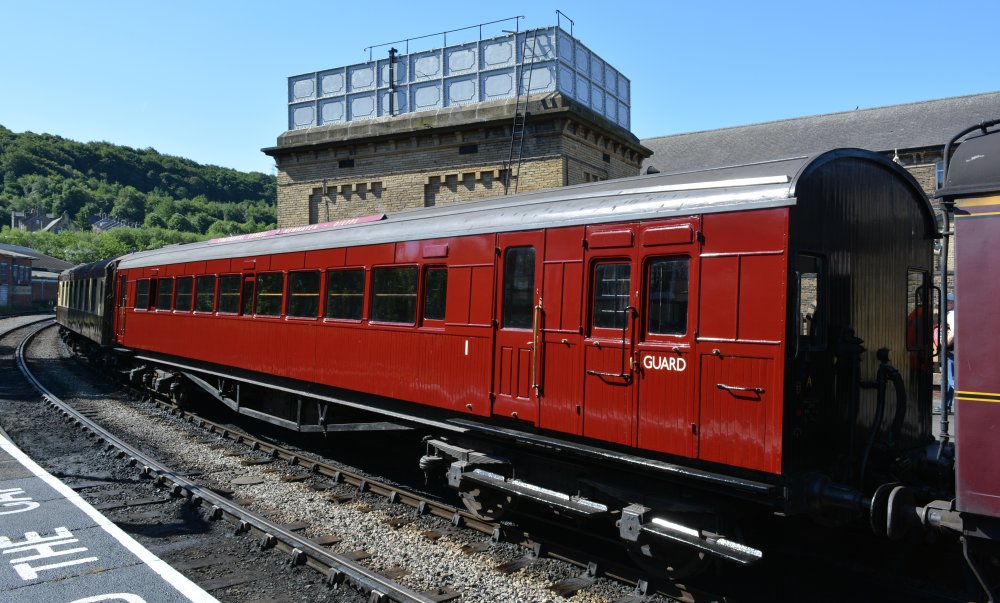



























 Enter specific words e.g. locomotive, train, station, location, railway line
trip, heritage museum, scenic route, anything
of railway interest!
Enter specific words e.g. locomotive, train, station, location, railway line
trip, heritage museum, scenic route, anything
of railway interest! |