|
FORMULATION CHEMISTRY EXPLAINED
[Author
©
Dr WP Brown PhD:
Doc Brown's chemistry exam revision notes
on formulation chemistry suitable for students of UK GCSE/IGCSE level
AQA, Edexcel, OCR, WJEC and CCEA GCSE level chemistry courses, ~US grades 9-10 chemistry
[page updated Feb 10th 2026 *]
[email doc b]
*
[privacy-policies-disclaimer] *
]SEARCH doc b's
science website]
Doc Brown's
Chemistry Notes on Formulation Chemistry
What is formulation
Chemistry?
What are formulations?
Examples of Formulation
Products
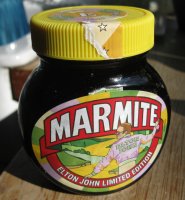
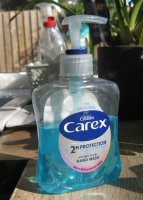
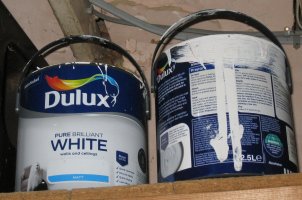
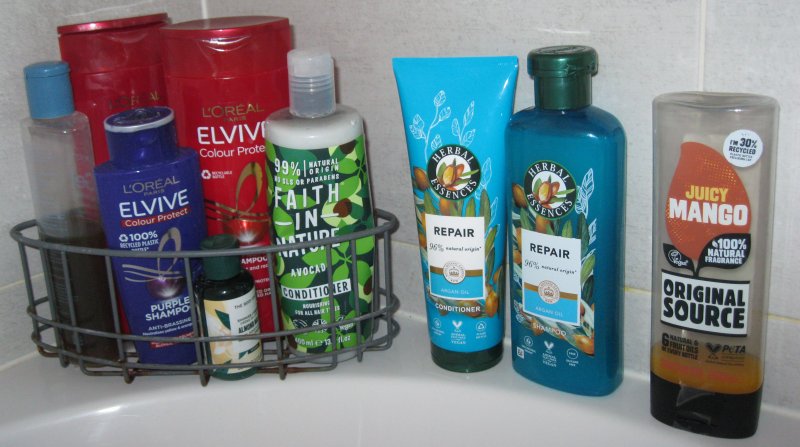
Examples of formulations: Marmite and lots of other food
products like salad cream to tempt our taste buds!, hand-wash for hygiene,
paints to coat anything and below a selection of bathroom products like soaps
and shower gels.
INTRODUCTION
Alphabetical list of
formulations mentioned
adhesives *
antiperspirants * cosmetics
* deodorants * detergents *
dietary supplements
hair colouring
* herbicides * inks *
nail polish * paints *
perfumes * pesticides
petrol *
petroleum oil products *
pharmaceutical products * sunscreens/sunblockers
Lots of other
examples of formulated products
briefly described
What
next? Associated Pages
INTRODUCTION
Well, examples of the products
of formulation chemistry are adhesives, antiperspirants, cosmetics, deodorants,
detergents, sunscreens (sunblockers), paints, dietary supplements, hair colourings, herbicides, inks, nail polish,
paints, perfumes, pesticides, fuels like petrol or diesel,
pharmaceutical products e.g. medicines like headache tablets, alloys,
fertilisers and alloys.
Formulation chemistry
is the mixing of substances
of specific amounts that do not react with each other but
produce a mixture (the FORMULATION) with the
desired characteristics/properties to suit a
particular application/use.
Many modern products
contain a combination of several chemical substances, each contributing an
advantage to the finished product for a particular application.
Commercially, they are made up from recipes of
tried and tested formulations for a particular purpose.
If you look around the house, especially in the
kitchen and bathroom, you will lists of ingredients on the side of the
bottle or package of products - percentages or relative amounts of the
components in the formulation.
This information might be important in your choice of
product i.e. you can choose the formulation with the best composition for
you particular use.
Most products list the ingredients
with any warning signs or advice on the use of the formulation on its packaging.
Laws are getting stricter, so beware of any product that does not clearly
state what is in the formulation!
People with allergies and other particular
medical conditions need to take extra care with many, albeit common, proprietary
products.
Because a formulation is a mixture that has
been specially designed as a useful product for a particular purpose, many such
products are complex mixtures in which each chemical has a particular purpose.
Formulations must be made by mixing the components in carefully measured
quantities to ensure that the product has the required properties with no health
or safety issues.
Many common formulations like fuels, cleaning agents, paints,
medicines, alloys, fertilisers and foods you will very familiar with
these proprietary products, and how useful all these
formulations are!
What would we do without these formulation products!
Any developed product
must be commercially viable i.e. a useful profitable material, so, almost
every example quoted below, you will actually find in your home i.e. a broad
range of useful household products are the result of the science of
formulation chemistry.
It is important that the packaging of any formulated product
carries hazard
warning symbols if any ingredient is potentially harmful to humans or any
other animals e.g. poisonous, irritating to the skin, corrosive or
flammable.
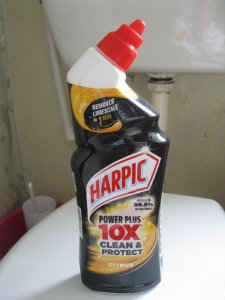
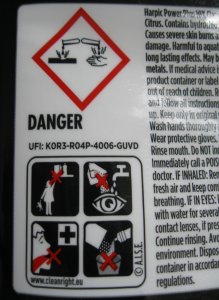 Toilet cleaners
and bleaches are dangerous liquid formulations and so carry one or more
hazard warning symbols. Toilet cleaners
and bleaches are dangerous liquid formulations and so carry one or more
hazard warning symbols.
A summary of the most common
hazard warning symbols is shown below.

Since no reactions happen in
making the mixture, most formulations are prepared by measuring liquids by
volume and solids by mass ('weight').
It is perfectly possible for a marketed product
to go on sale without a chemical
equation ever being written down! However, there may be much chemistry going on
to actually make some of the ingredients e.g. chemically synthesising a drug
is one matter, mixing it with water and other ingredients to make a liquid
medicine for oral consumption is another!
Although there are no chemical
reactions involved in preparing formulations, there are many chemical aspects to do with formulation.
These include thermodynamics (energy changes) of mixing, phase
equilibria, solutions, surface chemistry, colloids, emulsions and suspensions.
These important
principles and ingredients may be related to properties such as adhesion, weather
resistance, texture, shelf-life, biodegradability, allergenic response and many
other properties.
By changing the
composition of the mixture, its properties will change to be more or less
suited to a particular useful application.
Quite a bit of trial and error
goes into product formulation research and even computer programmes have
been developed to model and therefore predict the properties a mixture may
have - BUT its still got to be tested in the laboratory.
Formulations and
UK GCSE level:
You would
be expected to appreciate that a formulation is a mixture that has been designed
as a useful product, often a complex mixtures in which each chemical has a
particular purpose.
Formulations are prepared by mixing the components in
carefully measured quantities (mass of solid or volume of liquid or solution) to
ensure that the product has the required properties for the desired purpose
which may include fuels, cleaning agents, paints, medicines, alloys, fertilisers, foods
and many other proprietary products.
Paints formulations
A paint is made up of a
base pigment, a
mixture of compounds to give the paint a particular colour.
A binder and a solvent
to dissolve some of the components to give a well mixed composition and to give the paint the right sort of
viscosity ('stickiness').
The solvent eventually
evaporates to give a hard solid surface finish (matt or gloss depending on the
composition).
There may be other
additives to give paints
and the finish other distinctive properties.
Binders (resins) bind the pigment to the surface
painted and pigments must be insoluble materials e.g. titanium dioxide and zinc
oxide are used as white pigments (and have replaced potentially harmful lead
pigments).
Sometimes the binding action involves a chemical change e.g.
polymerisation. Acrylic paints use polymer resins as a solvent and can be
thinned with water, but still dry easily and the resin sets hard.
Paints may be water, latex, oil, acrylic or epoxy based. House paints
must be reasonably durable at a reasonable price but high durability paints used for
car and aircraft bodies are more costly.
Thermochromic paint -
changes colour when heated i.e. the colour observed is depends on the
temperature.
Photochromic paint - changes
colour on exposure to light i.e. observed colour depends on light intensity.
TOP
OF PAGE - INDEX
Inks and Dye
formulations
There is a huge variety of
inks available of different compositions to suit different circumstances.
Ink used for newspapers or
paperback novels must be cheap and have the consistency of a thick sludge to
properly feed through the ink rollers of a printing press.
Good colour quality is
required for glossy magazines.
As well as colour composition, appropriate ink flow is important for pens and
computer printers.
The performance and formulation of a good photocopier or laser printer toner
depends upon its electrostatic properties.
Dyes, natural or synthetic
(dyestuffs) are used to colour fabric materials and so are part of the
formulation of these clothing articles.
TOP
OF PAGE - INDEX
Cosmetics and other 'personal
product' formulations
The
cosmetic industry provides a wide
range of formulated products. In the bathroom/bedroom you may find perfumes, moisturizers, rouge,
lipstick, anti-aging skin products, face powder, nail polish,
sunscreen/sunblocker, hair gel, hair conditioning and colouring products, aftershave and
deodorants etc.
In the highly competitive world of
cosmetics developments in non-allergenic formulations and longer wearability factors have become increasingly important
and the way they
look and easy application all help to make a product line more marketable.
Nail polish consists of flexible lacquers, organic dyes
for colouring effects,
iron or chromium oxides, and ultramarine blue along with drying agents and
binders and solvents such as ethyl ethanoate ( ethyl acetate) that evaporate on drying. Nail polish
remover is usually an organic solvent such as propanone (acetone) or ethyl
ethanoate.
Perfumes have been used for
thousands of years and first recorded for posterity by the Egyptians? They and
other cultures extracted fragrant substances from plants such as pleasant
smelling flowers like roses, geraniums and from lemon
oils.
Animal extracts like musk were added later. The
first perfumes were probably developed to mask the odours from the body or disease
- good hygiene is a relatively modern concept! Perfumes are mixtures of various
components blended to produce a pleasing
scent that will last for several hours. Each fragrant component is called a
note.
The first note 'impression' is the odour perceived when the scent/perfume
is opened or sprayed. The second note is detected after the
perfume has made contact with the skin, and the third note is the component to
make the
fragrance last for a reasonable time. High-quality perfumes
are mixtures of 'highly selected' substances that appeal on a personal level.
Typical
ingredients include extracts of flowers and fragrances such as valerian,
lavender, chamomile, passionflower, vanilla, geranium, mint,
lemon as well as ambergris or musk, and water or alcohols.
The
formulation of perfumes is a mixture of 'art' and 'science' and new products are
constantly appearing in the 'market place'.
As well as products
for personal use, perfumes/fragrances are now used in numerous cleaning products
and for spraying around the house! Cleopatra would have loved, and been a great
patron of the modern cosmetics industry!
Hair colouring products are either temporary or permanent. Temporary hair colours attach to the surface of hair and wash out after repeated shampooing.
A dye
is considered permanent if it penetrates into the hollow hair fibres. Colouring
of hair starts with a treatment of substances such as hydrogen peroxide and
ammonia.
The ammonia causes hair shafts to swell and open, allowing dye
intermediates and couplers to penetrate.
Dyes applied during the second
step of colouring react with the intermediates/couplers to form pigments that remain in the
hair. Melanin compounds
determine hair colour and the density of melanin granules determines the shade.
Hair colours
are combinations of organic dyes chosen to produce particular shades. Hair that
contains little or no melanin is very light coloured or white.
Hair can be
deliberately bleached with oxidising agents like hydrogen peroxide which
destroys melanin.
Deodorants
and
antiperspirants
are often mixed in the same formulation.
It should be admitted that deodorants
don't usually remove bad body odours, but mask them with a more pleasant smell,
but some can inhibit the
microorganisms that cause body odour in the first place.
Deodorants contain a
mixture of strong perfumes e.g. with minty or musky odours.
Body odour can be
partially reduced by decreasing perspiration, a natural
gland function primarily to cool the skin and get rid
of excess heat, but perspiration carries pheromones and fatty acids with the
resulting odour, as well as the excretion of odourless salt.
One active
wisely used ingredient of antiperspirants is aluminium chloride and when
aluminium ions are absorbed
by cells in the epidermis cause the sweat gland ducts to close.
Sunscreens/sunblockers/suncreams
absorb/block harmful ultraviolet (UV)
radiation and allows the skin to tan. UV rays are high energy photons and can cause cancer by damaging DNA
and excess UV exposure causes
increased wrinkling of the skin.
Many of the older 'suncreams' contained organic
molecules (usually aromatic compounds) that absorb ultra-violet light (but not necessarily all the UV
light) so many products now use reflective-blocking properties of fine zinc oxide (ZnO) and titanium dioxide
(TiO2) particles (nanoparticles) because they block a much wider variation of the
wavelengths/frequencies of UV light.
There are several factors to consider in
formulating a particular product e.g.
(1) Most aromatic compounds are
potentially carcinogenic and/or interfere with hormones so low concentrations
are used to minimise risks.
(2) The active ingredients should not precipitate out of
the solution/cream or the product feel gritty.
(3) It is now possible to
encapsulate the active ingredients, i.e. the sunblockers, in tiny polymer bags
so the active chemicals do not come into contact with the skin.
Hair gel -
Toothpaste -
Shaving foam -
TOP
OF PAGE - INDEX
Detergents -
liquids/gels (e.g. washing up liquids/shampoos) and soaps blocks/powder
formulations
Detergents are a type of surfactant molecule in that changes the surface tension
of the 'washing' solution and act as wetting agents. Enzymes are added to 'biological' washing
liquids/powders/detergents.
A good acting enzyme is one which
efficiently breaks down the organic matter that some stains are made of with
zero/minimal damage to the organic matter which the clothes are made
of.
Washing up liquid detergents are formulated to effectively clean without
harming
the skin of the person doing dishes.
Solvent formulations
Water is a polar compound that readily dissolves most salts and
polar compounds such as sugar but it will not dissolve non-polar fatty/oily
substances from the body.
Non-polar solvents such as alkane hydrocarbons (hexane
etc.) and chlorinated hydrocarbons like 1,1,1-trichloroethane (CH3CCl3),
tetrachloromethane (CCl4, carbon tetrachloride) do not really mix
with water (immiscible), but
will dissolve nonpolar substances such as grease or oil.
Shampoo contains a mixture of ingredients, including detergents, that allow
water to wet the nonpolar oils found in bodily secretions such as sebum, the
oily substances which holds dirt and dead skin in hair. Common detergents
include sodium or ammonium lauryl sulfates (lauryl sulphate is an anion -
negative ion).
Cationic detergents, which act to
condition hair as well remove dirt and oil from it, include alkyl ammonium
compounds such as stearylammonium chloride or sulphate.
Other components of
shampoo include surfactants such as polyethylene glycol, antifoaming
agents, thickeners, antistatic agents, and buffers (pH balancers) as well as
colouring agents and perfumes to make them more
attractive to the consumer.
Most
soaps are sodium or potassium
salts of fatty acids that function well as surface active or wetting agents
(soaps!) because they are soluble in water but the hydrocarbon chain can
interact with grease, oils and other 'fatty' material to dislodge such materials
in the washing process.
However, calcium and magnesium ions in
hard water form insoluble compounds with these
fatty acids that dull shower/was basin walls etc. i.e. scum formation!
Shampoos and washing
up liquids etc. therefore contain chelating
agents such as ethylenediaminetetraacetate (EDTA) that form soluble complexes
with the magnesium/calcium ions and stopping 'scum' precipitates forming.
In addition, a surfactant such as an ethylene glycol ether wets
the wall so water droplets run off. Propan-2-ol (2-propanol, isopropyl alcohol) is a solvent both for the
shampoo ingredients and helps dissolve substances such as oils that are not water-soluble.
Research is being done to utilise bleach substitutes.
TOP
OF PAGE - INDEX
Pharmaceutical
products - administering drugs and medicine formulations
One of the most important aspects of the pharmaceuticals
industry relates to drug delivery, i.e. what is the best means of administering
a drug?
The tablet (pill) must ensure the drug
(i) goes to right part of the body,
(ii) is the correct dose - safe effective amount,
(iii) the correct concentration to match (ii)
above,
(iv) its palatable to the consumer and a long
enough shelf life so that it doesn't 'go off' and become ineffective.
The usefulness of a drug is
not just about its effectiveness in treating a condition but also on how
readily it can be given to the patient.
A tablet with little taste is one of the
most convenient and successful methods of administering medicines.
Tablets can
be formulated with additional ingredients to prevent
stomach upset, give a timed release and hold the tablet together as a solid.
Liquid medications of an 'unpleasant' tasting drug can be mixed with (mouth
watering!) flavourings to mask
the taste of the medicine.
(i) and (ii)
 are the
two possible structures of the active ingredient of Aspirin.
are the
two possible structures of the active ingredient of Aspirin.
(i) the non-salt
like insoluble acid (-COOH group) and
(ii) the water soluble sodium salt-like
form produced by neutralising the acid.
You can have a formulated mixture of (i) and
sodium hydrogencarbonate in the tablet which then dissolves in water to form (ii) administered in the form of a 'fizzy' drink.
Potential side-effects not
seen when using an individual drug, but occur with a mixture of assumed
beneficial ingredients.
Pharmaceutical formulations can be very
sophisticated both in design and delivery.
You need to ensure the right
concentration and dose and it gets to the right part of the body to be effective
formulation.
Even shelf-life is important - you may need to store a medication
for future use, so the formulation may need to be stable for a long time.
TOP
OF PAGE - INDEX
Adhesives
formulations
Generally speaking an adhesives
is a mixture of a bonding agent and a solvent,
which fill surfaces at the microscopic level and harden as the solvent evaporates.
Some
adhesives, such as super glue - epoxy resins do undergo a chemical reaction as
they harden.
Silicon based adhesives are used for high temperature applications
such as car exhaust repairs.
Fertilisers, Pesticides and
Herbicides - agrochemical formulations
Fertilisers are complex mixtures of chemicals to
provide vital elements for healthy plant growth e.g. NPK fertilisers provide
nitrogen, phosphorus and potassium.
For more details see
Ammonia, ammonium salts and fertilisers
Pesticides are chemical agents used to kill pests such as insects
and herbicides are used to control plant life such as 'weeds', so by their
very nature they are potentially harmful/toxic substance.
There may be one of
more active ingredients dissolved in a solvent e.g. water and then sprayed on
the crops.
 Pesticides are widely used
agrichemicals but their history is a rather mixed one and contentious issues
still remain and not just on safety/environmental grounds, but also the 'purer'
organic farming/gardening/horticulture versus the use of agrichemicals like
synthetic/artificial fertiliser formulations as well as pesticides/herbicides. Pesticides are widely used
agrichemicals but their history is a rather mixed one and contentious issues
still remain and not just on safety/environmental grounds, but also the 'purer'
organic farming/gardening/horticulture versus the use of agrichemicals like
synthetic/artificial fertiliser formulations as well as pesticides/herbicides.
Dichlorodiphenyltrichloroethane (DDT) is a halogenated hydrocarbon used
during the 1940-1960s to control mosquitoes in Africa and other parts of the
world and other pests in the so-called developed world.
However,
DDT dissolves in fatty tissues of animals and builds up in the food chain. It
caused genetic damage in birds which manifested itself by causing thin eggshells
that easily break, resulting in the unfortunate death of many chicks.
Although DDT is banned
in many countries, including the USA, all/most? European countries DDT remains a potent weapon
against malarial mosquitoes in other parts of the world.
Organophosphate pesticides act by
interfering with the nervous system of animals. The lethal dose required depends on the
weight of the animal and the effectiveness of the formulation.
 Herbicides are
chemicals that are used to control/inhibit plant growth e.g. plants deemed as
weeds. Since they tend to be harmful, the formulation and means of delivering
herbicides are very important factors in the application. Herbicides are
chemicals that are used to control/inhibit plant growth e.g. plants deemed as
weeds. Since they tend to be harmful, the formulation and means of delivering
herbicides are very important factors in the application.
TOP
OF PAGE - INDEX
Petroleum Oil Product
formulations
 Much of western society runs on fossil
fuels like petrol (gasoline), diesel fuels and
heating oil etc. Much of western society runs on fossil
fuels like petrol (gasoline), diesel fuels and
heating oil etc.
All these are products distilled and blended (i.e. formulated)
from petroleum oil to give the product its desired properties.
However, it isn't
just about combustion, although they all burn well to release heat energy
(exothermic combustion reaction), their physical properties are very important too and
additives for various reasons may also be added to the hydrocarbon mixture to make up the final 'fuel
formulation'.
 Crude petroleum oil is complex mixture
of hundreds of different hydrocarbon compounds (molecules of H and C atoms)
and generally speaking the bigger the molecule i.e. the longer the carbon chain
the higher the boiling point (less easily vapourised) and the more viscous
('sticky') the liquid. Crude petroleum oil is complex mixture
of hundreds of different hydrocarbon compounds (molecules of H and C atoms)
and generally speaking the bigger the molecule i.e. the longer the carbon chain
the higher the boiling point (less easily vapourised) and the more viscous
('sticky') the liquid.
These are very important factors in designing the
formulation of a fuels for a specific combustion process e.g.
 Petrol
('gas', gasoline for cars,
automobiles) must be a readily vapourised liquid in the carburettor and injected
into the cylinders of a car engine so they tend to be relatively small molecules
of 6-11 carbon atoms (C6H14 to C11H24).
Smaller molecules like methane (CH4) or propane (C3H8)
would be a gas and not conveniently poured into petrol tank! If the molecules
were bigger they would not be as readily vapourised and ignited in the car
engine cylinders.
Petrol
('gas', gasoline for cars,
automobiles) must be a readily vapourised liquid in the carburettor and injected
into the cylinders of a car engine so they tend to be relatively small molecules
of 6-11 carbon atoms (C6H14 to C11H24).
Smaller molecules like methane (CH4) or propane (C3H8)
would be a gas and not conveniently poured into petrol tank! If the molecules
were bigger they would not be as readily vapourised and ignited in the car
engine cylinders.
Apart from this molecular size factor
there are other problems to overcome in using petrol like 'knocking' which is
caused by ignition at the wrong time causing engine vibration. This is
inefficient combustion and the vibration can damage the engine.
 The different
blends or formulations of petrol are given an octane rating. A smooth
burning fuel has a higher rating than a 'knocking' burning fuel. The straight
chain alkane hydrocarbon called heptane (C7H16, right) is given
an octane value of zero. The different
blends or formulations of petrol are given an octane rating. A smooth
burning fuel has a higher rating than a 'knocking' burning fuel. The straight
chain alkane hydrocarbon called heptane (C7H16, right) is given
an octane value of zero.
 The much smoother/cleaner burning fuel iso-octane
(left),
which has a much higher octane rating is an isomer of octane C8H18
and a highly branched alkane whose real name is 2,2,4-trimethylpentane! The
higher the octane rating of the fuel formulation the smoother the fuel burns
without knocking in high compression engines.
The much smoother/cleaner burning fuel iso-octane
(left),
which has a much higher octane rating is an isomer of octane C8H18
and a highly branched alkane whose real name is 2,2,4-trimethylpentane! The
higher the octane rating of the fuel formulation the smoother the fuel burns
without knocking in high compression engines.
The octane rating of petrol/gasoline can
be raised by adding branched-chain alkanes like iso-octane, cyclic alkanes and
oxygenated organic molecules which may be alcohols or ethers, all of which burn
more efficiently and cleanly. Therefore it is possible to blend/formulate
mixtures of these alkane hydrocarbons into a variety of petrols of different
octane rating for different engines. Not surprisingly, the higher the octane
number, the higher the price! though combustion efficiency should increase to
partly compensate for this.
You can produce a range of petrol
formulations by mixing alkane hydrocarbons and ethanol ('alcohol') in different
proportions to give different octane values. Brazil has no oil reserves so it
imports crude petroleum oil, but it produces lots of sugar cane which can be
fermented to ethanol, which it then mixes with petrol from oil.
Historic note - the first octane enhancers were lead compounds such as
lead tetraethyl because it was found that a few milligrams per litre of this
compound converted cheaper
low octane petrol into a much higher octane fuel. The lead compounds have also
been phased out for another reason - lead poisons the active surface in
catalytic converters which convert harmful carbon monoxide (CO) into carbon
dioxide (CO2) and nitrogen oxides (NO, NO2) into harmless
nitrogen (N2).
Finally a mention of summer/winter
mixtures in petrol formulation. Since the average temperature is higher in the
summer than winter, then the volatility of petrol will vary accordingly. The
summer petrol blends contain more less easily vapourised hydrocarbons compared
to winter formulations and vice versa. This means the ease of volatilisation will
stay roughly constant through the year.
Other products derived from petroleum
oil
Polymers can be produced to
have a variety of physical properties.
They are synthesised from oil derived
compounds such as alkenes to make poly(ethene) ('polythene'),
poly(propene) ('polypropylene', 'polyprene' etc.).
Various additives
are used to colour the plastic and plasticizers are added to make it more
flexible.
Flexibility is important for electrical cables and clothing and shock
absorbance in footwear.
TOP
OF PAGE - INDEX
Food Industry Products: Additives,
Dietary
supplement formulations
Vegetable oil and margarine
-
vegetable oil (liquid) is ok as an ingredient in salad dressing emulsion (a sort
of formulation!), but
needs to be hydrogenated to give a soft solid (margarine) to spread on bread.
Ice cream
is an
emulsion based on milk, cream, sugar and colourings.
Salad dressing/mayonnaise - an
emulsion based on vinegar (acetic acid, ethanoic acid) and vegetable oil, plus
other ingredients to enhance taste.
Processed food contain permitted
food additives (given an E number) to improve appearance (colouring),
taste (artificial flavours) and shelf-life (so can store safely for a longer
time). The potential negative aspects should be considered too e.g.
harmful/toxicity? hyperactivity linked to tartrazine.
antioxidants - vitamin C
prevents deterioration due to reaction with ingredients with the oxygen in
air
flavourings - use of esters,
ethanoic acid (acetic acid, vinegar)
flavour enhancers - monosodium
glutamate
colourings - food colours like
tartrazine
preservatives - benzoic
acid/ethanoic acid (vinegar) inhibit the growth of harmful bacteria
sweeteners - aspartame to
reduce amount of sugar/calories taken in
thickeners - starch
emulsifiers
and stabilisers? help to mix ingredients together and to stop them
separating out like oil/cream and water. An emulsifier molecule has water
loving part (hydrophilic) and a 'water hating'/'fat loving' part
(hydrophobic).
 The
molecular structure of vitamin C ('ascorbic acid') one of many compounds
incorporated in multi-vitamin tablet formulations and is used as an antioxidant. The
molecular structure of vitamin C ('ascorbic acid') one of many compounds
incorporated in multi-vitamin tablet formulations and is used as an antioxidant.
Baking powder:
The thermal decomposition of sodium hydrogencarbonate
to give carbon dioxide gas and subsequent rising action in the bread dough (baking
soda addition or self-raising flour) or cake mixtures.
Baking powder can
have solid citric acid added to the self-raising mixture, no reaction in solid mixture, but reaction between acid
and carbonate occurs in presence of water to give carbon dioxide.
TOP
OF PAGE - INDEX
Other examples of formulated products:
Windscreen washer liquid for road
vehicles contains a detergent for greasy windscreens and alcohol to act as an
antifreeze in winter.
Aerosols e.g. air fresheners,
cooking oil spray
Fire extinguishers - foam,
powders, flame retardant liquids/gases
Nanotechnology - nano-sized silver
particles used as an anti-bacterial, antiviral/antifungal sterilising sprays to
clean operating theatres and coat inner surfaces of refrigerators (mentioned in
several GCSE science syllabuses)
Anticorrosion liquids - in central
heating water systems to minimise oxidation-corrosion of metal piping from
dissolved oxygen.
Antifreeze
fluid - car radiator cooling systems
containing water and ethylene glycol to lower the freezing point of the water.
Domestic cleaning agents - bleaches, TCP
antiseptics, formulations to clean and sterilise surfaces.
Metal alloys are mixtures of
metals and maybe some non-metallic substances, which are designed formulations
for specific purposes.
Plastics
can be classed as formulations.
Many plastics are actually mixtures with all sorts of additives in their formulation e.g. plasticizers
to increase flexibility and dyes to colour plastic toys.
Learning objectives for 'Formulation Chemistry'
Know that formulation products are used extensively in both industry and
domestically in the home for a variety of purposes.
Know and understand that a formulation is a mixture of chemicals that do
not react with each other.
Know and understand that each component of a formulation contributes in
some way to the successful application of the product.
Formulations are based on tried and tested complex mixtures whose
properties are well known and the product can be successfully marketed for
some specific use.
Know that the packaging of any formulated product must carry hazard
warning symbols if any ingredient is potentially harmful to humans or any
other animals e.g. poisonous, irritating to the skin, corrosive or
flammable.
What next?
Associated Pages
ALL my GCSE Level (~US grade 8-10)
School Chemistry Notes
(ages ~14-16, ~US grades 9-10)
All my Advanced Level pre-university Chemistry
notes (age ~16-18, ~US grades 11-12, K12 AP Honors)
This is a BIG
website, you need to take time to explore it [SEARCH
BOX]
email doc
brown - comment - query?
For notes on alloys see
metal structures *
transition metals
Related on-site pages involving the chemical
industry:
 Uses of Chemicals - a quick summary
reference table of the use of 220+ elements, compounds or mixtures
Uses of Chemicals - a quick summary
reference table of the use of 220+ elements, compounds or mixtures
Oil Products and their uses -
notes on oil, fuels, combustion, alkanes, alkenes, alcohols, polymers, drugs, food
additives etc.
Extra Notes on Industrial Chemistry - Limestone, Enzymes, Titanium,
Sulphuric Acid etc.
Transition Metals - GCSE level
notes on their physical and chemical properties and uses
Ammonia, ammonium salts and fertilisers
notes on ammonia synthesis and its uses
Based on the syllabus-specifications
for students taking the IGCSE/GCSE level chemistry examinations summary
revision notes and key points on explaining what a formulation is in
chemistry for students taking the AQA
igcse/gcse chemistry notes on explaining what a formulation is in chemistry, Edexcel gcse
chemistry notes on explaining what a formulation is in chemistry, OCR 21st century GCSE
chemistry notes on explaining what a formulation is in chemistry, OCR gateway
GCSE chemistry notes on explaining what a formulation is in
chemistry, WJEC gcse chemistry notes on explaining what a formulation is in
chemistry, CCEA
gcse chemistry notes on explaining what a formulation is in chemistry for students taking CIE Cambridge igcse
chemistry, or any other GCSE or IGCSE level chemistry exams notes on
explaining what a formulation is in chemistry, useful for US grade 9-10 chemistry courses,
Explaining the importance of explaining
what components do in formulations
in GCSE level chemistry, What you need to know about explaining what
components do in formulations for
GCSE level
chemistry,
Explaining the use of explaining what components do in formulations knowledge in GCSE level chemistry, Examples of
explaining what components do in formulations explained
when studying GCSE level chemistry, What is
the significance of explaining what components do in formulations in GCSE level chemistry, describing and
explaining the theory of explaining what components do in formulations when studying GCSE level chemistry, revision
notes for explaining what components do in formulations in exams, online help for understanding
explaining what components do in formulations, exam revision
notes for explaining what components do in formulations, what do I need to learn about
explaining what components do in formulations? revision summary for explaining
what components do in formulations, learning notes for explaining what
components do in formulations, help to pass the explaining what components do in
formulations
topic in an exam question, how to prepare for questions on explaining
what components do in formulations in a GCSE
chemistry examination?
|
Website content © Dr
Phil Brown 2000+. All copyrights reserved on Doc Brown's Chemistry revision notes, images,
quizzes, worksheets etc. Copying of website material is NOT
permitted.
What next?
Associated Pages
|
|
 For searching