Liverpool (8) The Anglican Cathedral - The Church of England Church to Christ the King

 North West Index

LIVERPOOL INDEX

Liverpool Anglican Cathedral: In 1888 the Liverpool Diocese was founded and in 1901 it was decided to build a new cathedral for Liverpool.  In 1922 Giles Gilbert Scott (then aged 22!) won the architect's design competition and the Foundation Stone was laid in 1904 by King Edward VII.  By 1910 the Lady Chapel was completed and consecrated allowing services to be held for the first time.  In 1924 the High Altar, Chancel and Eastern Transepts were completed in by 1941 the central space under the tower was finished. The Nave was built in the 1960s.  Finally, in 1978, the whole Cathedral was completed and a service of dedication held in the presence of her Majesty Queen Elizabeth II.

Entry is FREE, so PLEASE leave a donation to help with the running of this magnificent building

Exterior Architectures * Interior Architecture * Stained Glass * Lady Chapel * St James' Gardens & Graveyard

Notes on Liverpool's Anglican Cathedral  *  Email: chem55555@hotmail.com

[Author and photographer © Dr Phil Brown PhD plus notes help from AI these days, page updated May18th 2026]

* Doc Brown's Science Website biology chemistry physics *

External Architecture Views

Anglican Cathedral Liverpool

Liverpool Anglican Cathedral: View from the south-east. The Cathedral is oriented north-south (rather than the traditional east-west) to fit in with the extant graveyard and quarrying.


Anglican Cathedral Liverpool

Liverpool Anglican Cathedral built of red sandstone: The south end overlooking the entrance to St James' Gardens.


Anglican Cathedral Liverpool Exterior architecture view from the south-west

Liverpool Anglican Cathedral: Exterior architecture view from the south-west


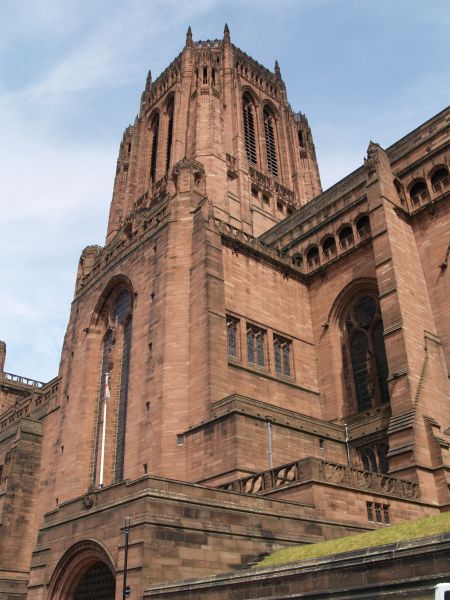
Anglican Cathedral Liverpool The huge central tower

Liverpool Anglican Cathedral: The huge central tower


Anglican Cathedral Liverpool The Rankin Porch, steps and iron gates leading up into the central space of the cathedral.

Liverpool Anglican Cathedral: The Rankin Porch, steps and iron gates leading up into the central space of the cathedral.


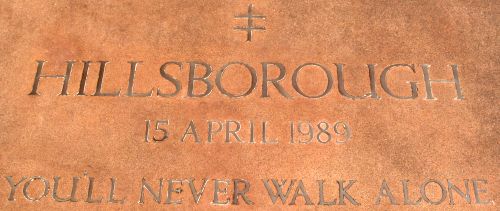
Anglican Cathedral Liverpool The memorial stone to the victims of the football crowd tragedy at Hillsborough Sheffield on the 15th April 1989 'YOU'LL NEVER WALK ALONE' the slogan of Liverpool Football Club.

Liverpool Anglican Cathedral: The memorial stone to the victims of the football crowd tragedy at Hillsborough Sheffield on the 15th April 1989 'YOU'LL NEVER WALK ALONE' the slogan of Liverpool Football Club.


Anglican Cathedral Liverpool Anglican Cathedral Liverpool

Liverpool Anglican Cathedral: The fine ironwork on the entrance gates to the Rankin Porch.


Anglican Cathedral Liverpool

Liverpool Anglican Cathedral: The statue above the main north entrance.


Lady Chapel

Anglican Cathedral Liverpool

Anglican Cathedral Liverpool

Liverpool Anglican Cathedral: Lady Chapel


Anglican Cathedral Liverpool architecture Lady Chapel

Liverpool Anglican Cathedral:  Lady Chapel


Anglican Cathedral Liverpool

Liverpool Anglican Cathedral:  Lady Chapel


Anglican Cathedral Liverpool The vaulting-tracery of the roof of the Lady Chapel

The vaulting-tracery of the roof of the Lady Chapel


Internal Architecture Views

Anglican Cathedral Liverpool

Liverpool Anglican Cathedral:


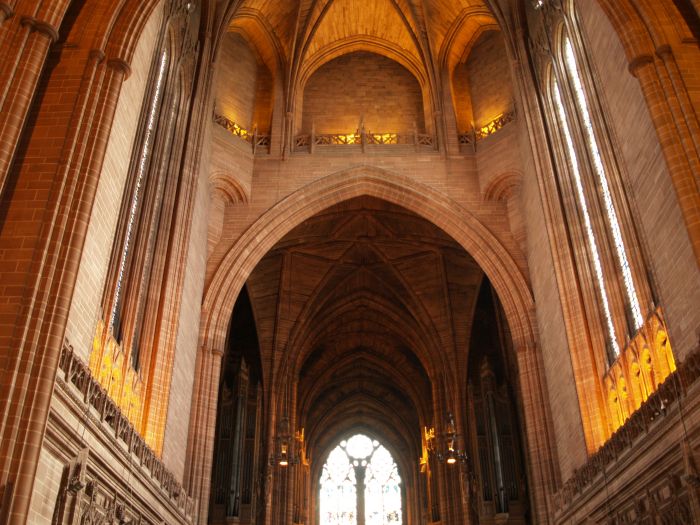
Anglican Cathedral Liverpool Looking south down the nave into the chancel and high altar

Liverpool Anglican Cathedral: Looking south down the nave into the chancel and high altar


Views from either side from behind the High Altar


The Liverpool College choir and orchestra in rehearsal in the Anglican Cathedral (March 2022)

The Liverpool College choir and orchestra in rehearsal (March 2022)


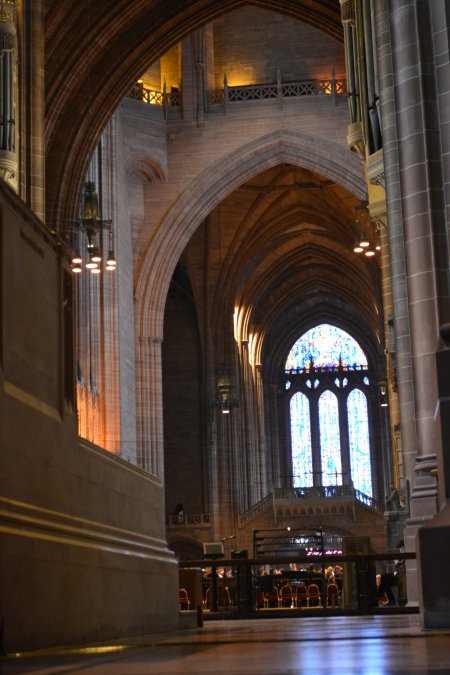
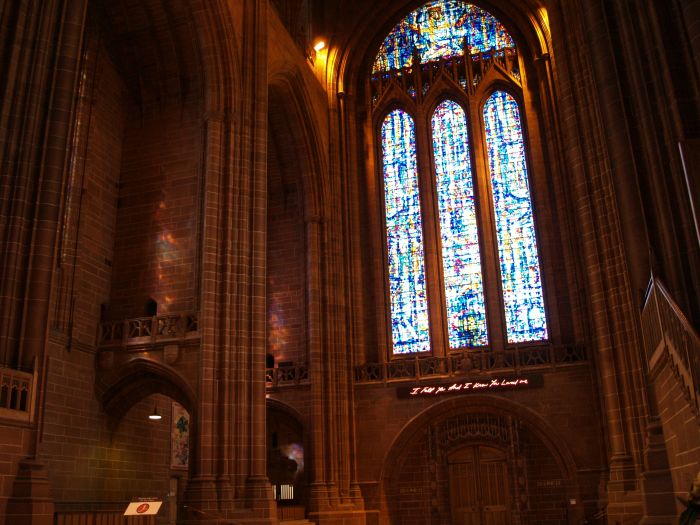
Anglican Cathedral Liverpool Looking north down the nave to the north window

Liverpool Anglican Cathedral: Looking north down the nave to the north window


Anglican Cathedral Liverpool

Liverpool Anglican Cathedral:


Anglican Cathedral Liverpool Looking north to the nave bridge

Liverpool Anglican Cathedral: Looking north to the nave bridge


The Dulverton Bridge across the nave Anglican Cathedral Liverpool

Liverpool Anglican Cathedral: The Dulverton Bridge across the nave.


Anglican Cathedral Liverpool The chancel, high altar and south window

Liverpool Anglican Cathedral: The chancel, high altar and south window


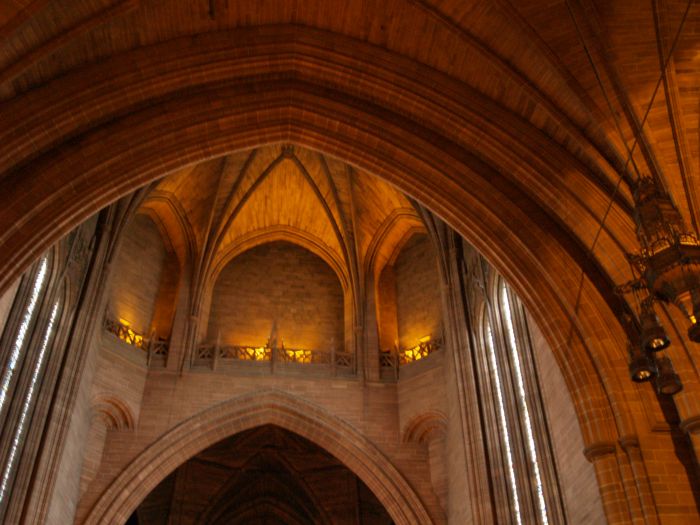
he stone vaulting beneath the central tower Anglican Cathedral Liverpool

Liverpool Anglican Cathedral: The stone vaulting beneath the central tower.


Anglican Cathedral Liverpool

Liverpool Anglican Cathedral:


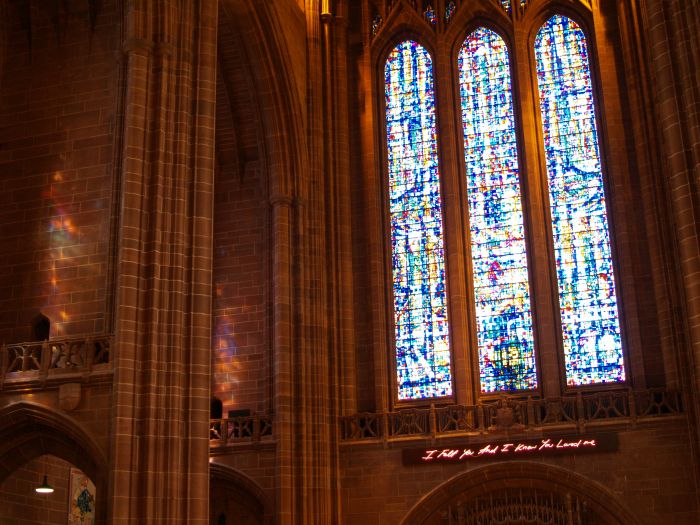
The north stained glass window above the entrance to the Anglican Cathedral Liverpool

Liverpool Anglican Cathedral: The north stained glass window above the entrance


Anglican Cathedral Liverpool

Liverpool Anglican Cathedral:


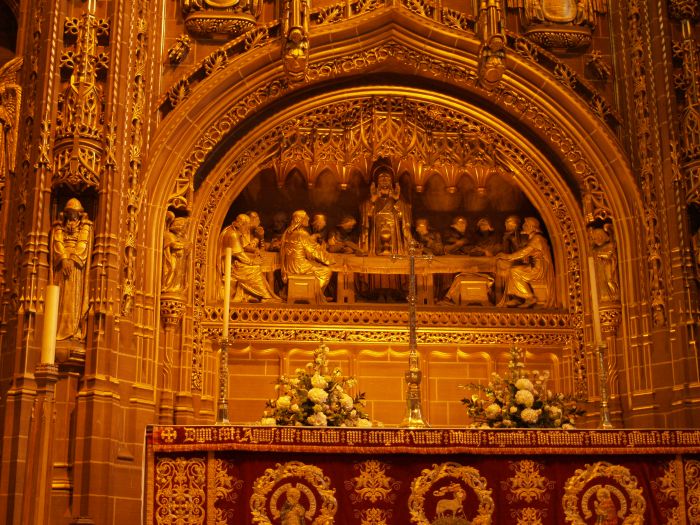
The High Altar and reredos Anglican Cathedral Liverpool

Liverpool Anglican Cathedral: The High Altar and reredos


The roof vaulting at the south end of the Anglican Cathedral Liverpool

Liverpool Anglican Cathedral: The roof vaulting at the south end


Some Details of the Stained Glass Windows

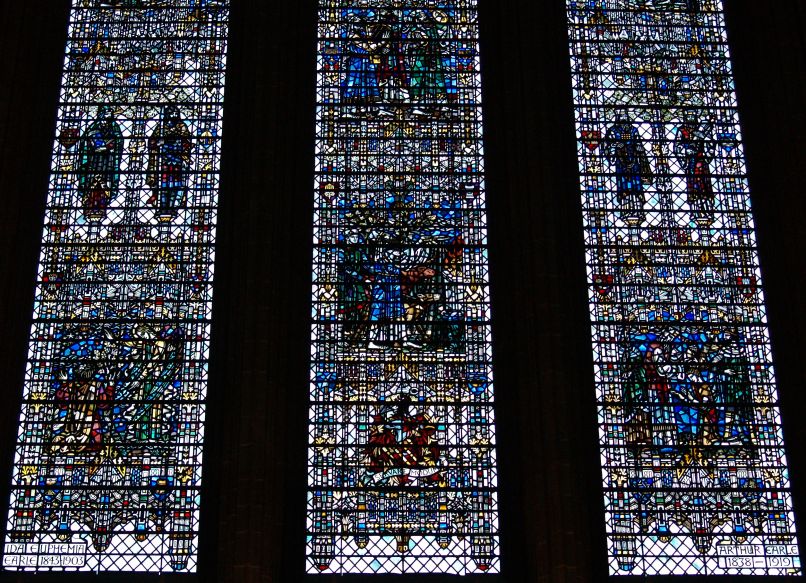
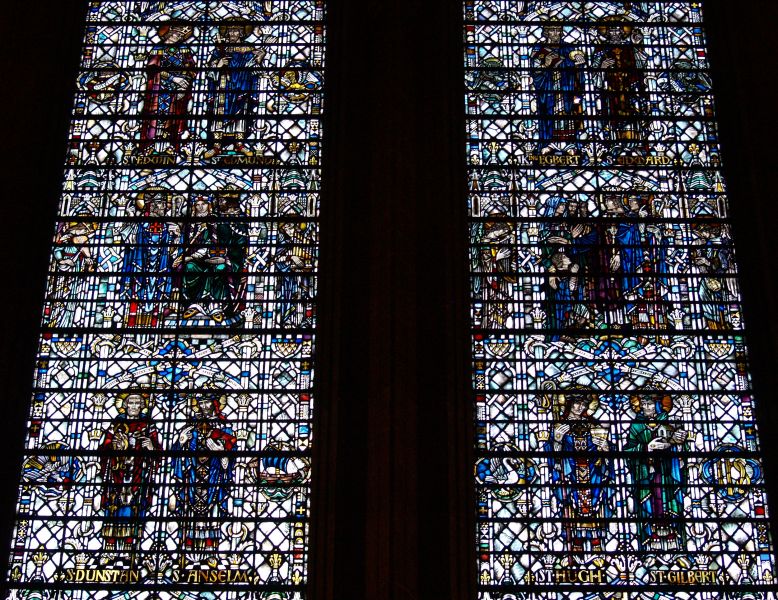
The stained glass panels of south window above the High Altar Anglican Cathedral Liverpool

Liverpool Anglican Cathedral: The stained glass panels of south window above the High Altar


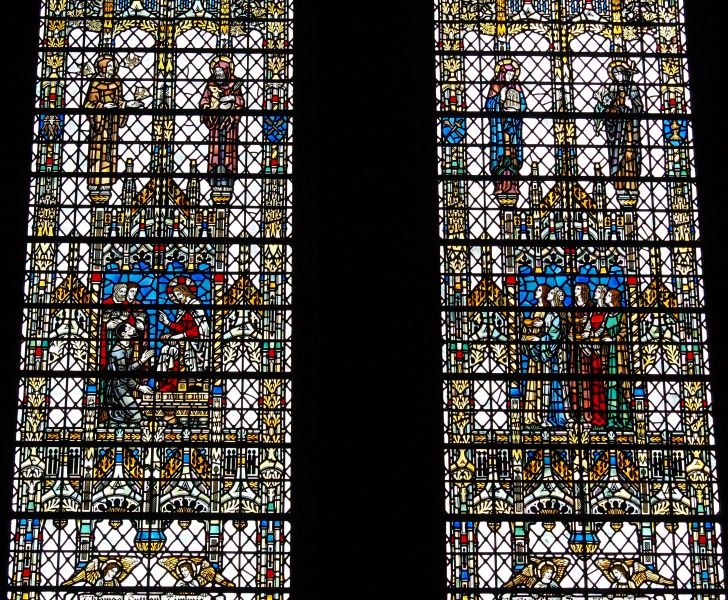
Anglican Cathedral Liverpool

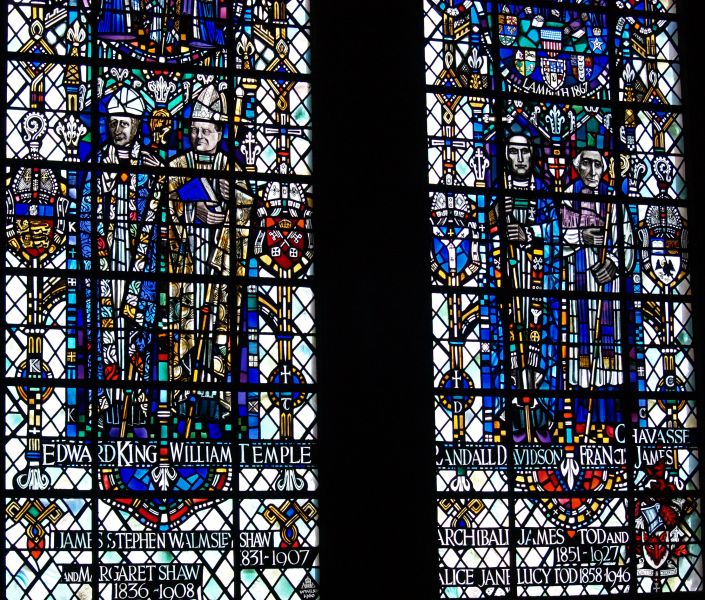
Liverpool Anglican Cathedral: Stained glass window panel - details

Anglican Cathedral Liverpool

Liverpool Anglican Cathedral:  Stained glass window panel - details


Anglican Cathedral Liverpool

Liverpool Anglican Cathedral:  Stained glass window panel - details


Anglican Cathedral Liverpool

Liverpool Anglican Cathedral: North window above the entrance porch


Anglican Cathedral Liverpool

Liverpool Anglican Cathedral:  Stained glass window panel - details


Anglican Cathedral Liverpool

Liverpool Anglican Cathedral:  Stained glass window panel - details


Anglican Cathedral Liverpool

Liverpool Anglican Cathedral:  Stained glass window panel - details


Anglican Cathedral Liverpool

Liverpool Anglican Cathedral:  Stained glass window panel - details


Anglican Cathedral Liverpool

Liverpool Anglican Cathedral:  Stained glass window panel - details


Anglican Cathedral Liverpool

Liverpool Anglican Cathedral:  Stained glass window panel - details


Anglican Cathedral Liverpool

Liverpool Anglican Cathedral:  Stained glass window panel - details


Anglican Cathedral Liverpool

Liverpool Anglican Cathedral:  Stained glass window panel - details


Anglican Cathedral Liverpool

Liverpool Anglican Cathedral:  Stained glass window panel - details


Anglican Cathedral Liverpool

Liverpool Anglican Cathedral:  Stained glass window panel - details


Anglican Cathedral Liverpool

Liverpool Anglican Cathedral:  Stained glass window panel - details


Anglican Cathedral Liverpool

Liverpool Anglican Cathedral:  Stained glass window panel - details


Anglican Cathedral Liverpool

Liverpool Anglican Cathedral:  Stained glass window panel - details


Anglican Cathedral Liverpool

Liverpool Anglican Cathedral:  Stained glass window panel - details


Anglican Cathedral Liverpool

Liverpool Anglican Cathedral:  Stained glass window panel - details


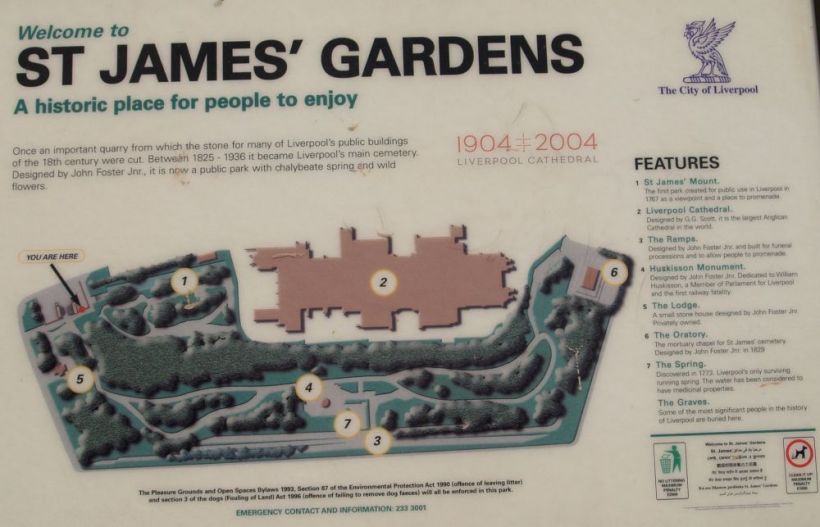
St James' Gardens & Graveyard

Anglican Cathedral Liverpool

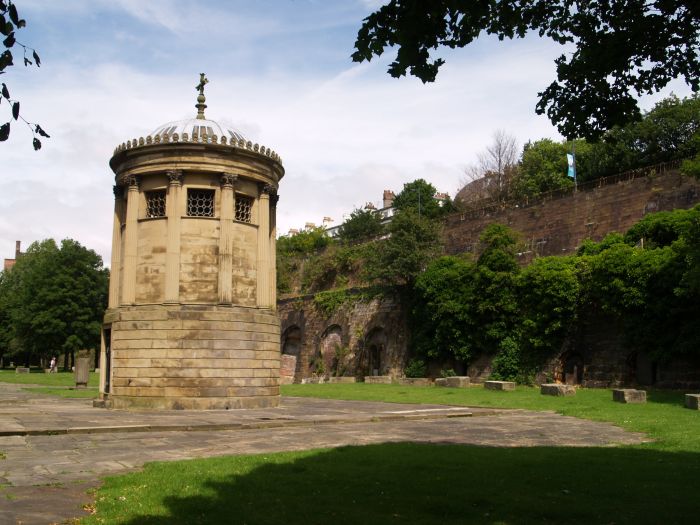
St James' Gardens and Graveyard  'rotunda' of the Huskisson Monument Anglican Cathedral Liverpool

St James' Gardens and graveyard: The 'rotunda' of the Huskisson Monument


Anglican Cathedral Liverpool

St James' Gardens and graveyard


Anglican Cathedral Liverpool

St James' Gardens and graveyard: Some of the gravestones, including some quite fine carved figures


Notes on Liverpool's Anglican Cathedral

Here is a full, structured, deeply detailed guide to the Anglican Cathedral of Christ the King (Liverpool Cathedral) and St James’ Gardens, written in the same comprehensive, heritage‑focused style you prefer.
This is one of the richest architectural stories in Britain: a 20th‑century Gothic giant, the largest cathedral in the UK, set above a sunken Georgian cemetery that has become one of Liverpool’s most atmospheric public spaces.


1. Historical Overview

The Anglican Cathedral of Christ the King, Liverpool

(Commonly called “Liverpool Cathedral”)

1. The Need for a Cathedral (19th century)

  • Liverpool’s explosive growth as a port created one of the largest cities in the British Empire.
  • The Church of England sought a cathedral to match the city’s status.
  • In 1880, Liverpool became a diocese; St Peter’s Church on Church Street served as the pro‑cathedral.

2. The Architectural Competition (1901–1903)

  • An open competition was held in 1901.
  • The winner was Giles Gilbert Scott, aged just 22.
  • His design: a vast Gothic Revival cathedral, but with modern structural engineering and a distinctive, simplified massing.

3. Construction (1904–1978)

  • Foundation stone laid: 1904
  • Lady Chapel completed: 1910
  • First part of main building opened: 1924
  • Tower completed: 1942
  • Final completion: 1978
  • Construction survived two world wars, funding crises, and design revisions.

4. Dedication

  • Dedicated to Christ the King — the same dedication as the Catholic Metropolitan Cathedral at the opposite end of Hope Street.

2. Architecture of Liverpool Cathedral

Style

  • Gothic Revival, but not Victorian Gothic.
  • Scott’s Gothic is stripped‑back, monumental, muscular, with clean lines and vast internal volumes.
  • Built of red sandstone from Woolton Quarry.

Exterior Features

1. The Tower

  • Height: 331 ft (101 m) — the tallest cathedral tower in the UK.
  • Houses the heaviest and highest peal of bells in the world (the “Mersey Bells”).
  • Viewing platform offers panoramic views across Merseyside and the Welsh hills.

2. West Front

  • A colossal, fortress‑like façade.
  • The great west window is one of the largest stained‑glass windows in the world.

3. Flying Buttresses & Massing

  • Scott used massive buttresses and simplified Gothic forms to create a sense of weight and permanence.
  • The building sits dramatically above St James’ Gardens, enhancing its dominance.

Interior Features

1. The Nave

  • One of the longest cathedral naves in the world (over 180 metres).
  • Height: 36 metres — a vast, uplifting space.
  • The scale is comparable to medieval cathedrals like York Minster or Winchester, but with a modern clarity.

2. The Lady Chapel

  • Completed first (1910).
  • Richly decorated, more intimate than the main nave.
  • Stained glass includes depictions of notable women in history.

3. The High Altar & Sanctuary

  • Elevated on a great platform.
  • Surrounded by Gothic arches and lit by the enormous east window.

4. Stained Glass

  • Designed by artists including J. W. Brown, Carl Edwards, and James Powell & Sons.
  • Themes include Creation, Redemption, and the history of the Church.

5. The Organ

  • One of the largest pipe organs in the world.
  • Over 10,000 pipes.

6. The Chapter House & Ambulatory

  • Quiet, atmospheric spaces with fine stone carving and memorials.

3. St James’ Gardens & Cemetery

(The sunken park immediately south of the cathedral)

⭐ Origins

  • Originally a quarry for the red sandstone used in many Liverpool buildings.
  • Became a cemetery in 1829, designed by John Foster Jr.
  • Closed to burials in 1936.
  • Converted into a public garden in the 1960s when the cathedral was nearing completion.

Key Features

1. The Sunken Landscape

  • The gardens lie in a deep, sheltered hollow — the former quarry.
  • High sandstone walls create a dramatic, enclosed atmosphere.

2. The Oratory (1829)

  • A small Greek Revival chapel at the north entrance.
  • Contains notable funerary monuments by sculptors such as John Gibson and Richard Westmacott.
  • Now used as a sculpture gallery.

3. The Huskisson Monument

  • Memorial to William Huskisson, MP for Liverpool, famously killed by Stephenson’s Rocket at the opening of the Liverpool–Manchester Railway in 1830.
  • His tomb is a major landmark in the gardens.

4. Gravestones & Memorials

  • Many gravestones were moved to the garden walls during landscaping.
  • Names reflect Liverpool’s diverse 19th‑century population: merchants, sailors, Irish migrants, and local families.

5. The Natural Spring (“Chalybeate Spring”)

  • A small iron‑rich spring emerges from the rock face.
  • Historically believed to have healing properties.

6. Wildlife & Planting

  • A quiet refuge with mature trees, birds, and wildflowers.
  • The cathedral tower rises dramatically above the treetops.

4. The Cathedral and Gardens Together

The relationship between the two is one of the most striking in any British city:

  • The cathedral stands like a cliff of red sandstone above the sunken cemetery.
  • The gardens provide a romantic, almost melancholy setting, contrasting with the cathedral’s grandeur.
  • The site symbolises Liverpool’s layers of history:
    • Georgian cemetery
    • Victorian expansion
    • 20th‑century cathedral
    • 21st‑century cultural regeneration

5. Best Visitor Experience

1. Approach from Hope Street

  • The cathedral appears gradually, framed by Georgian terraces.

2. Descend into St James’ Gardens

  • Walk the full circuit to appreciate the quarry walls and memorials.

3. Enter the Cathedral via the West Door

  • The transition from the quiet gardens to the vast nave is unforgettable.

4. Climb the Tower (if open)

  • One of the best viewpoints in northern England.

Here is a complete, structured, visitor‑friendly guide to the Anglican Cathedral of Christ the King (Liverpool Cathedral) and St James’ Gardens, written in the same clear, practical, heritage‑focused style as your other guides.
This is designed to be usable as-is for educational outreach or tourism content.


VISITOR’S GUIDE

Liverpool Cathedral (Anglican) & St James’ Gardens


1. Why Visit?

Liverpool Cathedral is:

  • The largest cathedral in Britain
  • One of the largest Gothic churches in the world
  • A masterpiece of 20th‑century Gothic Revival
  • Set dramatically above the atmospheric St James’ Gardens, a former Georgian cemetery in a sandstone quarry

Together they form one of the most striking cathedral settings in Europe.


2. Practical Information

Opening Hours

  • Cathedral: typically 10:00–18:00
  • Tower: varies; often 10:00–17:00
  • St James’ Gardens: open daylight hours

Admission

  • Cathedral: free
  • Tower: paid ticket
  • Gardens: free

Location

  • St James Mount, Liverpool L1 7AZ
  • At the southern end of Hope Street, opposite the Catholic Metropolitan Cathedral at the northern end

Accessibility

  • Cathedral: step‑free access
  • Tower: lift to top level
  • Gardens: steep paths; some uneven surfaces

3. Suggested Visitor Route (60–90 minutes)

A. Approach from Hope Street (5 minutes)

Walk up the gentle rise of St James Mount.
The cathedral appears gradually, its red sandstone mass dominating the skyline.

Best viewpoint:
From the top of Upper Duke Street, where the tower rises above the trees of St James’ Gardens.


4. Inside Liverpool Cathedral (45–60 minutes)

1. The West Entrance & Narthex

  • Huge bronze doors by Tommy Steele
  • First glimpse of the cathedral’s immense scale

2. The Nave

  • One of the longest cathedral naves in the world
  • Height: 36 metres
  • Clean, powerful Gothic lines
  • Look for the Nave Platform, used for concerts and events

Don’t miss:
The Benedicite Window, a vast stained‑glass composition of creation themes.


3. The Tower (optional but recommended)

  • Height: 331 ft (101 m)
  • Houses the heaviest and highest peal of bells in the world
  • Lift access to the top
  • Views across Liverpool, the Mersey, Wirral, and the Welsh hills

4. The Lady Chapel (15 minutes)

  • Completed in 1910, the first part of the cathedral finished
  • Richly decorated, more intimate than the main nave
  • Stained glass celebrates notable women, including:
    • Elizabeth Fry
    • Florence Nightingale
    • Queen Victoria

Acoustics: exceptional — often used for choral performances.


5. The High Altar & Sanctuary

  • Elevated on a great platform
  • Framed by soaring Gothic arches
  • The East Window is one of the largest stained‑glass windows in the world

6. The Organ

  • Over 10,000 pipes
  • One of the largest cathedral organs in Europe
  • Often heard during rehearsals and services

7. Side Chapels & Ambulatory

  • Quiet spaces for reflection
  • Fine stone carving and memorials
  • The Children’s Chapel contains charming modern artwork

5. Visiting St James’ Gardens (20–30 minutes)

A. Access

  • Main entrance beside the cathedral’s south side
  • Descend into the former sandstone quarry

B. What to See

1. The Sunken Landscape

  • Originally a quarry for the red sandstone used in Liverpool’s Georgian buildings
  • Converted into a cemetery in 1829
  • Now a peaceful public garden

The high rock walls create a dramatic, sheltered atmosphere.


2. The Oratory (1829)

  • Greek Revival funerary chapel by John Foster Jr
  • Contains high‑quality neoclassical monuments
  • Now used as a sculpture gallery

3. The Huskisson Monument

  • Tomb of William Huskisson, MP for Liverpool
  • Killed by Stephenson’s Rocket at the opening of the Liverpool–Manchester Railway (1830)
  • One of the most historically significant graves in the gardens

4. Gravestones & Memorial Walls

  • Many gravestones were moved to the perimeter walls during landscaping
  • Names reflect Liverpool’s diverse 19th‑century population:
    • Irish migrants
    • Sailors
    • Merchants
    • Local families

5. The Chalybeate Spring

  • A natural iron‑rich spring emerging from the rock
  • Historically believed to have healing properties
  • Still flows today

6. Wildlife & Planting

  • Mature trees, birds, and wildflowers
  • A quiet refuge beneath the cathedral’s towering walls

6. Understanding the Site as a Whole

The Cathedral

  • A 20th‑century Gothic giant
  • Built 1904–1978
  • Designed by Giles Gilbert Scott (aged 22 when he won the competition)
  • Monumental, simplified Gothic with modern engineering

The Gardens

  • A Georgian cemetery in a former quarry
  • Romantic, atmospheric, historically rich
  • Provides a dramatic setting for the cathedral above

Together

  • One of the most striking cathedral settings in Europe
  • A powerful contrast of:
    • Height vs depth
    • Gothic architecture vs natural sandstone
    • 20th‑century ambition vs 19th‑century memory

7. Best Photo Spots

  • Hope Street — cathedral framed by Georgian terraces
  • Upper Duke Street — tower rising above the gardens
  • Inside the nave — looking east toward the high altar
  • Lady Chapel — stained glass and vaulted ceiling
  • St James’ Gardens — cathedral towering above the quarry walls

8. Tips for Visitors

  • Visit late afternoon for warm light on the sandstone
  • Combine with the Catholic Metropolitan Cathedral for the “Two Cathedrals Walk
  • Tower visit is weather‑dependent
  • Gardens can be slippery after rain
  • Allow extra time for the Lady Chapel — many visitors say it’s the highlight

previous page <-> next page  *  North West Index

North West of England Liverpool scenes docspics images pictures © Phil Brown top tourist attractions in Liverpool, tourist information on Liverpool, student accommodation in Liverpool, luxury hotels, hostels to suit all budgets, B&B, self-catering flats, dining out in Liverpool, pubs, cafes, restaurants, museums, art galleries, guided tours of Liverpool docks, colleges, universities, churches, cathedrals, music concerts, theatres, cinemas, River Mersey, mini-breaks in North-West England

  Liverpool Index

Email: chem55555@hotmail.com

LIVERPOOL PICTURE INDEX: Liverpool (1) The Albert Dock, Salthouse Dock, Canning Dock and Wapping Dock Area  Liverpool (2) The Pierhead and 'Three Graces' Buildings Area  Liverpool (3) The 'NEW' Museum of Liverpool  (4) The Maritime Museum and The International Museum of Slavery  Liverpool (5) Lime Street Station, Mount Pleasant and University Area  Liverpool (6) Bold Street Area, Bluecoat School Chambers and St Luke's Church  Liverpool (7) The Roman Catholic Metropolitan Cathedral of Christ the King & Crypt  Liverpool (8) The Anglican Cathedral  Liverpool (9) A Miscellany of Buildings  Liverpool (10) St George's Hall Area & William Brown Street Liverpool (11) The Walker Art Gallery  Liverpool (12) The World Museum  Liverpool (13) YHA Youth Hostel and some places to eat and drink  Liverpool (14) A Ferry Trip on the River Mersey Ferryboat the ROYAL IRIS  Liverpool (15) The Tate Modern Art Gallery, Liverpool  (16) The Central Library and a wild flower garden!

DOC'S PICTURES - always travel with my camera! YORKSHIRE DALES and North Pennines scenes and notes THE WENSLEYDALE RAILWAY North Yorkshire LAKE DISTRICT PICTURES of England's Northern Lakeland WEST YORKSHIRE Scenes Notes YORK Scenes and Notes LIVERPOOL Selected NORTHERN ENGLAND VIEWS SCOTLAND - SCOTTISH Scenes and Notes
Email Docs Pics NORTHUMBRIA, Co. DURHAM and NEWCASTLE Scenes and Notes NORTH YORKSHIRE MOORS RAILWAY SCENES SCOTLAND - SCOTTISH Scenes and Notes Leeds-Settle-Carlisle Railway Trip Steam Train and Locomotive Photographs from the late 60's IRELAND - IRISH Scenes and Notes DUBLIN Scenes and Notes

TOP OF PAGE