SEARCH Doc's Pic's picture pages
|
We Dig Archaeology Ireland 5. Kilmogue Prehistoric Portal Tomb Dolmen (Leac/Leάc An Scail Dolmain) County Kilkenny
We Dig
Archaeology Index
[Author
and photographer
Email: chem55555@hotmail.com *
Ireland 5. Kilmogue Prehistoric Portal Tomb Dolmen (Leac/Leάc An Scail Dolmain) County Kilkenny This archaeological site at OS grid ref 503 281 is signposted about 5-6 miles north-west out of Mullinavat, don't follow the waterfall sign at the first T junction - turn right, it then seems a long way, but it is well signposted (1) after that, and well worth the trouble to find this quite exceptional 'ancient monument'. It is north-east of Carrick-on-Suir on the R698 road, I think? Kilmogue is from Cill Mhóġ, meaning 'The Church of Móġ and I'm much obliged to the information supplied on the plaque by the stones.
Leac an Scáil, also known as the Kilmogue Portal Tomb, is Ireland’s tallest and one of its most architecturally striking megalithic dolmens, dating back to around 3000 BC. Here’s a comprehensive breakdown of its features, history, and significance: Overview
Structure and Dimensions
Historical Context
Setting and Access
Alternate Names and Local Lore
Kilmogue Portal Tomb Dolmen: This is an exceptional example of a type of megalithic (large stone) tomb known as a Portal Tomb and is the tallest and most spectacular of all of Ireland.
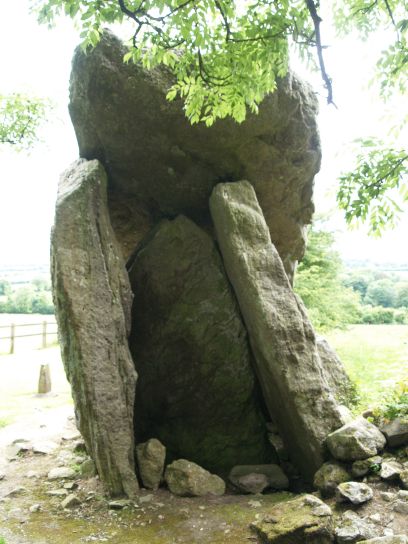
Kilmogue Portal Tomb Dolmen: (2) Two pointed portal stones (12 feet high), the tallest stones in the tomb, form the entrance to a stone-lined burial chamber, which is roofed by two massive stone slabs or capstones, the larger of which lies at a steep angle. The sill (next to Molly) between these two portal stones is nearly as high and blocks the entrance. A cairn, or low mound of stones would have covered most of the tomb, but the capstone probably remained visible.
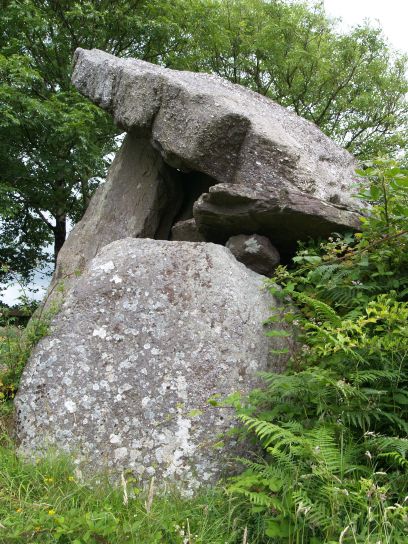
Kilmogue Portal Tomb Dolmen: (3) and (4) The top angled capstone of this dolmen is 15 feet long.
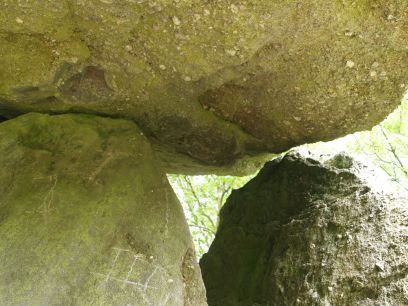
Kilmogue Portal Tomb Dolmen: (5) The angled upper capstone of the portal tomb rests on the lower horizontal capstone, which itself rests on three smaller upright stones of the burial lining.
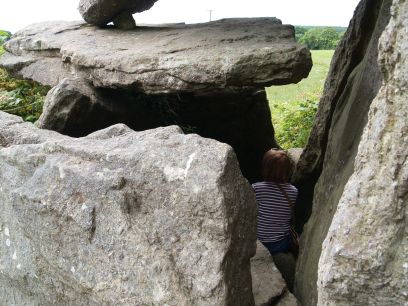
Kilmogue Portal Tomb Dolmen: (6) Down in the field below there seems to be a standing stone in amongst the cows! but this doesn't seem to be mentioned in the literature? This prehistoric site is known locally as Leac an Scάil (means the 'stone of the shadow or ghost'), and is situated on slightly sloping pasture land above the head-waters of a tributary of the River Suir. This was the type of landscape preferred by the builders of these tombs in south-east Ireland. The tomb has never been scientifically excavated. The likelihood is that it was built by Neolithic farmers about 6000 years ago (~4000 BC) for the burial of important members of the community ('high class citizens') and perhaps a focal point for a group or tribal meeting.
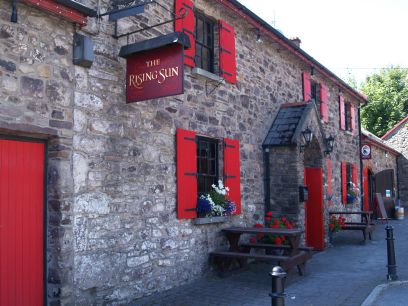
The Rising Sun
pub in Mullinavat, County Kilkenny, Ireland, provides good food
and hospitality on the Dublin-Waterford road. Find time to visit
Irelands largest Dolmen, the Kilmogue Prehistoric Portal
Tomb (Leac/Leάc An Scail Dolmain), signposted west out
of the village. previous Irish site <=> next Irish site history archaeology pictures of historical and prehistoric Irish archaeological sites from the megalithic neolithic, bronze age or iron age historic sites from antiquity we find on holiday in Ireland images pictures photos © Phil Brown docspics famous archaeological sites history holiday tours of historic and archaeological sites of Europe archaeology holiday trips to Eastern Europe Greece Mediterranean Middle East Egypt Italy history famous ruins |


 (1)
(1)

 (2)
(2)
 (3)
(3)


 (4)
(4)
 (5)
(5)

 (6)
(6)
|
 Enter
anything of interest!
Enter
anything of interest!
|


