|
Doc Brown's
Advanced Chemistry: Part 14.7 Isomers of a given molecular formula
Constitutional
structural
carbon chain isomers of molecular formula C10H22
[Author
©
Dr
Phil Brown GRIC, PhD:
Doc Brown's advanced level organic chemistry exam revision notes
suitable for students of UK advanced level chemistry courses, IB
advanced chemistry & US K12 grades 11-12 and AP honors chemistry
courses: Molecular
spectroscopy and analysing the isomers of C10H22
[page updated
RE-EDIT]
Sub-index for
this page on C9H22 isomers
(1)
Introduction to isomerism for molecular formula C9H22
(2)
Details of the individual C9H22
isomers (and some NMR data)
(3)
Extra notes on the isomers of C9H22
(e.g. properties and uses)
(4)
Learning objectives for the isomerism of molecular
formula C9H22
(5)
Practice exam questions on the isomers of C9H22
email
doc brown - comments - query?
*
[privacy policy, cookies
and disclaimer]
Associated
organic chemistry page links
Index
of sets of isomers for a given molecular formula
This is a big chemistry website, please allow time
to explore it
(1) The 75 alkane carbon chain constitutional-structural isomers of molecular formula C10H22
(Mr = 142)
Introduction to
75 constituent isomers of C 10H22
Percent
composition based on atomic masses C= 12.01 H = 1.01
and Mr(C10H22) = 142.32
Element
composition (to two dp): carbon = 84.39%
hydrogen = 15.61%
Empirical formula =
C5H11
and molecular formula = C10H22
Structural
isomerism includes carbon chain variation (usually need a
minimum of 4 C atoms), change in position of a substituent or
functional group and functional group isomerism where the atoms
have a different configuration, usually with significant
differences in chemical and physical properties.
Only carbon
chain structural isomerism applies to the isomers of C10H22.
Stereoisomerism is where
molecules have the same basic constitutional structural formula, but isomers
differ in the 2D/3D arrangement of the atoms.
E/Z
stereoisomerism was called 'geometrical isomerism' e.g. cis
and trans isomers of alkenes or disubstituted cyclic alkanes
where there are 3D spatial variations due to restricted bond rotation that are not mirror images and not super
imposable.
Does NOT apply to the isomers of
C10H22.
R/S
stereoisomerism was called 'optical isomerism', the pairs of
isomers are called enantiomers which are 3D non-superimposable
mirror image forms of the molecule. The molecule must have a chiral centre
(a stereocentre), that is an asymmetric carbon atom with four
different atoms/groups attached to it.
There are
many
examples of R/S 'optical' isomerism in the isomers of C10H22.
AND, some have two chiral centres, giving a possible
permutation of 4 stereoisomers for the same molecule (RR', RS', SR' and SS),
or just 3 if the molecule is symmetrical with respect to the two chiral
centres (R, S and optically inactive meso stereoisomers).
NOTE
These are all examples of carbon chain isomerism,
but a number of them, theoretically, will exhibit R/S isomerism
(mirror image optical isomers known as enantiomers).
For benzene ring isomers of C10H22
the side
chains are methyl, ethyl or propyl groups.
Many of these structural isomers also exhibit R/S (optical
isomerism) with pairs of enantiomers.
I
have identified 75 constitutional isomers, are there others I haven't
spotted?
(2) Details of the constitutional isomers of C10H22
(and the accompanying R/S 'optical' isomers)
A really important note on NMR data.
All NMR numerical data and spectra
diagrams adapted from
https://sdbs.db.aist.go.jp/.
My website
is primarily designed for pre-university college
students, but I have predicted and quoted, selected and
limited data for the
expected principal 1H or 13C
chemical shift in the NMR spectra of these isomers.
This is
generally correct for molecules that do not have a
chiral centre that gives rise to R/S (optical)
isomerism.
However,
in the course of exploring isomerism, it appears that
predicting the number of principal 1H or
13C NMR chemical shifts is much more complicated
than I expected and requires university level analysis
to explain the extra lines you see in the NMR spectra of
these molecules.
If the
molecule has a chiral carbon, the proton, and
particularly, the carbon atom environments, may not be
equivalent according to the constitutional-structural
formula.
The
resulting asymmetry from the chiral carbon atoms results
in more spectral lines than expected.
I've
illustrated this with NMR spectra of isomer (24)
3-ethyl-4-methylheptane. The comments for isomer (24)
apply to all isomers with at least one chiral carbon in
the molecule.
(1)
decane,
CH3CH2CH2CH2CH2CHI2CH2CH2CH2CH3
or
CH3(CH2)8CH3
for brevity!
skeletal formula

A linear alkane hydrocarbon
molecule, only one possible from
a given alkane molecular formula.
Number of low resolution
NMR chemical shift
δ
signal peaks: 5 1H
and 5 13C
(email
if disagree?)
Quite a symmetrical molecule, symmetry reduces number of NMR
peaks
Theoretical 1H NMR integration ratio of peaks:
6 : 4 : 4 : 4 : 4
1H chemical shifts/ppm: 0.88,
1.39, 6 x ~1.26 , 1.39, 0.88
13C chemical shifts/ppm: 14.16,
22.88, 32.16, 29.59, 29.89, 29.89, 29.59, 32.16, 22.86,
14.16
You would expect many/all of the NMR
chemical shifts to be close together.
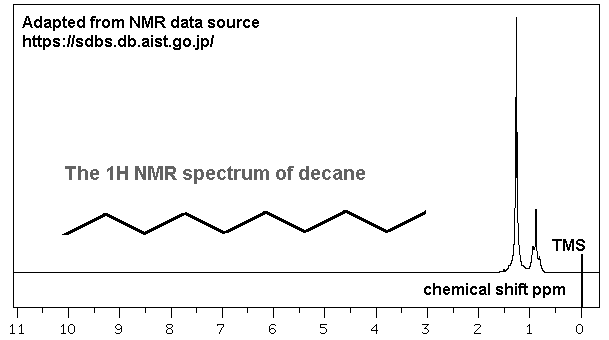
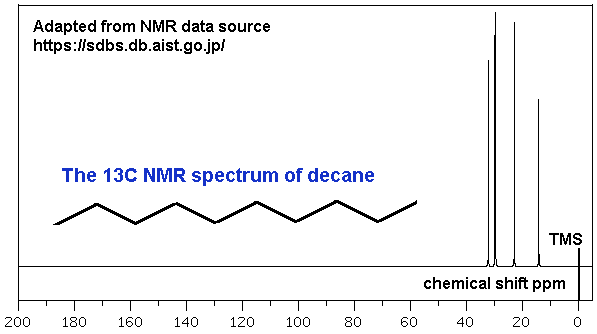
For linear and symmetrical decane you expect
five 13C NMR chemical shifts, but as you can see two
virtually overlap 29.59 and 29.89, but the prediction is
correct.
There is no asymmetric carbon tom in the
decane molecule, BUT contrast this with isomer (24)
3-ethyl-4-methylheptane.
Details of isomers based on a carbon chain of
nine (substituted
nonanes)
(2) 2-methylnonane,
CH3CH2CH2CH2CH2CH2CH2CH(CH3)2
skeletal formula

Number of low resolution
NMR chemical shift
δ
signal peaks: 9 1H
and 9 13C
(email
if disagree?)
(3) 3-methylnonane,
CH3CH2CH2CH2CH2CH2CH(CH3)CH2CH3
(R/S optical isomers, 3rd C3 is chiral)
skeletal formula

Number of low resolution
NMR chemical shift
δ
signal peaks: 10 1H
and 10 13C
(email
if disagree?)
No molecular symmetry, so maximum number of possible chemical
shifts.
The predicted number of NMR shifts based on the structural
formula assumes that there are no complications due to the presence of a chiral
carbon atom in the molecule, but this may not be so, see
NMR data note
and discussion of the
spectra of isomer (24).
(4) 4-methylnonane,
CH3CH2CH2CH2CH2CH(CH3)CH2CH2CH3
(R/S optical isomers, 4th C is chiral)
skeletal formula

Number of low resolution
NMR chemical shift
δ
signal peaks: 10 1H
and 10 13C
(email
if disagree?)
No molecular symmetry, so maximum number of possible
chemical shifts.
The predicted number of NMR shifts based on the structural
formula assumes that there are no complications due to the presence of a
chiral carbon atom in the molecule, but this may not be so, see
NMR data note
and discussion of the
spectra of isomer (24).
(5) 5-methylnonane,
CH3CH2CH2CH2CH(CH3)CH2CH2CH2CH3
(symmetrical molecule)
skeletal formula

Number of low resolution
NMR chemical shift
δ
signal peaks: 6 1H
and 6 13C
(email
if disagree?)
Quite symmetrical, so far less chemical shifts than the
maximum of 10.
Details of isomers based on a carbon chain of eight (substituted octanes)
(6) 3-ethyloctane, skeletal
formula,
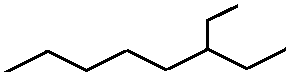
Number of low resolution
NMR chemical shift
δ
signal peaks: 8 1H
and 8 13C
(email
if disagree?)
(7) 4-ethyloctane, skeletal
formula,
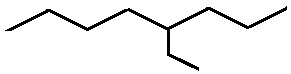
(R/S optical isomers, 4th
carbon C4 is chiral)
Number of low resolution
NMR chemical shift
δ
signal peaks: 10 1H
and 10 13C
(email
if disagree?)
No molecular symmetry, so maximum number of
possible chemical shifts.
The predicted number of NMR shifts based on
the structural formula assumes that there are no
complications due to the presence of a chiral carbon atom in
the molecule, but this may not be so, see
NMR data note and discussion of the
spectra of isomer (24).
(8) 2,2-dimethyloctane,
skeletal formula,
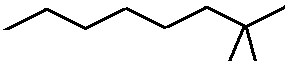
Number of low resolution
NMR chemical shift
δ
signal peaks: 7 1H
and 8 13C
(email
if disagree?)
(9)
2,3-dimethyloctane,
skeletal formula,
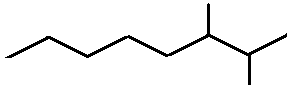
(R/S
optical isomers,
3rd carbon C is chiral)
Number of low resolution
NMR chemical shift
δ
signal peaks: 9 1H
and 9 13C
(email
if disagree?)
The predicted number of NMR shifts based on
the structural formula assumes that there are no
complications due to the presence of a chiral carbon atom in
the molecule, but this may not be so, see
NMR data note and discussion of the
spectra of isomer (24).
(10)
2,4-dimethyloctane,
skeletal formula,
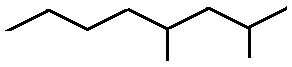
(R/S optical isomers, 4th atom C4 is chiral)
Number of low resolution
NMR chemical shift
δ
signal peaks: 9 1H
and 9 13C
(email
if disagree?)
The predicted number of NMR shifts based on
the structural formula assumes that there are no
complications due to the presence of a chiral carbon atom in
the molecule, but this may not be so, see
NMR data note and discussion of the
spectra of isomer (24).
(11)
2,5-dimethyloctane,
skeletal formula,

(R/S optical isomers, 5th
carbon C5 is chiral)
Number of low resolution
NMR chemical shift
δ
signal peaks: 9 1H
and 9 13C
(email
if disagree?)
The predicted number of NMR shifts based on
the structural formula assumes that there are no
complications due to the presence of a chiral carbon atom in
the molecule, but this may not be so, see
NMR data note and discussion of the
spectra of isomer (24).
(12)
2,6-dimethyloctane,
skeletal formula,

(R/S optical isomers, 6th
carbon C6 is chiral)
Number of low resolution
NMR chemical shift
δ
signal peaks: 9 1H
and 9 13C
(email
if disagree?)
The predicted number of NMR shifts based on
the structural formula assumes that there are no
complications due to the presence of a chiral carbon atom in
the molecule, but this may not be so, see
NMR data note and discussion of the
spectra of isomer (24).
(13) 2,7-dimethyloctane,
skeletal formula,
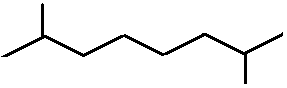
Number of low resolution
NMR chemical shift
δ
signal peaks: 4 1H
and 4 13C
(email
if disagree?)
Quite a symmetrical molecule, so a greatly
reduced number of NMR chemical shifts.
(14) 3,3-dimethyloctane,
skeletal formula,
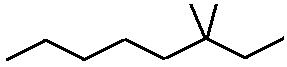
Number of low resolution
NMR chemical shift
δ
signal peaks: 8 1H
and 9 13C
(email
if disagree?)
(15) 3,4-dimethyloctane,
skeletal formula,

R/S optical isomers, 3rd and 4th carbon atoms,
C3 and C4, are chiral - complicated, university level analysis - no plane of symmetry in the
molecule, so four permutations of stereoisomers possible: RR', RS', SR' and
SS' because they are not equivalent chiral centres.
Number of low resolution
NMR chemical shift
δ
signal peaks: 10 1H
and 10 13C
(email
if disagree?)
No molecular symmetry, so maximum number of possible
chemical shifts.
The predicted number of NMR shifts based on the structural
formula assumes that there are no complications due to the presence of a
chiral carbon atom in the molecule, but this may not be so, see
NMR data note
and discussion of the
spectra of isomer (24).
(16) 3,5-dimethyloctane,
skeletal formula,
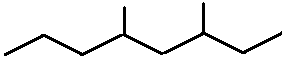
R/S optical isomers, 3rd and 5th
carbon
atoms, C3 and C5, are chiral - complicated, university level analysis - no plane of symmetry in the
molecule, so four permutations of stereoisomers possible: RR', RS', SR' and
SS' because they are not equivalent chiral centres.
Number of low resolution
NMR chemical shift
δ
signal peaks: 10 1H
and 10 13C
(email
if disagree?)
No molecular symmetry, so maximum number of possible
chemical shifts.
The predicted number of NMR shifts based on the structural
formula assumes that there are no complications due to the presence of a
chiral carbon atom in the molecule, but this may not be so, see
NMR data note
and discussion of the
spectra of isomer (24).
(17) 3,6-dimethyloctane,
skeletal formula,

R/S optical isomers, 3rd and 6th C
atoms are chiral, symmetrical molecule - plane of symmetry, so there are a pair of
R/S optical isomers (enantiomer) and a 3rd meso form stereoisomer - the
chiral centres are equivalent to each other.
Number of low resolution
NMR chemical shift
δ
signal peaks: 6 1H
and 6 13C
(email
if disagree?)
Symmetry reduces number of NMR chemical shifts.
The predicted number of NMR shifts based on the structural
formula assumes that there are no complications due to the presence of a
chiral carbon atom in the molecule, but this may not be so, see
NMR data note
and discussion of the
spectra of isomer (24).
(18) 4,4-dimethyloctane,
skeletal formula,
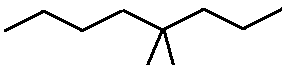
Number of low resolution
NMR chemical shift
δ
signal peaks: 5 1H
and 6 13C
(email
if disagree?)
Symmetry reduces number of NMR chemical
shifts.
(19) 4,5-dimethyloctane,
skeletal formula,
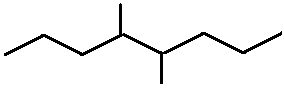
R/S optical isomers, 4th and 5th
carbon atoms, C4 and C5
atoms are chiral, symmetrical molecule - plane of symmetry, so there are a
pair of R/S optical isomers (enantiomer) and a 3rd meso form stereoisomer
because the chiral centres are equivalent to each other.
Number of low resolution
NMR chemical shift
δ
signal peaks: 7 1H
and 7 13C
(email
if disagree?)
The predicted number of NMR shifts based on the structural
formula assumes that there are no complications due to the presence of a
chiral carbon atom in the molecule, but this may not be so, see
NMR data note
and discussion of the
spectra of isomer (24).
Details of isomers based on a carbon chain of seven (substituted heptanes)
(20) 4-propylheptane, skeletal formula
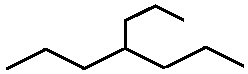
Number of low resolution
NMR chemical shift
δ
signal peaks: 7 1H
and 7 13C
(email
if disagree?)
(21) 4-(1-methylethyl)heptane or 4-isopropylheptane,
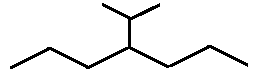
Number of low resolution
NMR chemical shift
δ
signal peaks: 6 1H
and 6 13C
(email
if disagree?)
Molecular symmetry reduces the number of NMR
chemical shifts.
(22) 3-ethyl-2-methylheptane, skeletal formula,
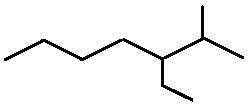
R/S optical isomers, 3rd
carbon atom C3 is chiral
Number of low resolution
NMR chemical shift
δ
signal peaks: 9 1H
and 9 13C
(email
if disagree?)
The predicted number of NMR shifts based on the structural
formula assumes that there are no complications due to the presence of a
chiral carbon atom in the molecule, but this may not be so, see
NMR data note
and discussion of the
spectra of isomer (24).
(23)
3-ethyl-3-methylheptane, skeletal formula,
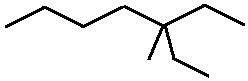
Number of low resolution
NMR chemical shift
δ
signal peaks: 7 1H
and 8 13C
(email
if disagree?)
(24)
3-ethyl-4-methylheptane, skeletal formula,
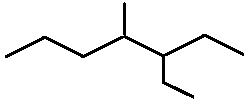
R/S optical isomers, 4th
carbon atom C4 is chiral
Number of low resolution
NMR chemical shift
δ
signal peaks: 8 1H
and 8 13C
(email
if disagree?)
You would expect a proton ratio of 3 : 2 : 2 : 1 :3 : 1 : 4(2+2)
: 6(3+3)
The predicted number of NMR shifts based on the structural
formula assumes that there are no complications due to the presence of a
chiral carbon atom in the molecule, but this may not be so, see
NMR data note
and discussion below.
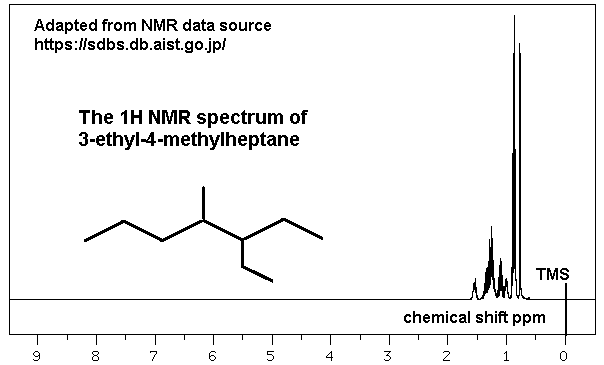
You can clearly see the clusters of peaks from the expected eight 1H
chemical shifts, and it is difficult to see if the prediction is correct,
but the source data did indicate eight signals, so the prediction seems ok
on the basis of the structural formula CH3CH2CH2CH(CH3)CH(CH2CH3)2.
However, the prediction of eight 13C NMR shifts is completely
wrong!
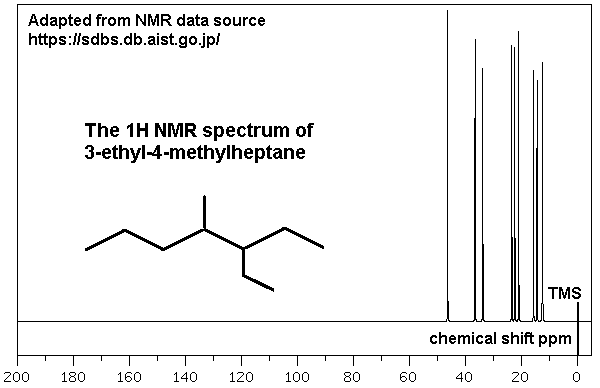
Structural formula: CH3CH2CH2CH(CH3)CH(CH2CH3)2.
(C chiral carbon)
Due to the chiral carbon atom, the asymmetry causes ALL of the carbon atoms
to be inequivalent in terms of their chemical environment, so you see 10
signals in the spectrum, rather than eight, though two overlap with each
other.
This discussion on the spectra of isomer (24) may apply to every isomer with
a chiral carbon in the molecule.
(25)
3-ethyl-5-methylheptane, skeletal formula,
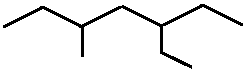
R/S optical isomers, 5th
carbon atom C5 is chiral (note ethyl comes before methyl, so C5 not C3).
Number of low resolution
NMR chemical shift
δ
signal peaks: 8 1H
and 8 13C
(email
if disagree?)
The predicted number of NMR shifts based on the structural
formula assumes that there are no complications due to the presence of a
chiral carbon atom in the molecule, but this may not be so, see
NMR data note
and discussion of the
spectra of isomer (24).
(26) 4-ethyl-2-methylheptane, skeletal formula,
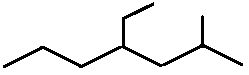
R/S optical isomers, 4th
carbon atom C4 is chiral.
Number of low resolution
NMR chemical shift
δ
signal peaks: 9 1H
and 9 13C
(email
if disagree?)
The predicted number of NMR shifts based on the structural
formula assumes that there are no complications due to the presence of a
chiral carbon atom in the molecule, but this may not be so, see
NMR data note
and discussion of the
spectra of isomer (24).
(27) 4-ethyl-3-methylheptane, skeletal formula,
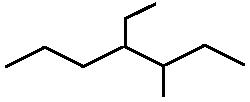
R/S optical isomers, 3rd and 4th C
atoms are chiral, no plane of symmetry - complicated, university level analysis - no plane of symmetry in the
molecule, so four permutations of stereoisomers possible: RR', RS', SR' and
SS' because the chiral centres are not equivalent.
Number of low resolution
NMR chemical shift
δ
signal peaks: 10 1H
and 10 13C
(email
if disagree?)
No molecular plane of symmetry, maximum number of possible
NMR chemical shifts.
The predicted number of NMR shifts based on the structural
formula assumes that there are no complications due to the presence of a
chiral carbon atom in the molecule, but this may not be so, see
NMR data note
and discussion of the
spectra of isomer (24).
(28) 4-ethyl-4-methylheptane, skeletal formula,
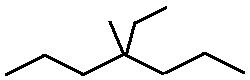
Number of low resolution
NMR chemical shift
δ
signal peaks: 6 1H
and 7 13C
(email
if disagree?)
(29) 5-ethyl-2-methylheptane, skeletal formula,
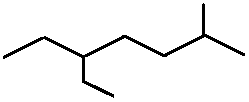
R/S optical isomers, 5th
carbon atom C5 is chiral.
Number of low resolution
NMR chemical shift
δ
signal peaks: 7 1H
and 7 13C
(email
if disagree?)
The predicted number of NMR shifts based on the structural
formula assumes that there are no complications due to the presence of a
chiral carbon atom in the molecule, but this may not be so, see
NMR data note
and discussion of the
spectra of isomer (24).
(30)
2,2,3-trimethylheptane, skeletal formula,
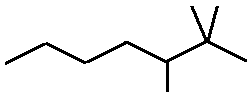
R/S optical isomers, 3rd
carbon atom C3 is chiral.
Number of low resolution
NMR chemical shift
δ
signal peaks: 7 1H
and 8 13C
(email
if disagree?)
The predicted number of NMR shifts based on the structural
formula assumes that there are no complications due to the presence of a
chiral carbon atom in the molecule, but this may not be so, see
NMR data note
and discussion of the
spectra of isomer (24).
(31)
2,2,4-trimethylheptane, skeletal formula,
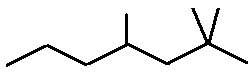
R/S optical isomers, 4th C atom chiral.
Number of low resolution
NMR chemical shift
δ
signal peaks: 7 1H
and 8 13C
(email
if disagree?)
The predicted number of NMR shifts based on
the structural formula assumes that there are no
complications due to the presence of a chiral carbon atom in
the molecule, but this may not be so, see
NMR data note and discussion of the
spectra of isomer (24).
(32) 2,2,5-trimethylheptane, skeletal formula,

R/S optical isomers, 5th C atom chiral.
Number of low resolution
NMR chemical shift
δ
signal peaks: 7 1H
and 8 13C
(email
if disagree?)
The predicted number of NMR shifts based on
the structural formula assumes that there are no
complications due to the presence of a chiral carbon atom in
the molecule, but this may not be so, see
NMR data note and discussion of the
spectra of isomer (24).
(33) 2,2,6-trimethylheptane, skeletal formula,
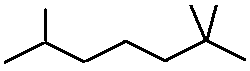
Number of low resolution
NMR chemical shift
δ
signal peaks: 6 1H
and 7 13C
(email
if disagree?)
(34)
2,3,3-trimethylheptane, skeletal formula,
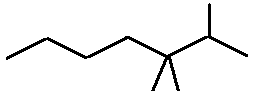
Number of low resolution
NMR chemical shift
δ
signal peaks: 7 1H
and 8 13C
(email
if disagree?)
(35) 2,3,4-trimethylheptane, skeletal formula,
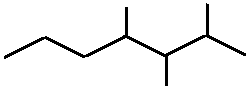
R/S optical isomers, 3rd and 4th C atoms
are chiral, no plane of symmetry - complicated, university level analysis - no plane of symmetry in the
molecule, so four permutations of stereoisomers possible: RR', RS', SR' and
SS' because the chiral centres are not equivalent to each other.
Number of low resolution
NMR chemical shift
δ
signal peaks: 9 1H
and 9 13C
(email
if disagree?)
Low symmetry, nearly the maximum number of NMR chemical
shifts possible.
The predicted number of NMR shifts based on the structural
formula assumes that there are no complications due to the presence of a
chiral carbon atom in the molecule, but this may not be so, see
NMR data note
and discussion of the
spectra of isomer (24).
(36) 2,3,5-trimethylheptane, skeletal formula,
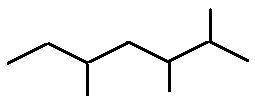
R/S optical isomers, 3rd and 5th C atoms
are chiral, no plane of symmetry - complicated, university level analysis - no plane of symmetry in the
molecule, so four permutations of stereoisomers possible: RR', RS', SR' and
SS' because the chiral centres are not equivalent to each other.
Number of low resolution
NMR chemical shift
δ
signal peaks: 9 1H
and 9 13C
(email
if disagree?)
Low symmetry, nearly the maximum number of NMR chemical
shifts possible.
The predicted number of NMR shifts based on the structural
formula assumes that there are no complications due to the presence of a
chiral carbon atom in the molecule, but this may not be so, see
NMR data note
and discussion of the
spectra of isomer (24).
(37) 2,3,6-trimethylheptane, skeletal formula,
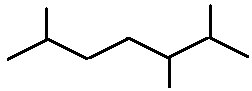
R/S optical isomers, 3rd C3 atom is chiral.
Number of low resolution
NMR chemical shift
δ
signal peaks: 8 1H
and 8 13C
(email
if disagree?)
The predicted number of NMR shifts based on the structural
formula assumes that there are no complications due to the presence of a
chiral carbon atom in the molecule, but this may not be so, see
NMR data note
and discussion of the
spectra of isomer (24).
(38)
2,4,4-trimethylheptane, skeletal formula,
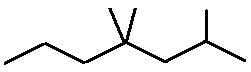
Number of low resolution
NMR chemical shift
δ
signal peaks: 7 1H
and 8 13C
(email
if disagree?)
(39) 2,4,5-trimethylheptane, skeletal formula,
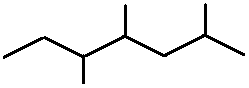
R/S optical isomers, 4th and 5th C atoms
are chiral, no plane of symmetry - complicated, university level analysis - no plane of symmetry in the
molecule, so four permutations of stereoisomers possible: RR', RS', SR' and
SS' because the chiral centres are not equivalent to each other.
Number of low resolution
NMR chemical shift
δ
signal peaks: 9 1H
and 9 13C
(email
if disagree?)
Low symmetry, nearly the maximum number of NMR chemical
shifts possible.
The predicted number of NMR shifts based on the structural
formula assumes that there are no complications due to the presence of a
chiral carbon atom in the molecule, but this may not be so, see
NMR data note
and discussion of the
spectra of isomer (24).
(40) 2,4,6-trimethylheptane, skeletal formula,
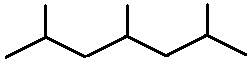
Number of low resolution
NMR chemical shift
δ
signal peaks: 5 1H
and 5 13C
(email
if disagree?)
Very symmetrical, so number of chemical shifts possible is
halved.
(41) 2,5,5-trimethylheptane, skeletal formula,
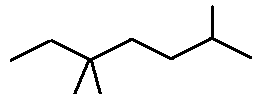
Number of low resolution
NMR chemical shift
δ
signal peaks: 7 1H
and 8 13C
(email
if disagree?)
(42) 3,3,4-trimethylheptane, skeletal formula,
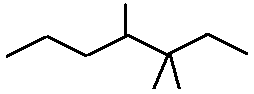
R/S optical isomers, 4th C atom is chiral.
Number of low resolution
NMR chemical shift
δ
signal peaks: 8 1H
and 9 13C
(email
if disagree?)
The predicted number of NMR shifts based on the structural
formula assumes that there are no complications due to the presence of a
chiral carbon atom in the molecule, but this may not be so, see
NMR data note
and discussion of the
spectra of isomer (24).
(43) 3,3,5-trimethylheptane, skeletal formula,
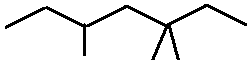
R/S optical isomers, 5th C atom is chiral.
Number of low resolution
NMR chemical shift
δ
signal peaks: 8 1H
and 9 13C
(email
if disagree?)
The predicted number of NMR shifts based on the structural
formula assumes that there are no complications due to the presence of a
chiral carbon atom in the molecule, but this may not be so, see
NMR data note
and discussion of the
spectra of isomer (24).
(44) 3,4,4-trimethylheptane, skeletal formula,
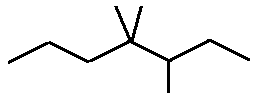
R/S optical isomers, 3rd C atom is chiral.
Number of low resolution
NMR chemical shift
δ
signal peaks: 8 1H
and 9 13C
(email
if disagree?)
The predicted number of NMR shifts based on the structural
formula assumes that there are no complications due to the presence of a
chiral carbon atom in the molecule, but this may not be so, see
NMR data note
and discussion of the
spectra of isomer (24).
(45) 3,4,5-trimethylheptane, skeletal formula,
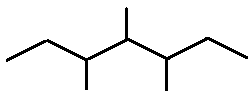
Number of low resolution
NMR chemical shift
δ
signal peaks: 6 1H
and 6 13C
(email
if disagree?)
Molecular symmetry significantly reduces the
number of NMR chemical shifts.
Details of isomers based on a carbon chain of six (substituted hexanes)
(46) 2-methyl-3-(1-methylethyl)hexane or
3-isopropyl-2-methylhexane,
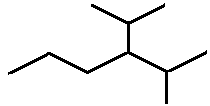
Number of low resolution
NMR chemical shift
δ
signal peaks: 6 1H
and 6 13C
(email
if disagree?)
Molecular symmetry significantly reduces the
number of NMR chemical shifts.
(47) 3,3-diethylhexane, skeletal formula,
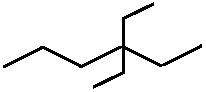
Number of low resolution
NMR chemical shift
δ
signal peaks: 6 1H
and 6 13C
(email
if disagree?)
Molecular symmetry significantly reduces the
number of NMR chemical shifts.
(48) 3,4-diethylhexane, skeletal formula,

Some images
included for isomers (49)
to (57) were originally done for my
alkanes nomenclature page, but the skeletal formula have
been also in my new isomer image database. However, they are
handy to show examples of how to write the abbreviated-condensed
formula.
Number of low resolution
NMR chemical shift
δ
signal peaks: 3 1H
and 3 13C
(email
if disagree?)
High molecular symmetry significantly
reduces the number of NMR chemical shifts to 3 versus the
maximum of 10 for some isomers!.
The predicted number of NMR shifts based on
the structural formula assumes that there are no
complications due to the presence of a chiral carbon atom in
the molecule, but this may not be so, see
NMR data note and discussion of the
spectra of isomer (24).
(49) 3-ethyl-2,2-dimethylhexane ,
 , ,

R/S optical isomers,
3rd C is chiral,
skeletal formula
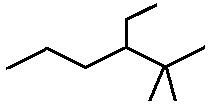
Number of low resolution
NMR chemical shift
δ
signal peaks: 7 1H
and 8 13C
(email
if disagree?)
The predicted number of NMR shifts based on the structural
formula assumes that there are no complications due to the presence of a
chiral carbon atom in the molecule, but this may not be so, see
NMR data note
and discussion of the
spectra of isomer (24).
(50) 3-ethyl-2,3-dimethylhexane ,
 , ,

R/S optical isomers ,
3rd C is chiral,
skeletal formula
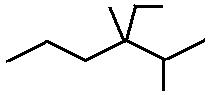
Number of low resolution
NMR chemical shift
δ
signal peaks: 8 1H
and 9 13C
(email
if disagree?)
The predicted number of NMR shifts based on the structural
formula assumes that there are no complications due to the presence of a
chiral carbon atom in the molecule, but this may not be so, see
NMR data note
and discussion of the
spectra of isomer (24).
(51) 3-ethyl-2,4-dimethylhexane ,
 , ,

R/S optical isomers,
3rd and 4th C are chiral, skeletal formula, skeletal formula
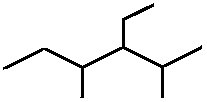
Number of low resolution
NMR chemical shift
δ
signal peaks: 9 1H
and 9 13C
(email
if disagree?)
Low symmetry, so nearly the maximum possible NMR chemical
shifts.
(52) 3-ethyl-2,5-dimethylhexane ,
 ,
,

R/S optical isomers,
3rd C is chiral,
skeletal formula
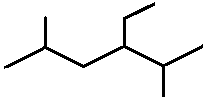
Number of low resolution
NMR chemical shift
δ
signal peaks: 8 1H
and 8 13C
(email
if disagree?)
The predicted number of NMR shifts based on the structural
formula assumes that there are no complications due to the presence of a
chiral carbon atom in the molecule, but this may not be so, see
NMR data note
and discussion of the
spectra of isomer (24).
(53)
3-ethyl-3,4-dimethylhexane, skeletal formula,
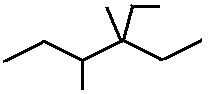
Number of low resolution
NMR chemical shift
δ
signal peaks: 7 1H
and 8 13C
(email
if disagree?)
(54) 4-ethyl-2,2-dimethylhexane ,
 , ,

skeletal formula
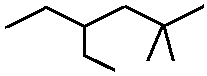
Number of low resolution
NMR chemical shift
δ
signal peaks: 6 1H
and 7 13C
(email
if disagree?)
(55) 4-ethyl-2,3-dimethylhexane ,
 , ,

R/S optical
isomers,
3rd C3 is chiral,
skeletal formula,
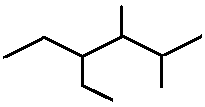
Number of low resolution
NMR chemical shift
δ
signal peaks: 7 1H
and 7 13C
(email
if disagree?)
The predicted number of NMR shifts based on the
structural formula assumes that there are no complications due
to the presence of a chiral carbon atom in the molecule, but
this may not be so, see
NMR data note and discussion of
the
spectra of isomer (24).
(56)
4-ethyl-2,4-dimethylhexane, skeletal formula,
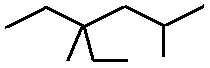
Number of low resolution
NMR chemical shift
δ
signal peaks: 8 1H
and 9 13C
(email
if disagree?)
(57) 4-ethyl-3,3-dimethylhexane,
 ,
,
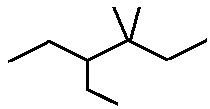
Abbreviated-condensed molecular formula and skeletal formula.
Number of low resolution
NMR chemical shift
δ
signal peaks: 6 1H
and 7 13C
(email
if disagree?)
(58) 2,2,3,3-tetramethylhexane, skeletal
formula,
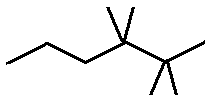
Number of low resolution
NMR chemical shift
δ
signal peaks: 5 1H
and 7 13C
(email
if disagree?)
(59) 2,2,3,4-tetramethylhexane, skeletal
formula,
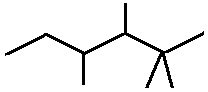
R/S optical isomers, carbon atoms 3 and 4 are chiral,
no plane of symmetry - complicated, university level analysis - no plane of symmetry in the
molecule, so four permutations of stereoisomers possible: RR', RS', SR' and
SS' because the chiral centres are equivalent to each other.
Number of low resolution
NMR chemical shift
δ
signal peaks: 7 1H
and 8 13C
(email
if disagree?)
The predicted number of NMR shifts based on the
structural formula assumes that there are no complications due
to the presence of a chiral carbon atom in the molecule, but
this may not be so, see
NMR data note and discussion of
the
spectra of isomer (24).
(60) 2,2,3,5-tetramethylhexane, skeletal
formula,
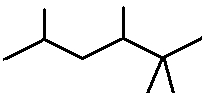
R/S optical isomers, carbon atom C3 is chiral.
Number of low resolution
NMR chemical shift
δ
signal peaks: 6 1H
and 7 13C
(email
if disagree?)
The predicted number of NMR shifts based on
the structural formula assumes that there are no
complications due to the presence of a chiral carbon atom in
the molecule, but this may not be so, see
NMR data note and discussion of the
spectra of isomer (24).
(61) 2,2,4,4-tetramethylhexane, skeletal
formula,
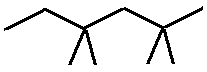
Number of low resolution
NMR chemical shift
δ
signal peaks: 5 1H
and 7 13C
(email
if disagree?)
(62) 2,2,4,5-tetramethylhexane, skeletal
formula,

R/S optical isomers, carbon atom C4 is chiral.
Number of low resolution
NMR chemical shift
δ
signal peaks: 6 1H
and 7 13C
(email
if disagree?)
The predicted number of NMR shifts based on
the structural formula assumes that there are no
complications due to the presence of a chiral carbon atom in
the molecule, but this may not be so, see
NMR data note and discussion of the
spectra of isomer (24).
(63) 2,2,5,5-tetramethylhexane, skeletal
formula,
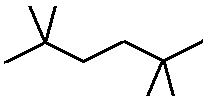
Number of low resolution
NMR chemical shift
δ
signal peaks: 2 1H
and 3 13C
(email
if disagree?)
Very high symmetry, greatly reduces the
possible number of NMR chemical shifts.
(64) 2,3,3,4-tetramethylhexane, skeletal
formula,
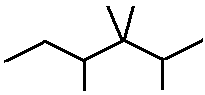
R/S optical isomers, carbon atom 4 is chiral
Number of low resolution
NMR chemical shift
δ
signal peaks: 7 1H
and 8 13C
(email
if disagree?)
The predicted number of NMR shifts based on
the structural formula assumes that there are no
complications due to the presence of a chiral carbon atom in
the molecule, but this may not be so, see
NMR data note and discussion of the
spectra of isomer (24).
(65) 2,3,3,5-tetramethylhexane, skeletal
formula,
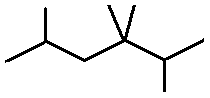
Number of low resolution
NMR chemical shift
δ
signal peaks: 6 1H
and 7 13C
(email
if disagree?)
(66) 2,3,4,4-tetramethylhexane, skeletal
formula,
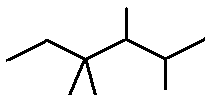
R/S optical isomers, carbon atom 3 is chiral.
Number of low resolution
NMR chemical shift
δ
signal peaks: 7 1H
and 8 13C
(email
if disagree?)
(67) 2,3,4,5-tetramethylhexane, skeletal
formula,
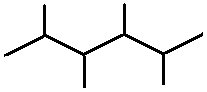
R/S optical isomers, carbon atoms 3 and 4
are chiral,
symmetrical molecule - plane
of symmetry, so there are a pair of R/S optical isomers
(enantiomer) and a 3rd meso form stereoisomer because the
chiral centres are equivalent to each other because of the
molecular symmetry.
High symmetry, greatly reduces the possible
number of NMR chemical shifts.
The predicted number of NMR shifts based on
the structural formula assumes that there are no
complications due to the presence of a chiral carbon atom in
the molecule, but this may not be so, see
NMR data note and discussion of the
spectra of isomer (24).
(68) 3,3,4,4-tetramethylhexane, skeletal
formula,
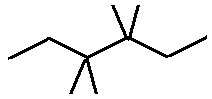
Number of low resolution
NMR chemical shift
δ
signal peaks: 3 1H
and 4 13C
(email
if disagree?)
Very high symmetry, greatly reduces the
possible number of NMR chemical shifts.
Details of isomers based on a carbon chain of
five (substituted pentanes)
(69) 2,4-dimethyl-3-(1-methylethyl)pentane
or 3-isopropyl-2,4-dimethylpentane
skeletal formula,
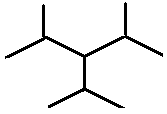
Number of low resolution
NMR chemical shift
δ
signal peaks: 3 1H
and 3 13C
(email
if disagree?)
Very high symmetry, greatly reduces the
possible number of NMR chemical shifts.
(70) 3,3-diethyl-2-methylpentane, skeletal
formula,
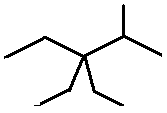
Number of low resolution
NMR chemical shift
δ
signal peaks: 4 1H
and 5 13C
(email
if disagree?)
High symmetry, greatly reduces the possible
number of NMR chemical shifts.
(71) 3-ethyl-2,2,3-trimethylpentane,
skeletal formula,
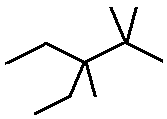
Number of low resolution
NMR chemical shift
δ
signal peaks: 3 1H
and 5 13C
(email
if disagree?)
Very high symmetry, greatly reduces the
possible number of NMR chemical shifts.
(72) 3-ethyl-2,2,4-trimethylpentane,
skeletal formula,
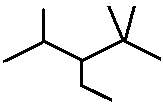
R/S optical isomers, carbon atom C3 is chiral.
Number of low resolution
NMR chemical shift
δ
signal peaks: 6 1H
and 7 13C
(email
if disagree?)
High symmetry, greatly reduces the possible
number of NMR chemical shifts.
The predicted number of NMR shifts based on
the structural formula assumes that there are no
complications due to the presence of a chiral carbon atom in
the molecule, but this may not be so, see
NMR data note and discussion of the
spectra of isomer (24).
(73) 3-ethyl-2,3,4-trimethylpentane,
skeletal formula,
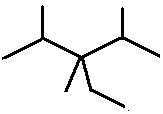
Number of low resolution
NMR chemical shift
δ
signal peaks: 6 1H
and 8 13C
(email
if disagree?)
Symmetry reduces the possible number of NMR
chemical shifts.
(74) 2,2,3,3,4-pentamethylpentane,
skeletal formula,
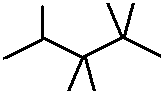
Number of low resolution
NMR chemical shift
δ
signal peaks: 5 1H
and 7 13C
(email
if disagree?)
Moderately high symmetry, greatly reduces
the possible number of NMR chemical shifts.
(75) 2,2,3,4,4-pentamethylpentane,
skeletal formula,
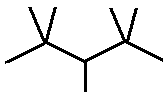
Number of low resolution
NMR chemical shift
δ
signal peaks: 3 1H
and 4 13C
(email
if disagree?)
High symmetry, greatly reduces the possible
number of NMR chemical shifts.
(3)
EXTRA NOTES on isomers of
C10H22
Alkane isomers of molecular
formula
C10H22
(decane) are primarily used as fuels, solvents, and chemical feedstocks,
with their applications shaped by branching and boiling point differences.
Straight-chain decane is
favoured for combustion, while branched isomers serve in specialized fuels
and industrial formulations.
Overview of
C10H22
Isomers
C10H22
represents the molecular formula for decane, a saturated
hydrocarbon with 75 known structural isomers. These include:
-
n-Decane: Straight-chain structure
-
Branched isomers: e.g., 2-methylnonane,
3-ethyl-2-methyloctane, etc. some of which exhibit R/S optical isomerism.
Each isomer shares the same molecular formula but differs in
structure, affecting physical properties like boiling point, density, and
combustion behaviour.
Physical and Chemical Properties Comparison
for isomers of C10H22
|
Property |
n-Decane
(Straight-chain) |
Branched Isomers |
|
Boiling Point |
~174 °C |
Lower (due to
branching) |
|
Density |
~0.73 g/mL |
Slightly lower |
|
Combustion Efficiency |
High |
Moderate to high |
|
Volatility |
Lower |
Higher |
|
Surface Area |
Larger |
Smaller |
Applications by isomer Type
for isomers of C10H22
1.
n-Decane (Straight-chain)
-
Jet fuel & diesel additive: High energy
density and clean combustion make it suitable for aviation and transport
fuels.
-
Combustion research: Used as a model
compound to study hydrocarbon combustion kinetics.
-
Solvent: Effective in organic synthesis and
industrial degreasing due to its non-polar nature.
-
See boiling point and octane number data table
2.
Branched Isomers
-
Gasoline blending: Branched isomers have
higher octane ratings, reducing engine knocking.
-
Specialty fuels: Used in racing fuels and
high-performance engines.
-
Chemical intermediates: Serve as precursors
in the synthesis of surfactants, lubricants, and plasticizers.
-
See boiling point and octane number data table
Comparative insights
for isomers of C10H22
-
Boiling Point & Volatility: Branched
isomers boil at lower temperatures, making them more volatile and suitable
for gasoline applications.
-
Octane Rating: Branching increases octane
number, enhancing anti-knock properties in internal combustion engines.
-
Combustion Profile: n-Decane burns more
uniformly, ideal for controlled combustion studies and diesel fuels.
-
See boiling point and octane number data table
Industrial and Environmental Considerations
for isomers of C10H22
-
Fractional Distillation:
C10H22 isomers
are separated from crude oil via fractional distillation, with applications
determined by boiling point and volatility.
-
Environmental Impact: Combustion releases
CO2; thus, branched isomers with cleaner burn profiles are
preferred in regulated fuel blends.
Data table of selected C10H22
alkane isomers, their boiling points and octane
numbers
-
n‑Decane
has the highest
boiling point and
lowest octane
number.
-
Moderately
branched isomers
show lower bpt
and moderate
RON.
-
Highly branched
isomers
(trimethylheptanes, tetramethylhexanes) have
very high RON,
often approaching
100, which is
similar to the RON standard of iso-octane (C8H18,
RON 100).
Comments based on the data table
1. Boiling
point decreases with branching
Branching reduces
surface area → weaker London forces → lower b.p.
2. Octane
number increases with branching
Highly branched
alkanes resist auto‑ignition → better anti‑knock
behaviour.
The RON trend 2 is
more significant than the bpt. trend 1.
3.
Petrol blends use
branched alkanes because they:
-
burn smoothly
-
resist knocking
-
improve engine
efficiency
Straight‑chain alkanes
(like n‑decane) are poor fuels in
spark‑ignition engines due to low RON.
|
(4)
Learning objectives - questions to be answered?
Can you IUPAC name these
C10H22 isomers?
Can you deduce the number of principal 1H chemical
shifts and proton ratio you would expect to see in the NMR spectrum of
these
C10H22
isomers?
Can you deduce the number of principal 13C chemical
shifts you would expect to see in the NMR spectrum of these
C10H22
isomers?
How many isomers are there of
molecular formula C10H22?
How do you work out the structure
of the isomers of molecular formula C10H22?
How do you draw the constitutional-structural
formula of the isomers of molecular formula
C10H22?
How do you draw the skeletal formula of the isomers of molecular formula
C10H22?
How do you name the isomers of molecular formula
C10H22?
How many aliphatic structural
isomers are there of molecular formula C10H22?
How many aliphatic carbon chain
isomers are there of molecular formula C10H22?
How many positional isomers are
there of molecular formula C10H22?
Does C10H22 have any stereoisomers?
Are there any E/Z (geometrical) or
RS (optical) stereoisomers (enantiomers) of C10H22?
Are there any aliphatic open chain
alkene isomers of molecular formula C10H22?
Are there any alkane/cycloalkane isomers of
molecular formula C10H22?
Are there any alkene/cycloalkene/diene/alkyne isomers of
molecular formula C10H22?
Are there any alicyclic cycloalkane
isomers of molecular formula C10H22?
Are there any functional group
isomers with a molecular formula C10H22?
This page will answer these questions for molecular formula C10H22
(5) Practise exam questions
|
Practise exam questions
based on isomers of molecular formula
the isomers of C10H22
Jot
down your responses
with explanations!
ANSWERS
to the questions based on the
isomers of
C10H22
If you think there are
any errors, please email me asap at
chem55555@hotmail.com
I don't mind if students/teachers do a selected printout
of these questions and answers.
Given these six selected isomers of molecular formula
C10H20
....
Q1 Name isomers A to
E with
a correct IUPAC name (F is university level
nomenclature, but very pretty!)
Q2
Which of A to F can exhibit R/S (optical) isomerism, and
which carbon atoms are a chiral centre?
Q3
(a) Which
of A to F is likely to have the highest boiling point
and the lowest boiling point?
(b)
Which of A to F is likely to have the highest octane
number and the lowest octane number?
(c)
If an isomer has R/S ('optical') isomers, is
there likely to be any difference in their boiling point
or octane numbers?
Q4
Predict the expected numbers of principal 1H
AND 13C chemical shifts you would expect to
observe in the NMR spectra of molecules A, C and F. Give
the expected integrated proton ratios.
ANSWERS
to the questions based on the
isomers of
C10H22
If you think there are
any errors, please email me asap at
chem55555@hotmail.com
I don't mind if students/teachers do a selected printout
of these questions and answers.
|
Associated organic chemistry links
Advanced Level pre-university
organic chemistry notes
IR, mass and H-1 & C-13 NMR
spectra of organic compounds
Examples of effects of isomerism: The similarity or difference
in the physical & chemical properties of structural isomers
Index of sets of isomers for a given
molecular formula
The molecular structure and
naming of ALKANES
Index of revision notes
on the chemistry of ALKANES and the petrochemical
industry
Isomerism: introduction, structural isomerism - chain,
positional, functional group, tautomerism
Stereoisomerism:
introduction, definition,
priority rules, E/Z isomerism (cis/trans isomerism)
Stereoisomerism - R/S isomerism (optical
isomerism) -
definition - examples explained
This is a big chemistry website, please allow time
to explore it

|
Website content © Dr
Phil Brown 2000+. All copyrights reserved on revision notes, images,
quizzes, worksheets etc. Copying of Doc Brown's pre-university
advanced level chemistry website material is NOT
permitted. Exam revision summaries & references to science course specifications
are unofficial. These organic chemistry revision notes on
isomerism are
suitable for use of pre-university students studying AQA advanced level
chemistry constitutional isomers of C10H22, Edexcel advanced level
chemistry constitutional isomers of C10H22, OCR advanced level
chemistry constitutional isomers of C10H22, IB advanced level
chemistry constitutional isomers of C10H22, WJEC (Eduqas) advanced
level chemistry constitutional isomers of C10H22, CIE Cambridge advanced level chemistry
constitutional isomers of C10H22, US grade 11-12 AP honors
chemistry courses constitutional isomers of C10H22 and they will also prove useful to
1st year undergraduate students of chemistry including
constitutional isomers of C10H22. |
Keywords or phrases: how many isomers are
there of molecular formula C10H22? how do you name the isomers of
molecular formula C10H22? what is the molecular structure of the
isomers of C10H22, what type of isomerism is exhibited by molecules
of formula C10H22, how do you work out the isomers of molecular
formula C10H22, what are the structural isomers of C10H22, the carbon chain
isomers of C10H22 in the homologous series of alkanes, comparing
the spectra of isomers of molecular formula C10H22 how many structural isomers of C10H22 can
you draw? how many structural isomers does C10H22 have? what are
the possible isomers of C10H22? revision notes on isomerism of
C10H22 molecules R/S
optical isomers enantiomers of C10H22,
isomers of C10H22 of molecular mass 142
open carbon chain aliphatic alkane molecules isomeric of molecular formula
C10H22,
hydrocarbon molecules isomeric with molecular formula C10H22, structural isomers of molecular
formula C10H22, optical isomers R/S enantiomers isomeric with molecular
formula C10H22, positional isomers isomeric with molecular formula
C10H22,
which types of isomerism are exhibited by molecules isomeric with
molecular formula C10H22 alkyl positional isomers of C10H22 branched
carbon chain alkane isomers of C10H22
cycloalkane molecules isomeric of molecular formula C10H22,
cycloalkane molecules isomeric with molecular formula C10H22, structural isomers of molecular
formula C10H22, optical isomers R/S enantiomers isomeric with molecular
formula C10H22, positional isomers isomeric with molecular formula
C10H22,
which types of isomerism are exhibited by molecules isomeric with
molecular formula C10H22 alkyl positional isomers of C10H22 branched
carbon chain cycloalkane isomers of molecular formula C10H22
cycloalkene molecules isomeric of molecular formula
C10H22,
cycloalkene molecules isomeric with molecular formula C10H22, structural isomers of molecular
formula C10H22, optical isomers R/S enantiomers isomeric with molecular
formula C10H22, positional isomers isomeric with molecular formula
C10H22,
which types of isomerism are exhibited by molecules isomeric with
molecular formula C10H22 alkyl positional isomers of C10H22
cycloalkenes branched carbon chain cycloalkene isomers of
molecular formula C10H22 open carbon chain aliphatic alkane molecules isomeric of molecular formula
C10H22,
hydrocarbon molecules isomeric with molecular formula C10H22, structural isomers of molecular
formula C10H22, optical isomers R/S enantiomers isomeric with molecular
formula C10H22, positional isomers isomeric with molecular formula
C10H22,
which types of isomerism are exhibited by molecules isomeric with
molecular formula C10H22 alkyl positional isomers of C10H22 branched
carbon chain alkane isomers of C10H22
cycloalkane molecules isomeric of molecular formula C10H22,
cycloalkane molecules isomeric with molecular formula C10H22, structural isomers of molecular
formula C10H22, optical isomers R/S enantiomers isomeric with molecular
formula C10H22, positional isomers isomeric with molecular formula
C10H22,
which types of isomerism are exhibited by molecules isomeric with
molecular formula C10H22 alkyl positional isomers of C10H22 branched
carbon chain cycloalkane isomers of molecular formula C10H22
cycloalkene molecules isomeric of molecular formula C10H22,
cycloalkene molecules isomeric with molecular formula C10H22, structural isomers of molecular
formula C10H22, optical isomers R/S enantiomers isomeric with molecular
formula C10H22, positional isomers isomeric with molecular formula
C10H22,
which types of isomerism are exhibited by molecules isomeric with
molecular formula C10H22 alkyl positional isomers of C10H22
cycloalkenes branched carbon chain cycloalkene isomers of
molecular formula C10H22
|
ANSWERS
Practise exam questions
based on isomers of molecular formula
the isomers of C10H22
If you think there are
any errors, please email me asap at
chem55555@hotmail.com
I don't mind if students/teachers do a selected printout
of these questions and answers.
Given these six selected isomers of molecular formula
C10H20
....
Q1 Name isomers A to
E with
a correct IUPAC name (F is university level
nomenclature, but very pretty!)
ANSWERS
A
decane,
B
3-methylnonane,
C 3-ethyloctane,
D
3,3,4-triimethylheptane (A-D should be OK)
E
3-ethyl-2,5-dimethylhexane
(a tricky one!),
F
2,4-dimethyl-3-(1-methylethyl)pentane (impossible!)
Q2
Which of A to F can exhibit R/S (optical) isomerism, and
which carbon atoms are a chiral centre?
ANSWERS:
Isomers B (C3), D (C4), and E (C3)
To be a chiral centre for R/S isomerism, there must
be four different atoms/groups attached to what becomes
an asymmetric carbon atom.
Q3
(a) Which
of A to F is likely to have the highest boiling point
and the lowest boiling point?
(b)
Which of A to F is likely to have the highest octane
number and the lowest octane number?
(c)
If an isomer has R/S ('optical') isomers, is
there likely to be any difference in their boiling point
or octane numbers?
ANSWERS
(a)
A
is most likely to have the highest boiling point and
F
the lowest boiling point. The linear A is less compact
than F, increasing the molecular surface area (more
polarizable), so increasing the intermolecular bonding
forces, so higher KE needed. Reverse argument for F. A
bpt 174oC, F bpt ~138oC.
(b)
You would expect
F to
have the lowest octane number (RON) than A. The more
branched molecules are more compact and far less prone
to premature ignition ('knocking') in a car engine.
A octane number is 15-20 and F octane number 90-100
(c)
NO,
under most circumstances, there is no difference in the
physical and chemical properties of he R/S isomers
Note: D and E are also quite branched and would have
lower boiling points and higher octane numbers than the
less branched than A, B and C.
For more on octane numbers see
Alkanes 1.5
Modification of hydrocarbon fuel
mixtures, global warming-climate change and alternative fuels
Alcohols 4.4
Enthalpies of combustion, use as fuels,
octane numbers
Q4
Predict the expected numbers of principal 1H
AND 13C chemical shifts you would expect to
observe in the NMR spectra of molecules A, C and F. Give
the expected integrated proton ratios.
ANSWERS
A
5 1H
and 5 13C, expected proton ratio: 6 : 4 : 4 : 4 : 4
(symmetrical molecule, 2 x CH3CH2CH2CH2CH2
C
8 1H
and 8 13C, expected proton ratio: 3 : 2 : 2 : 2 : 2 :
1 : 4 : 6 (from left to right)
F 3 1H
and 4 13C, expected proton ratio: 18 : 1 : 3 (6 x CH3
: CH : CH3)
If you think there are
any errors, please email me asap at
chem55555@hotmail.com
I don't mind if students/teachers do a selected printout
of these questions and answers.
|
|
