|
28. The famous London store of Fortnum & Mason Cameo Snapshot Images of the City of London A history of Fortnum and Masons and illustrations below Fortnum & Mason (Fortnum's) is a department store in central London, with an additional smaller stores at St Pancras railway station, Heathrow T5, Dubai and various stockists worldwide. Fortnum & Mason's headquarters is on Piccadilly, where it was established in 1707 by William Fortnum and Hugh Mason. Fortnum & Mason's is a privately owned company by Wittington Investments Ltd. Fortnum & Mason is recognised internationally for its high quality goods and as an iconic British symbol on the high street. Fortnum & Mason's have held many Royal Warrants over the past 150 years. Fortnum & Mason's was founded as a grocery store and Fortnum's reputation was built on supplying quality food grew rapidly through the Victorian era. Fortnum & Mason now focuses on stocking a variety of exotic, speciality and also 'basic' provisions, but has since opened several other departments, such as the Gentlemen's department on the top floor. Fortnum & Mason's have a celebrated tea shop and several restaurants.
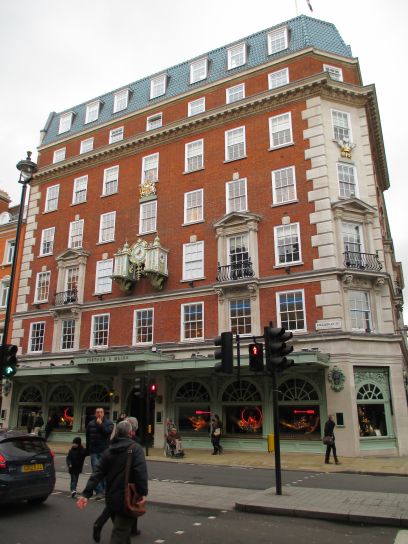
The front of Fortnum & Mason's on Piccadilly
One of the entrances to Fortnum & Mason's
Fortnum & Mason's have enjoyed Royal patronage for many years!
Two handsome gentlemen to greet you on the staircase as you enter Fortnum & Mason's A Summary of the store directory Fortnum & Mason's Floor 4: The diamond Jubilee Tea Salon, the Drawing Room and the Tasting Room Fortnum & Mason's Floor 3: Babyware &Gifts, Bath & Body, Gift Wrapping Service, Ladies' Loungewear, Gentlemen's Accessories, Shoe Shine service, Gentlemen's Grooming, Gentlemen's Cloakroom Fortnum & Mason's Floor 2: Beauty, Millinery, Cosmetics, Perfumery, Fashion Accessories, Baby Changing, Handbags, Accessible Cloakroom, Jewellery Room Fortnum & Mason's Floor 1: Candle Room, Demonstration Kitchen, China, Silver & Glassware, Stationery, Pens & games, Cookshop, The parlour Restaurant, Customer Service, Ladies Powder Room, Ordering Fortnum & Mason's Ground Floor: Biscuits, Chocolates, Coffee, Confectionery, Hampers, Patisserie, Preserves & Honey, Tea & Tea Accessories, The Fountain Restaurant, The gallery Restaurant Fortnum & Mason's Lower Ground Floor: Bakery, Charcuterie, Cheese, Delicatessen, Floristry, Fruit & Vegetables, Meat & Fish, Savoury Groceries, Spirits, The Fortnum's Takeaway, The Crypt, Wine & Champagnes, The Wine Bar
Biscuits and confectionery at Fortnum & Mason's
Tea galore at Fortnum & Mason's!
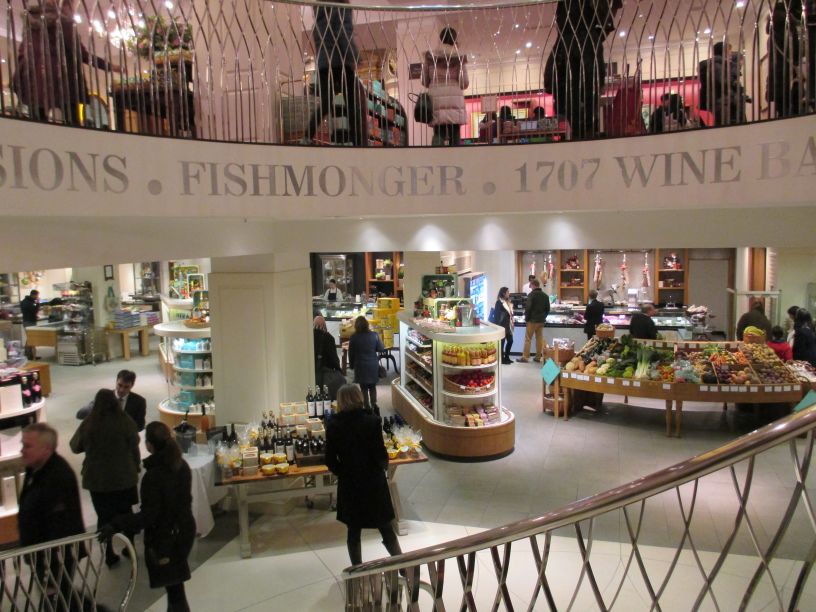
Fish, wine, vegetables etc. in Fortnum & Mason's
One of the balconies around the central stairway of Fortnum & Mason's
Fortnum & Mason's Parlour cafe
Fortnum & Mason's hamper kits by the Parlour
The central staircase of Fortnum & Mason
Looking down the central spiral staircase to the floristry department of Fortnum & Mason
The 'hat' department of Fortnum & Mason
*
One of Fortnum & Mason's restaurants
*
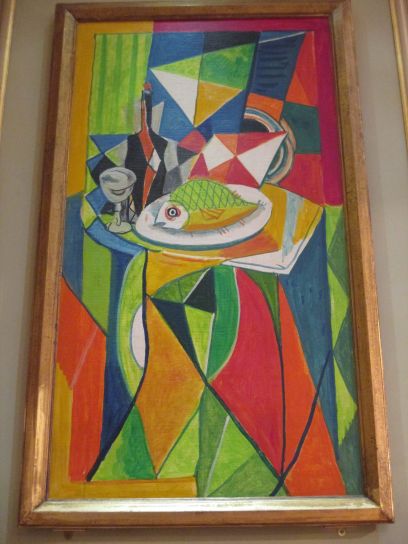
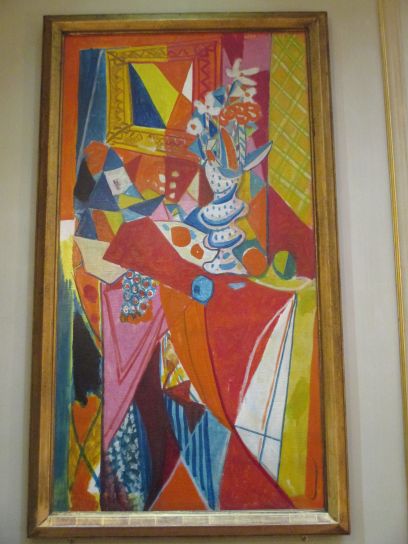
There several fine works of art on the stairs of Fortnum & Mason
Some pleasing modern paintings on the stairs of Fortnum & Mason
"The Boat Race - The Oxford Blues" painting by Nick Botting at Fortnum & Mason
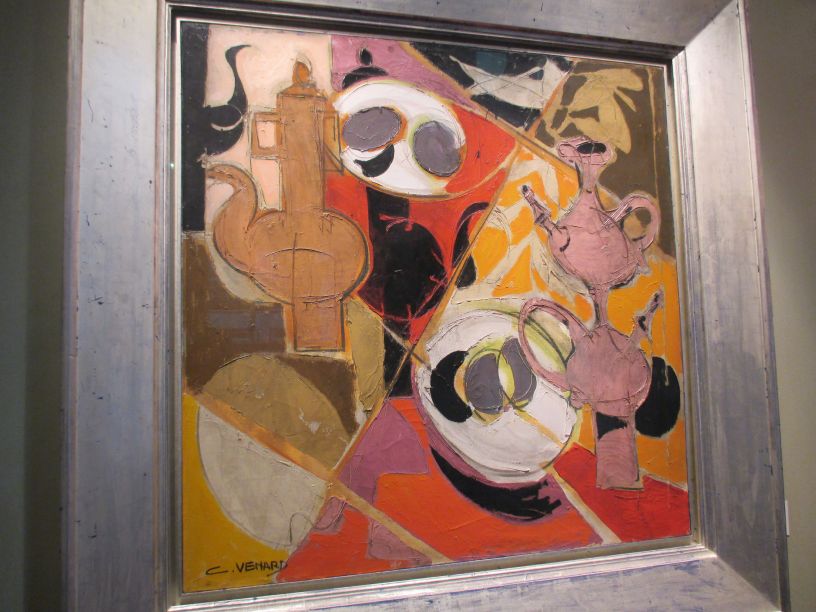
"Nature Mort Au Vase Noir" painting by Claude Venard at Fortnum & Mason
"Rolling Along - Two Tea Clippers" painting by Montague Dawson at Fortnum & Mason
"Battle of Trafalgar" painting by William Adophus Knell at Fortnum & Mason A history of Fortnum and Masons Below is a full, richly detailed, citation‑grounded history of Fortnum & Mason, from its candle‑selling origins in Queen Anne’s household to its present‑day status as one of London’s most iconic luxury stores. Fortnum & Mason began in 1707 when William Fortnum, a footman to Queen Anne, and his landlord Hugh Mason opened a small grocery in St James’s Market. Over three centuries it evolved into London’s most famous luxury food emporium, renowned for tea, hampers, exotic imported foods, and a deep connection with the Royal Household. Today its flagship at 181 Piccadilly remains a global symbol of British refinement. 1. Origins (Late 17th century – 1707)A business born from candle wax
Partnership with Hugh Mason
2. Early growth & Georgian innovation (1707–1830s)Portable luxury foods for travellersFortnum & Mason quickly became known for inventive, ready‑to‑eat foods.
A postal hub before the Post Office
Royal connections deepen
3. Regency & Victorian expansion (1830s–1900)Supplying the EmpireDuring the 19th century, Fortnum & Mason became the premier supplier of luxury provisions to the British elite and military.
Tinned foods & the arrival of Heinz
Hampers become iconic
4. The Piccadilly store & architectural evolutionThe flagship at 181 Piccadilly is itself a piece of London history. Early building (1707–1776)
Georgian rebuild (1776)
19th‑century expansions
Early 20th century
Mid‑20th century modernisation
The famous outdoor clock (1964)
5. Tea, exotic foods & global reputation (1900–present)Tea as a defining identity
Exotic imports
Diversification
6. Modern era (1951–today)Ownership
New locationsThe brand has expanded beyond Piccadilly, with stores at:
Sustainability & innovation
Today
7. Why Fortnum & Mason mattersFortnum & Mason is not just a shop — it is a living piece of London history, embodying:
A guided walk through Fortnum & Mason's Piccadilly flagship
This is written as an immersive, story‑driven experience — the kind of layered, historically grounded synthesis you enjoy. FORTNUM & MASON: A GUIDED WALK THROUGH HISTORY, INNOVATION & THE VICTORIAN AGE1. BEGIN YOUR WALK — PICCADILLY, OUTSIDE THE STOREYou stand on 181 Piccadilly, facing the pale‑green
façade, the gilded signage, and the famous Fortnum & Mason clock. Before stepping inside, you're already surrounded by history:
Now you step through the doors. 2. GROUND FLOOR — THE FOOD HALLSThe heart of Fortnum's, and the perfect place to begin the story.The moment you enter, you’re surrounded by:
This is where Fortnum’s identity was forged. Innovation Timeline (woven into the walk)As you move through the ground floor, you’re walking across three centuries of innovation: 1707 — The foundingFortnum & Mason opens as a small grocery in St James’s Market. 1738 — The Scotch eggInvented here as a portable meal for travellers heading west out of London. 1794–1839 — Private post officeFortnum’s operates its own postal service, with letterboxes emptied six times a day. 1850s — Crimean War suppliesFortnum’s sends beef tea and provisions to Florence Nightingale’s hospitals. 1886 — Heinz arrives in BritainFortnum's becomes the first UK store to sell Heinz products. 1902 — Royal Blend teaCreated for King Edward VII; still one of the store’s signature teas. 1964 — The Piccadilly clockInstalled on the façade, becoming a London landmark. 2008 — Rooftop beehivesFortnum’s becomes an early champion of urban beekeeping. 2019–present — Global expansionNew stores open at St Pancras, Heathrow, Hong Kong, and the Royal Exchange. 3. THE VICTORIAN DEEP DIVE — WALKING INTO THE PASTNow imagine the store as it was in the Victorian era, the period when Fortnum’s became a household name across the Empire. You're still on the ground floor, but the year is 1855. The Victorian store was a marvel of modernity
Fortnum's and the Crimean WarQueen Victoria personally ordered Fortnum’s to supply:
These were shipped to Florence Nightingale's hospitals in Scutari. The rise of the hamperVictorians adored picnics, excursions, and travel.
These hampers were sent to:
The hamper became the Victorian symbol of Fortnum's — portable luxury for a world on the move. Tinned food revolutionFortnum's was one of the first British retailers to embrace tinned
foods.
By the 1880s, the store stocked everything from tinned turtle soup to preserved fruits from Australia. Heinz arrives (1886)A young Henry Heinz brought samples of his products to London. 4. FIRST FLOOR — TEA, CHOCOLATE & THE SPIRIT OF EMPIREAs you ascend the staircase, you enter the world of tea, the product that defines Fortnum’s more than any other. 🍵Tea as identity
In 1902, the store created Royal Blend for King Edward VII — a smooth, honeyed tea that remains a bestseller. �Chocolate & confectioneryVictorian Fortnum's was a pioneer in:
These were displayed in glass cabinets like jewellery. 5. SECOND FLOOR — THE GENTLEMEN'S DEPARTMENTS (VICTORIAN STYLE)A world of grooming, travel, and luxury goodsIn the Victorian era, this floor sold:
It was the shopping destination of diplomats, officers, and gentlemen of the Empire. 6. THIRD FLOOR — THE PARLOUR & THE ART OF AFTERNOON TEAToday, the Diamond Jubilee Tea Salon occupies this
space.
It was a place where London society came to see and be seen. 7. THE WALK ENDS — BUT THE STORY CONTINUESAs you return to the ground floor, you've walked through:
Fortnum & Mason is not just a shop — it is a living museum of British taste, a survivor of every era, and a symbol of refinement that has never lost its sense of theatre. If you'd like, I can also create:
Just tell me where you'd like to wander next. London England docspics images pictures © Phil Brown What to visit in London? Where to eat out in London? Where to stay in London? What Shows to see in London? Cheap Coaches to London Trains Flights to London, bargain train fares, luxury Hotels, B&B, self-catering holiday flats, budget accommodation in London, hostels to suit all budgets, tourism information, top tourist attractions in London, museums, art galleries, gardens, London guided tours, good local transport, buses, commuter trains, London underground tube stations, rover tickets, cheap train fares, River Thames boat trips, ticket booking, London buses, West End theatres, famous historic buildings in London, churches, London parks to walk in docspics images photos of Fortnum and Masons Fortnum's London © Phil Brown Tourist information on Fortnum and Masons Fortnum's London, top tourist attractions near Fortnum and Masons Fortnum's London Things to do near Fortnum and Masons Fortnum's London, What to see near Fortnum and Masons Fortnum's London, Walks near Fortnum and Masons Fortnum's London, weekend breaks near Fortnum and Masons Fortnum's London family holidays near Fortnum and Masons Fortnum's London, Top tourist attractions near Fortnum and Masons Fortnum's London, luxury hotels near Fortnum and Masons Fortnum's London, self-catering holiday cottages near Fortnum and Masons Fortnum's London, B&B near Fortnum and Masons Fortnum's London, friendly pubs near Fortnum and Masons Fortnum's London, cafes near Fortnum and Masons Fortnum's London, eating out in fine restaurants near Fortnum and Masons Fortnum's London, bargain holiday breaks near Fortnum and Masons Fortnum's London, wining & dining weekends near Fortnum and Masons Fortnum's London, touring coach tours including Fortnum and Masons Fortnum's London, pretty villages near Fortnum and Masons Fortnum's London, historic towns near Fortnum and Masons Fortnum's London, visiting museums near Fortnum and Masons Fortnum's London, local art galleries near Fortnum and Masons Fortnum's London, guided walks from Fortnum and Masons Fortnum's London, history of Fortnum and Masons Fortnum's London, architecture of Fortnum and Masons Fortnum's London trains to Fortnum and Masons Fortnum's London buses to Fortnum and Masons Fortnum's London coach tours to Fortnum and Masons Fortnum's London historic houses near Fortnum and Masons Fortnum's London historic churches near Fortnum and Masons Fortnum's London historic buildings |










 Enter place, feature, park, street, museum, station, gallery, building,
monument, anything of
interest in London!
Enter place, feature, park, street, museum, station, gallery, building,
monument, anything of
interest in London!