|
45b. Kilmalkedar Church, St Brendan's House and the Chancellor's House, Dingle Peninsula, Kerry SCENES from IRELAND
INDEX
Kilmalkedar Church
*
St Brendan's House
*
The
Chancellor's House [Author
&
photographer
©
Dr Phil Brown PhD
+ notes help from AI,
page re-edit Nov 19th 2026]
*
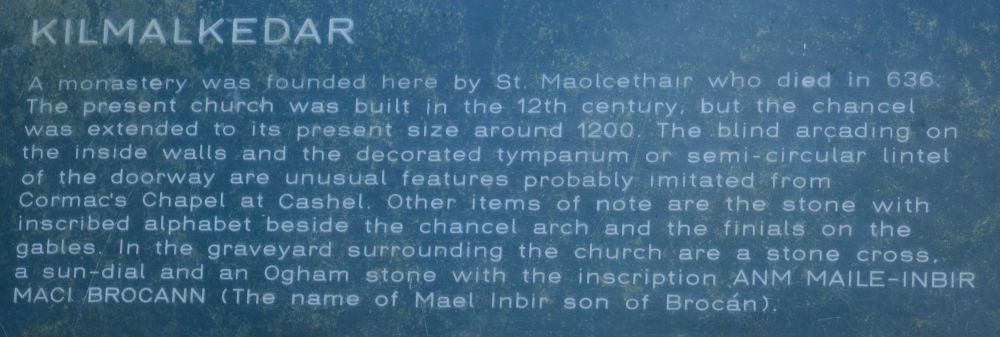
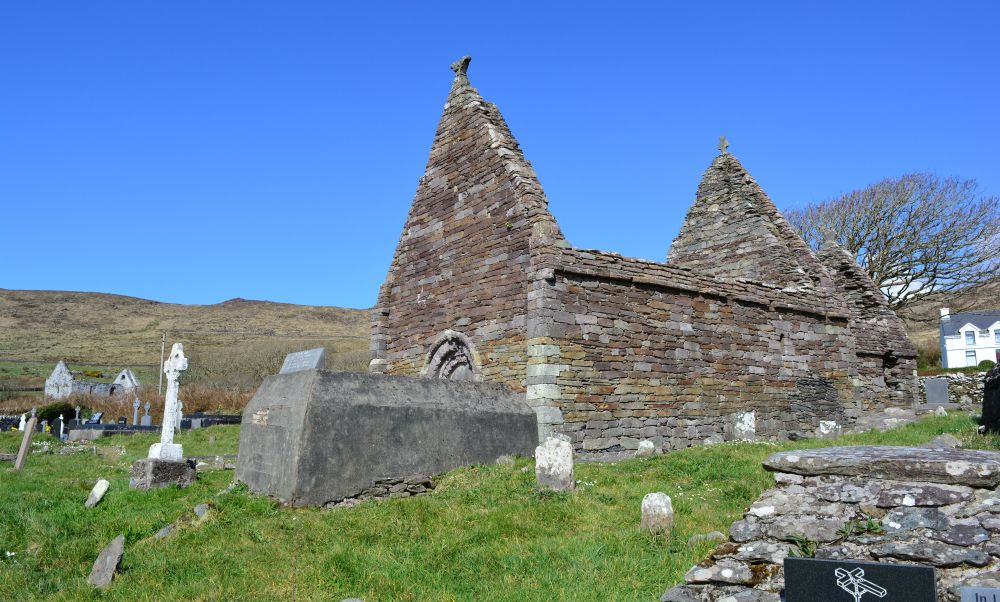
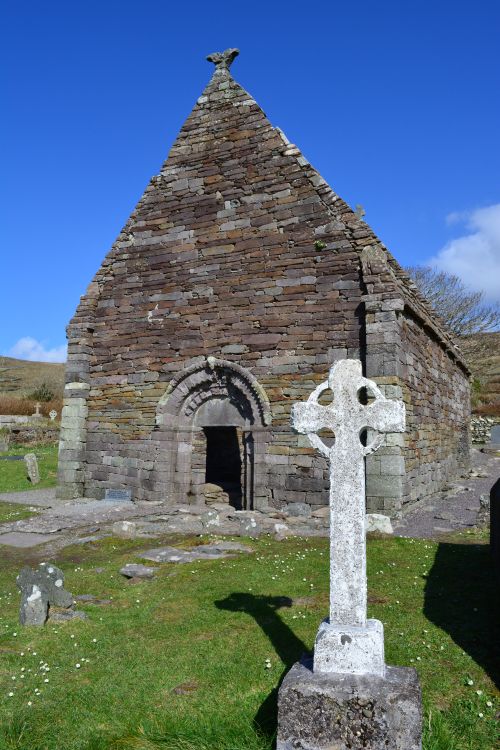
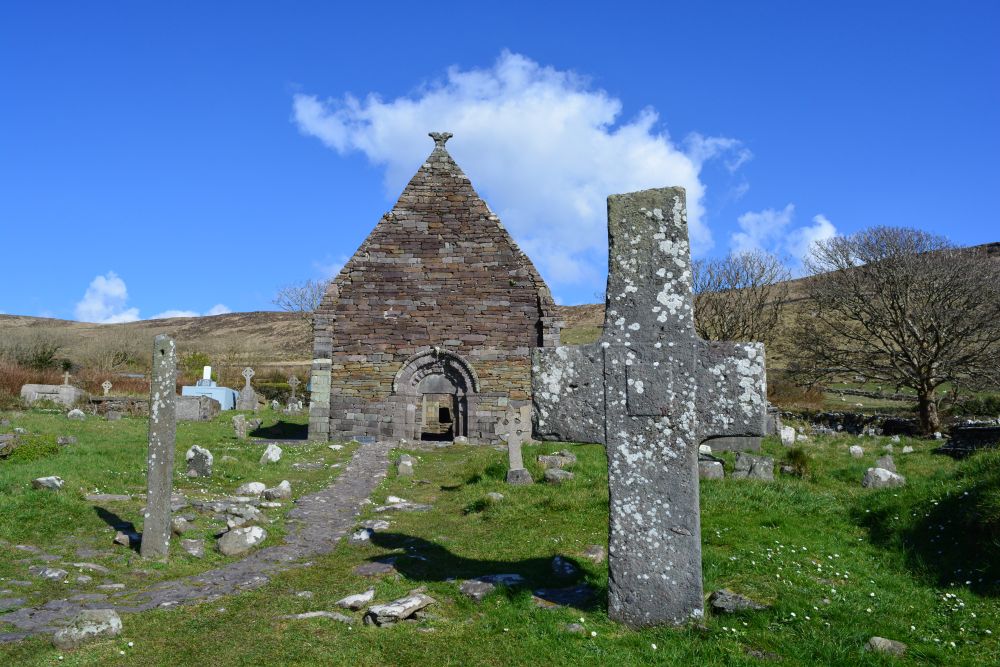
General view of Kilmalkedar Church Kilmalkedar Medieval Church (Cill Maoilchéadair), Dingle Peninsula, County Kerry Kilmalkedar is one of the most important early Christian and medieval church sites in Ireland. It lies about 5 km east of Ballyferriter (Baile an Fheirtéaraigh) on the western Dingle Peninsula, overlooking Smerwick Harbour. The site is not simply a ruined church, but a large ecclesiastical complex containing monuments from several different periods spanning more than a thousand years. Origins and Early History The site is named after St Maolcethair (Maolchéadair), an early Irish saint who is recorded as having died in AD 636. Tradition holds that he founded a monastery here in the 7th century. Kilmalkedar also became associated with St Brendan the Navigator, the famous Kerry saint and explorer. Archaeological evidence shows that the site was important long before the surviving church was built. Early Christian remains include:
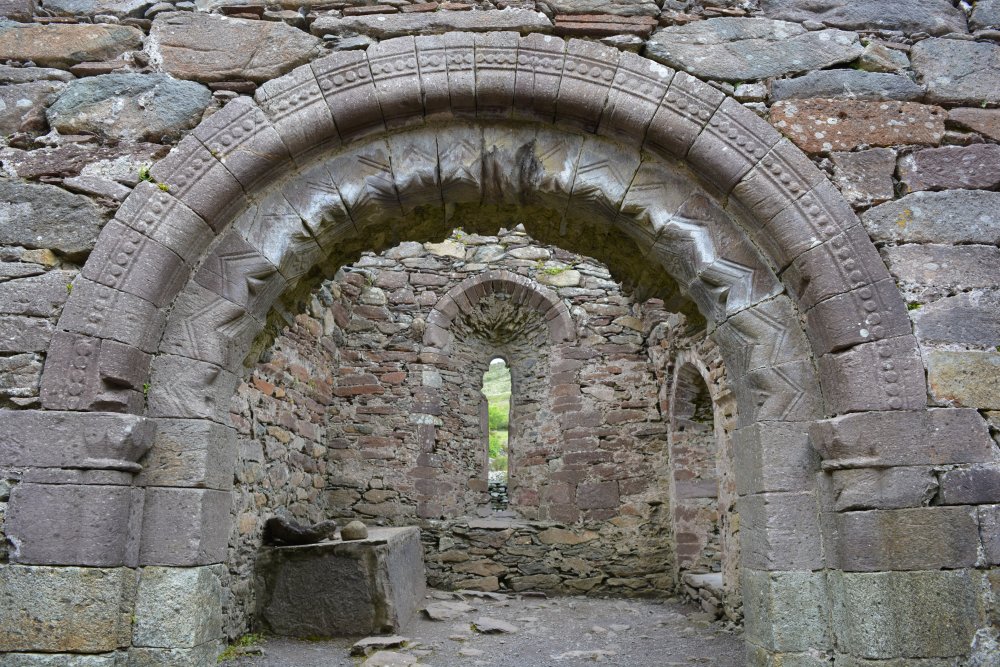
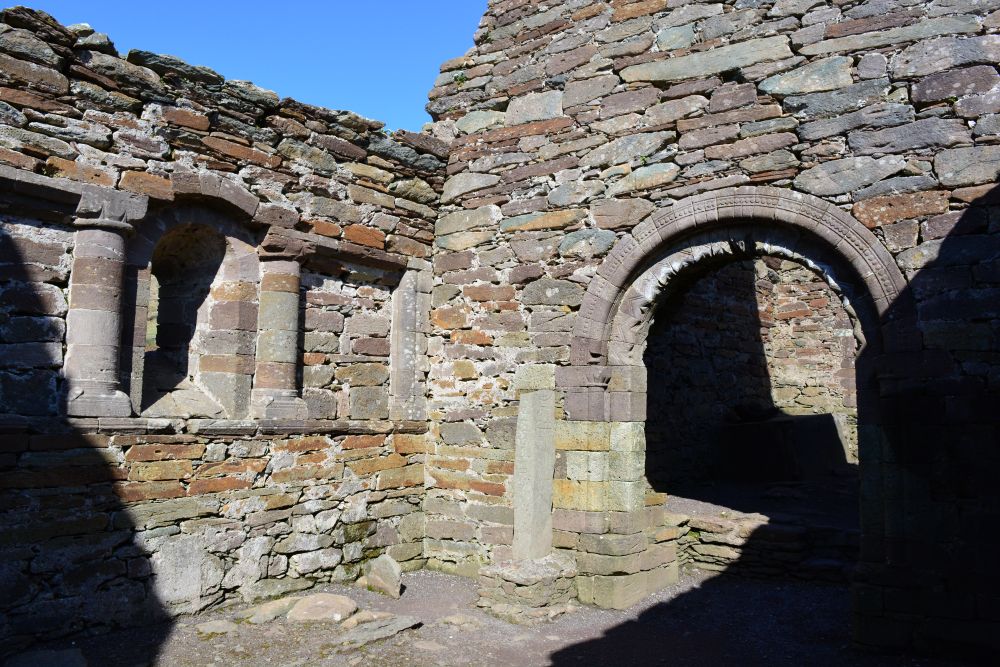
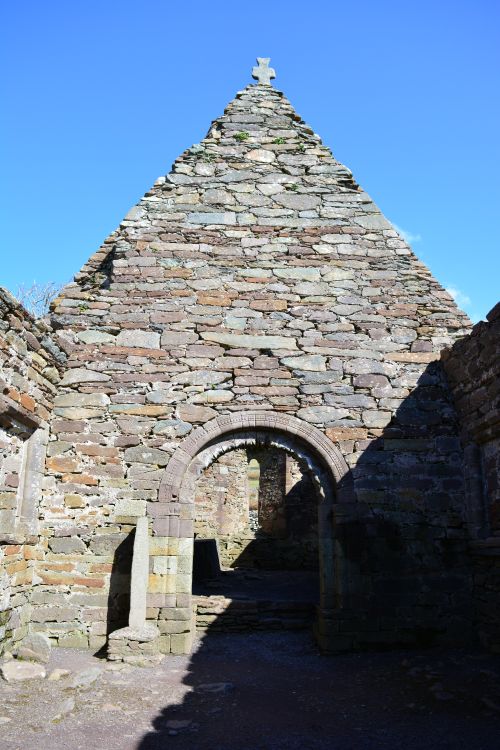
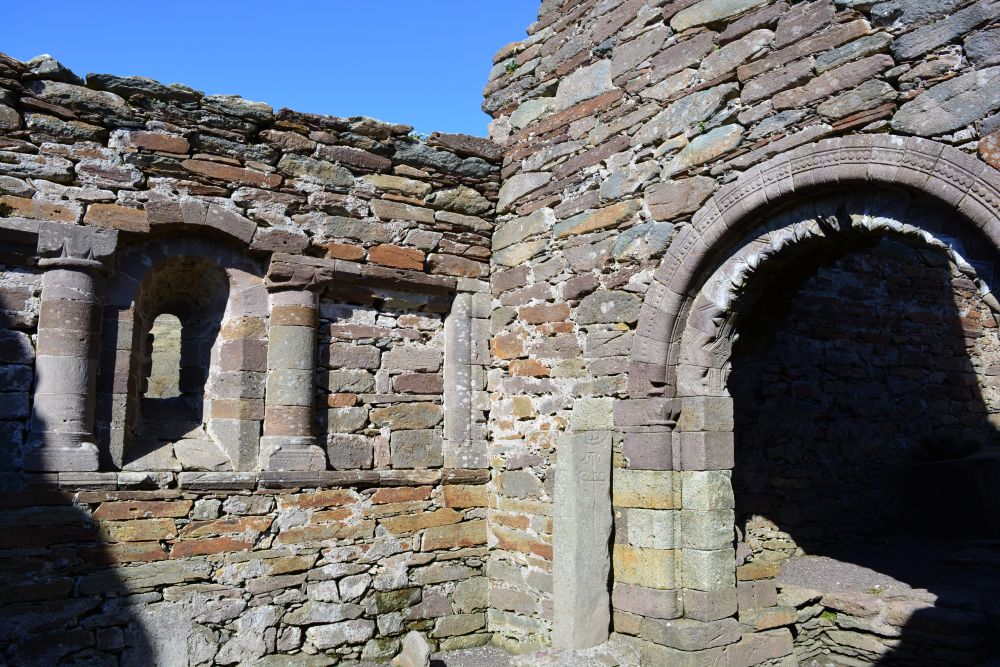
These monuments indicate that Kilmalkedar was already a significant religious centre centuries before the medieval church was constructed. The Medieval Church The surviving church dates mainly from the mid-12th century and is one of the finest examples of Hiberno-Romanesque architecture in County Kerry. Around AD 1200 the eastern chancel was enlarged. The church bears similarities to Cormac's Chapel on the Rock of Cashel, one of Ireland's greatest Romanesque buildings. Architectural features include:
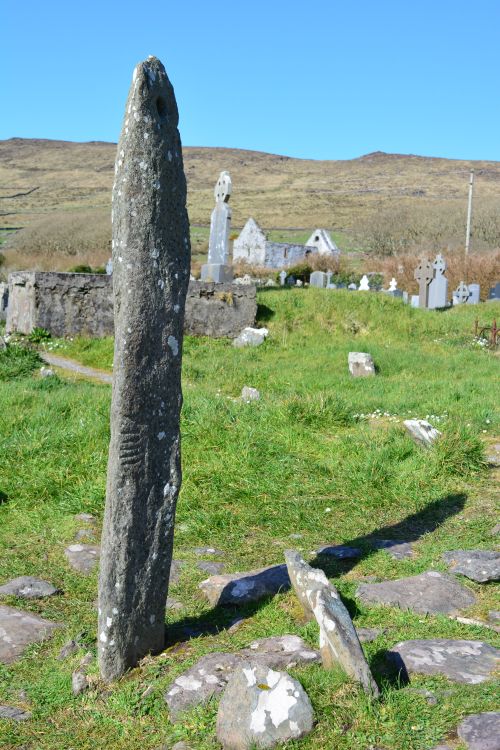
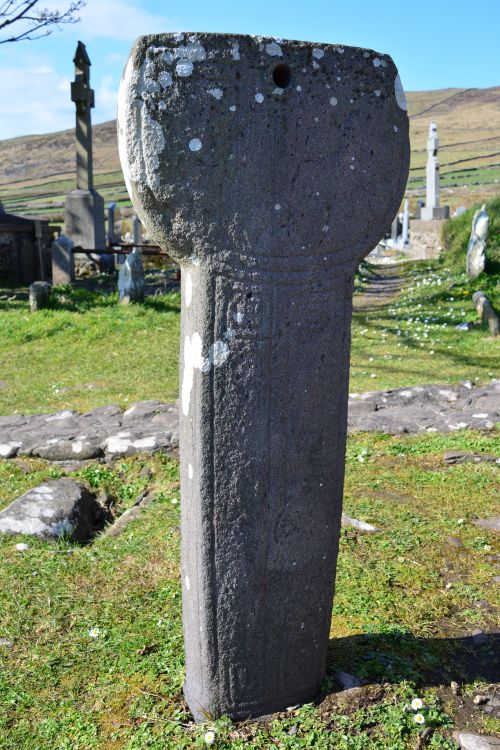
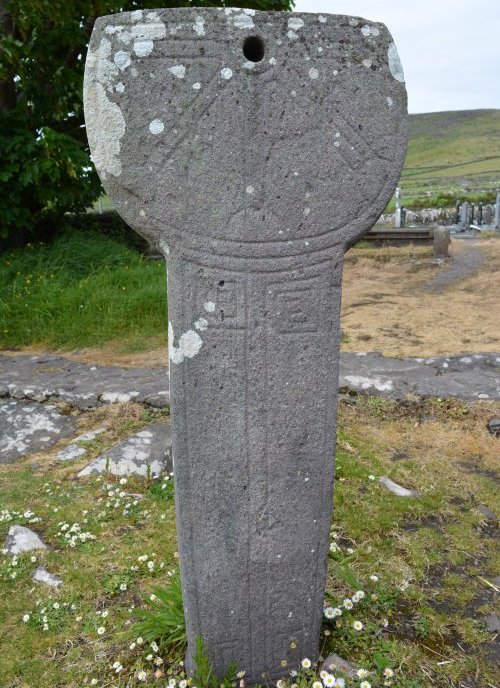
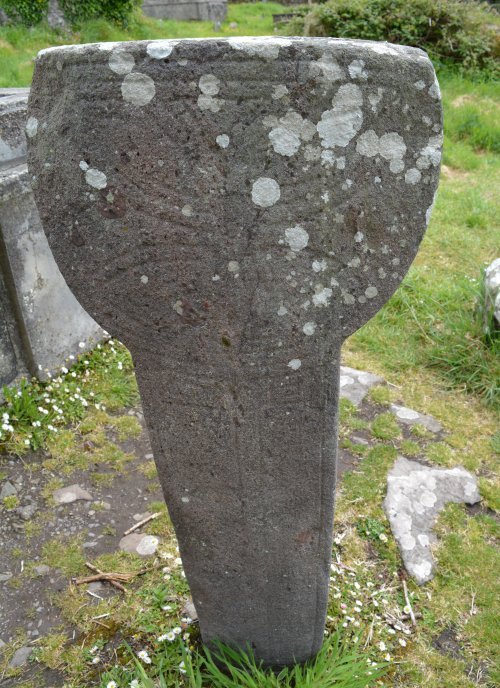
The building consists of a nave and chancel and remains remarkably well preserved considering its age. Pilgrimage Centre Kilmalkedar stood on the famous pilgrimage route known as Cosán na Naomh ("The Saints' Road"), which led pilgrims towards Mount Brandon, one of Ireland's most important pilgrimage mountains. During the medieval period pilgrims stopped at Kilmalkedar as part of their religious journey. The site became one of the wealthiest parishes in the medieval Diocese of Kerry and remained in use as a parish church until roughly the 16th century. Important Features Within the Site The Ogham Stone One of the most notable monuments is a holed ogham stone dating from around AD 600. It bears an inscription interpreted as commemorating a man named Máel-Inbher, son of Broccán. The hole bored through the stone is highly unusual and has given rise to local traditions involving oath-taking and marriage rituals. The Alphabet Stone Dating from the 6th century, this remarkable stone contains letters of the Latin alphabet carved in early script. It is one of the most important early Christian inscriptions in Ireland. The Sundial A pillar sundial stands in the graveyard. Only a handful of such early medieval sundials survive in Ireland, making it a particularly rare monument. Stone Cross A large Latin cross stands within the churchyard and may date from the 12th century, roughly contemporary with the Romanesque church. The "Eye of the Needle" A small opening in the eastern wall of the chancel is traditionally known as the "Eye of the Needle". Local folklore claimed that anyone able to pass through it would be assured entry to heaven. Associated Monuments Near the church are several additional historic features:
Why Kilmalkedar Matters Kilmalkedar is exceptional because it preserves evidence from multiple periods of Irish religious history in a single location. Visitors can see traces of:
Today it is a National Monument and is regarded as one of the most important ecclesiastical sites on the Dingle Peninsula, alongside nearby monuments such as Gallarus Oratory and the Riasc monastic settlement.
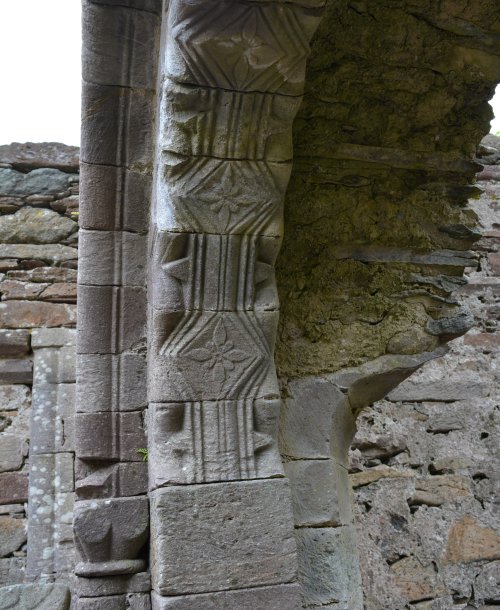
The decorative Romanesque arch in Kilmalkedar Church
*
*
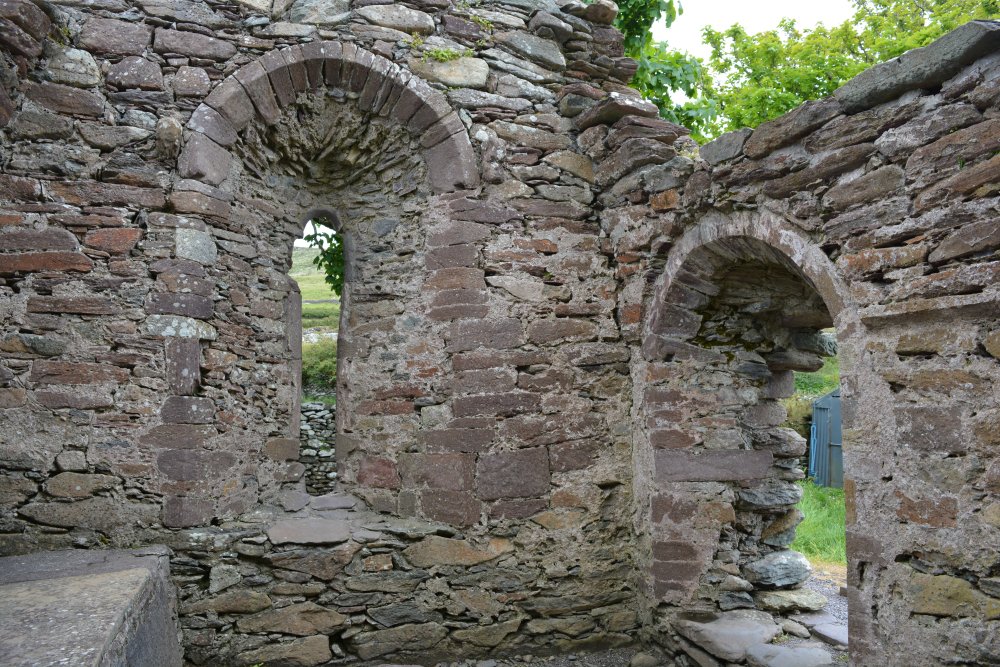
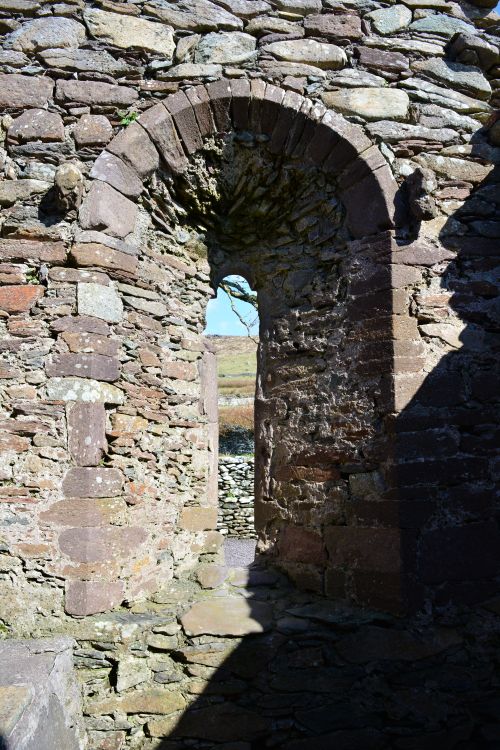
Recessed Norman style Romanesque windows of Kilmalkedar Church
*
An Ogham stone by Kilmalkedar Church
*
*
*
*
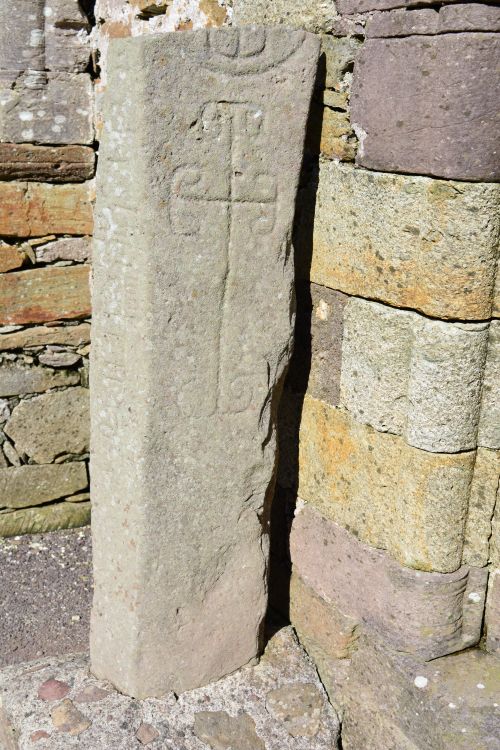
Cross slab gravestones in Kilmalkedar Church
*
*
The famous sun dial by Kilmalkedar Church
*
*
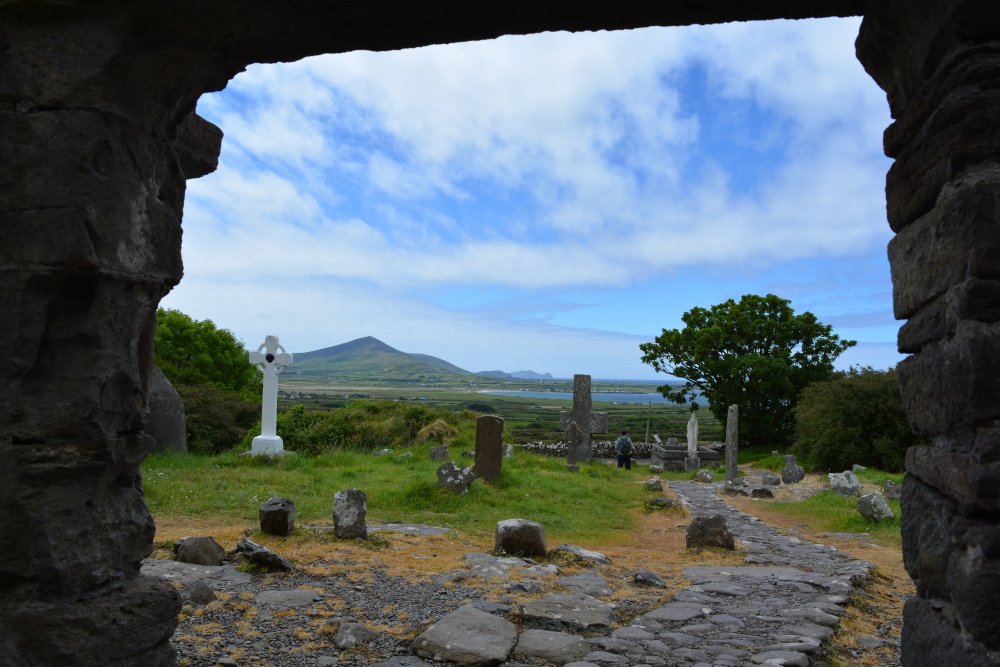
Looking out to sea from the graveyard of Kilmalkedar Church
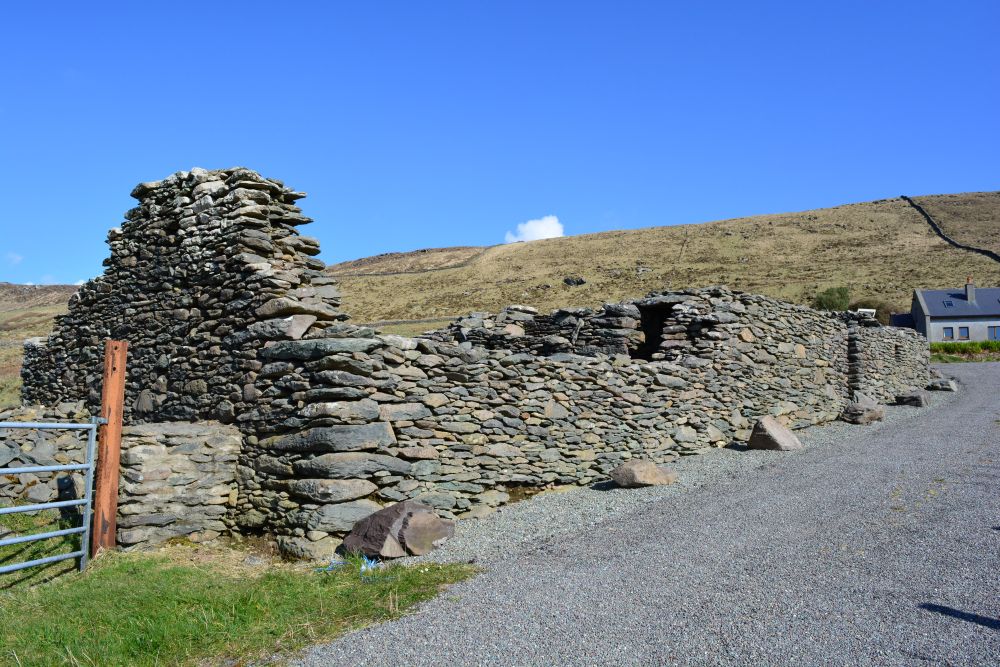
Across the track from Kilmalkedar Church is a medieval priest's house known as St Brendan's House.
St Brendan's House (The Priest's House), Kilmalkedar, Dingle Peninsula, County Kerry St Brendan's House is a small medieval stone building situated close to Kilmalkedar Church on the western Dingle Peninsula, County Kerry. Despite its popular name, there is no firm evidence that St Brendan himself ever lived there. The building is also known as"The Priest's House", and historians generally regard it as a residence connected with the medieval church and parish at Kilmalkedar. Kilmalkedar was one of the most important ecclesiastical centres in west Kerry, and the house formed part of a wider religious complex that included:
The building stands beside the ancient pilgrimage route known as Cosán na Naomh ("The Saints' Road"), which linked religious sites across the peninsula and led pilgrims towards Mount Brandon. Purpose and Function The most widely accepted interpretation is that the structure served as accommodation for local clergy attached to Kilmalkedar Church during the later medieval period. One source specifically notes that it may have been used as a residence for parish clerics serving the area. Buildings of this type are often referred to in Ireland as priests' houses, rectories, or ecclesiastical dwellings. They provided living quarters for clergy responsible for worship, administration, and pastoral care within an important parish. Association with St Brendan The traditional name "St Brendan's House" reflects the strong local connection between Kilmalkedar and St Brendan the Navigator, one of Ireland's most celebrated saints. However, scholars generally consider Kilmalkedar to have been primarily associated with St Maolcethair (Maolchéadair), the local saint after whom the church and parish are named. The attachment of Brendan's name probably arose from local tradition and the saint's importance throughout the Dingle Peninsula rather than from definite historical evidence that he occupied the building. Location The house stands very close to Kilmalkedar Church and St Brendan's Holy Well. Historic descriptions place it between the church complex and the ancient pilgrimage landscape of the area. The building lies in open countryside beneath the slopes of the hills overlooking Smerwick Harbour. St Brendan's Holy Well Adjacent to the house is St Brendan's Holy Well (Tobar Bréanainn), a spring well enclosed within a stone structure and reached by stone steps. The well was an important devotional site and remains one of several holy wells associated with the Kilmalkedar complex. Architecture Published descriptions of St Brendan's House are relatively brief. It survives as a stone-built medieval structure and is generally regarded as one of several ancillary buildings associated with the church complex. Unlike the richly decorated Romanesque church itself, the house appears to have been a functional residence rather than a place of worship. Importance Although overshadowed by nearby Gallarus Oratory and the magnificent Romanesque church at Kilmalkedar, St Brendan's House is valuable because it helps illustrate how a medieval Irish ecclesiastical centre functioned. It reminds us that churches required clergy, accommodation, administration and support buildings, not just places of worship. Together with the church, holy wells, pilgrimage route and early Christian monuments, it forms part of one of the richest surviving religious landscapes on the Dingle Peninsula. In summary, St Brendan's House is best understood not as the dwelling of St Brendan himself, but as a surviving medieval clerical residence associated with the great ecclesiastical centre of Kilmalkedar, preserving another important piece of the religious history of Corca Dhuibhne (the Dingle Peninsula).
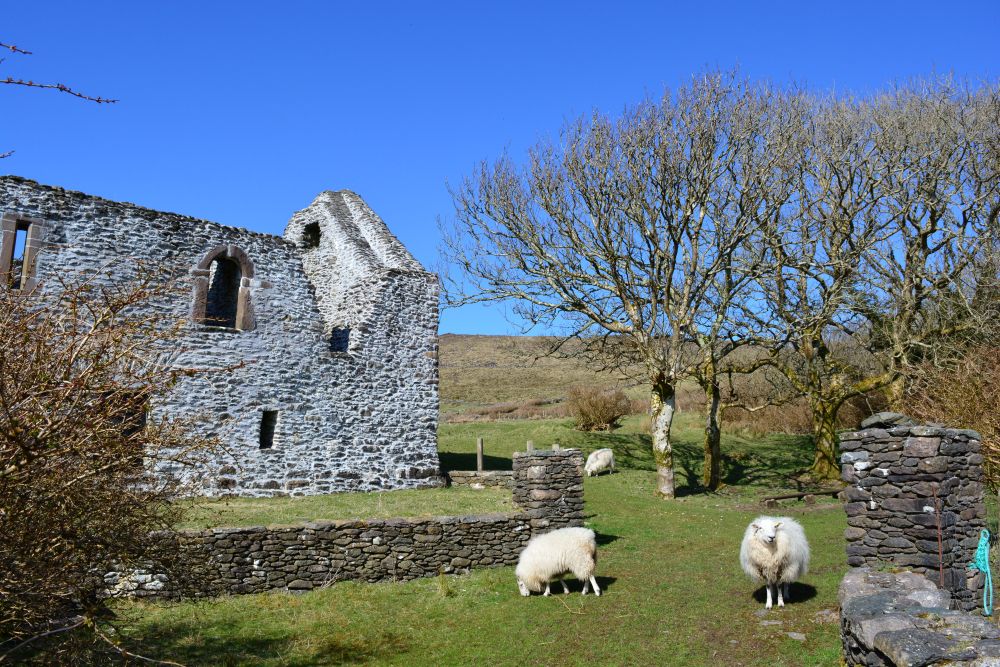
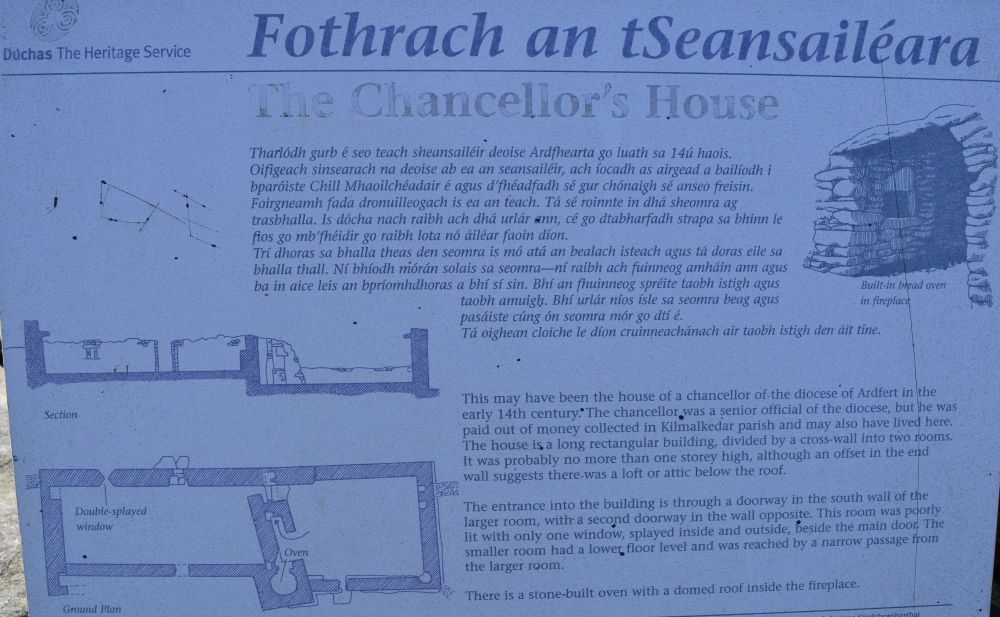
The Chancellor's House (Fothrach an tSainsiléara), Kilmalkedar, Dingle Peninsula, County Kerry The Chancellor's House is one of the lesser-known but most intriguing medieval buildings on the Dingle Peninsula. It stands about 400 metres south-west of Kilmalkedar Church, overlooking Smerwick Harbour and the dramatic mountains of west Kerry. The ruin is known in Irish as Fothrach an tSainsiléara, meaning "The Chancellor's Ruin". The building is generally believed to have been the residence of the Chancellor of the Diocese of Ardfert and Aghadoe, one of the senior officials of the medieval church in Kerry. Historical records from the early 14th century show that the Chancellor held the rectory of Kilmalkedar as part of the income attached to his office, making it entirely plausible that he maintained a house here. Kilmalkedar was one of the wealthiest and most important parishes in medieval Kerry, and the existence of such a substantial residence suggests the importance of the parish within the diocesan administration. Location The house occupies a sloping site beneath the spurs of Reenconnell Hill and enjoys spectacular views across Smerwick Harbour towards the Three Sisters mountain peaks. It lies close to Kilmalkedar Church and the ancient pilgrimage route known as Cosán na Naomh (The Saints' Road). Architecture The building is a rectangular stone structure measuring approximately 17.6 metres in internal length and is divided into two principal chambers by a cross-wall. The western room is the larger of the two and is thought to have served as the main living area. The eastern chamber appears to have functioned as the kitchen. Several interesting features survive:
The house was constructed upon boulder foundations and built from split stone and rubble. Archaeologists have noted features suggesting that it may once have had an upper loft area or partial upper storey. The Bread Oven One of the most remarkable survivals is the medieval bread oven. Built into the side of the fireplace, it projects beyond the outside wall and still survives in recognisable form. Such domestic features provide valuable evidence for everyday life within a medieval ecclesiastical residence. Date of Construction The exact date is uncertain. Some sources describe it as a medieval building connected with the Chancellor of Ardfert, while others suggest a 14th- or even 15th-century date. The available evidence confirms that it is a medieval structure associated with the church administration of Kilmalkedar. Connection with Caherdorgan North The Chancellor's House stands about 300 metres north of Caherdorgan North Cashel, an early medieval stone enclosure containing several beehive huts and a souterrain. Together these monuments demonstrate the long history of settlement and religious activity in the area surrounding Kilmalkedar. Historical Importance The Chancellor's House is particularly significant because medieval domestic buildings survive far less frequently than churches. While many visitors come to see the Romanesque church at Kilmalkedar, the house provides a rare glimpse into the administrative side of medieval church life. It helps illustrate where a senior church official may have lived, worked and managed the revenues of one of Kerry's most important parishes. Today the ruin remains an evocative reminder of the wealth and importance of medieval Kilmalkedar. Alongside the church, ogham stone, sundial, holy wells, St Brendan's House and nearby Gallarus Oratory, it forms part of one of the richest early Christian and medieval landscapes in Ireland.
Irish holiday tour docspics photos images photographs pictures photos pics © Phil Brown * travelling touring in Ireland, top tourist attractions, tourism information, luxury hotels, self-catering holiday cottages, B&B accommodation, historic towns & cities in Ireland archaeological sites, museums, cheap flights, get there by flying , car ferry, Irish Ferries, Stena Line, Ryanair Travel, dining out in Ireland, good food guide to Ireland, top Irish restaurants, Irish coach tours, weekend breaks trips to Ireland docspics images photos of Kilmalkedar Church, Dingle Peninsula, Kerry in Ireland © Phil Brown Tourist information on Kilmalkedar Church, Dingle Peninsula, Kerry, top tourist attractions near Kilmalkedar Church, Dingle Peninsula, Kerry Things to do near Kilmalkedar Church, Dingle Peninsula, Kerry, What to see near Kilmalkedar Church, Dingle Peninsula, Kerry, Walks near Kilmalkedar Church, Dingle Peninsula, Kerry, weekend breaks near Kilmalkedar Church, Dingle Peninsula, Kerry family holidays near Kilmalkedar Church, Dingle Peninsula, Kerry, Top tourist attractions near Kilmalkedar Church, Dingle Peninsula, Kerry, luxury hotels near Kilmalkedar Church, Dingle Peninsula, Kerry, self-catering holiday cottages near Kilmalkedar Church, Dingle Peninsula, Kerry, B&B near Kilmalkedar Church, Dingle Peninsula, Kerry, friendly pubs near Kilmalkedar Church, Dingle Peninsula, Kerry, cafes near Kilmalkedar Church, Dingle Peninsula, Kerry, eating out in fine restaurants near Kilmalkedar Church, Dingle Peninsula, Kerry, bargain holiday breaks near Kilmalkedar Church, Dingle Peninsula, Kerry, wining & dining weekends near Kilmalkedar Church, Dingle Peninsula, Kerry, touring coach tours including Kilmalkedar Church, Dingle Peninsula, Kerry, pretty villages near Kilmalkedar Church, Dingle Peninsula, Kerry, historic towns near Kilmalkedar Church, Dingle Peninsula, Kerry, visiting museums near Kilmalkedar Church, Dingle Peninsula, Kerry, local art galleries near Kilmalkedar Church, Dingle Peninsula, Kerry, guided walks from Kilmalkedar Church, Dingle Peninsula, Kerry, history of Kilmalkedar Church, Dingle Peninsula, Kerry, architecture of Kilmalkedar Church, Dingle Peninsula, Kerry trains to Kilmalkedar Church, Dingle Peninsula, Kerry buses to Kilmalkedar Church, Dingle Peninsula, Kerry coach tours to Kilmalkedar Church, Dingle Peninsula, Kerry historic houses near Kilmalkedar Church, Dingle Peninsula, Kerry historic churches near Kilmalkedar Church, Dingle Peninsula, Kerry historic buildings near Kilmalkedar Church, Dingle Peninsula, Kerry good places to eat near Kilmalkedar Church, Dingle Peninsula, Kerry must see tourist attractions near Kilmalkedar Church, Dingle Peninsula, Kerry tourist information for Kilmalkedar Church, Dingle Peninsula, Kerry things to do near Kilmalkedar Church, Dingle Peninsula, Kerry things to see near Kilmalkedar Church, Dingle Peninsula, Kerry |























 Enter place, heritage site, feature, walk, town, village, city, museum, historic building,
mountain, island, anything of interest in Ireland!