|
 |
 |
 |
 |
 |
 |
 |
 |
 |
 |
 |
 |
 |
 |
 |
 |
 |
|
 Enter place, heritage site, feature, walk, town, village, city, museum, historic building,
mountain, island, anything of interest in Ireland!
Enter place, heritage site, feature, walk, town, village, city, museum, historic building,
mountain, island, anything of interest in Ireland! |
|
15. The Town of Lismore, Castle and Gardens and surrounding area in County Waterford
SCENES from IRELAND
[Author photographer
Streets and buildings in Lismore St Carthage's Cathedral (Church of Ireland), Lismore St Carthage's Church (Roman Catholic Cathedral), Lismore The St Carthage Hall Art Gallery, Lismore The Arthur Kiely-Ussher Lodge and the Ballysaggartmore Towers How Lismore’s Features Fit Together
St Carthage’s Cathedrals, Lismore (Co. Waterford)A tale of one saint, two traditions, and 1,400 years of history Lismore is one of Ireland’s most historically layered ecclesiastical sites. The presence of two cathedrals—one Church of Ireland (ancient, medieval, architecturally significant) and one Roman Catholic (19th‑century, elegant, and still the centre of a living diocese)—reflects the long and complex religious history of Ireland. 3. Why Two Cathedrals?The duplication reflects Ireland’s post‑Reformation religious landscape:
Both communities kept the title “St Carthage’s Cathedral” because both trace their lineage to the same early medieval monastic foundation. 4. St Carthage (Mochuda) – The Shared Patron
5. A Quick Comparative Snapshot
Why Lismore Is so interestingFew towns in Ireland preserve such a clear architectural dialogue between:
*
The Streets and Buildings of Lismore Here’s a richly detailed, fully grounded history of
Lismore town, Lismore Castle, and its
gardens—a place where early medieval scholarship,
Anglo‑Norman power, and Victorian romanticism all converge in one of
Ireland’s most atmospheric river landscapes. Lismore’s story begins with the foundation of
Lismore Abbey in the 6th century by
Saint Mochuda (also known as St Carthage). The settlement
quickly became one of the most important centres of learning in early
medieval Ireland, attracting scholars, kings, and ecclesiastics. The abbey’s reputation endured for centuries, and the
town’s Irish name Lios Mór (“great ringfort”) reflects
its early significance. By the High Middle Ages, Lismore had become: The town’s medieval importance is reflected in its
later status as a parliamentary borough and a centre of
ecclesiastical authority. Lismore was deeply affected by the upheavals of the
16th and 17th centuries: Today, Lismore is a small but vibrant town of around
1,347 people (2022 census). It serves a rural
hinterland and retains its historic character, with the castle
dominating the skyline above the River Blackwater.
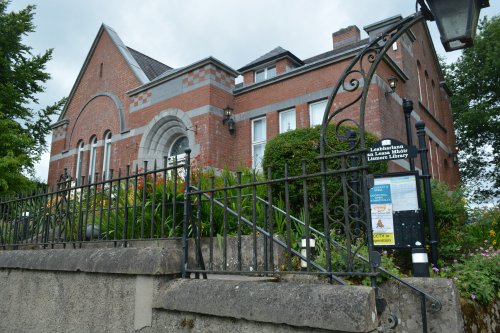
Quite a good place to park is up the road near the library with its
neat little attractive garden.
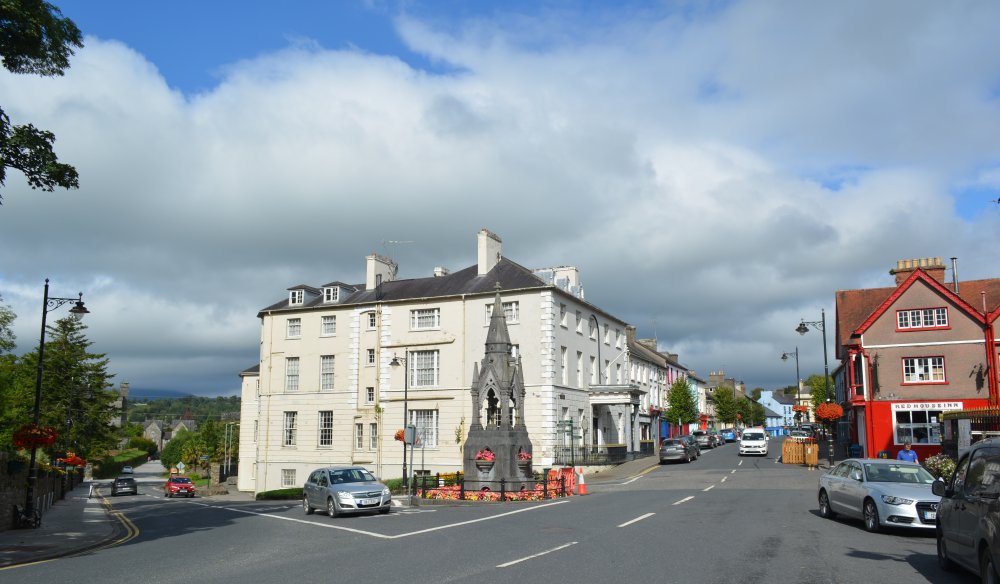
The town centre of Lismore, a pleasant little down to
browse around and explore the two cathedrals, cafes and pubs. Founded by Saint Mochuda (Irish: Mo Chutu mac Fínaill),
died 637, also known as Saint Carthage (Carthach or Carthach the
Younger; Latinised: Carthagus, Anglicised: Carthage), first abbot of
Lismore (Irish: Les Mór Mo Chutu). The town is renowned for its early ecclesiastical
history and the scholarship of Lismore Abbey.
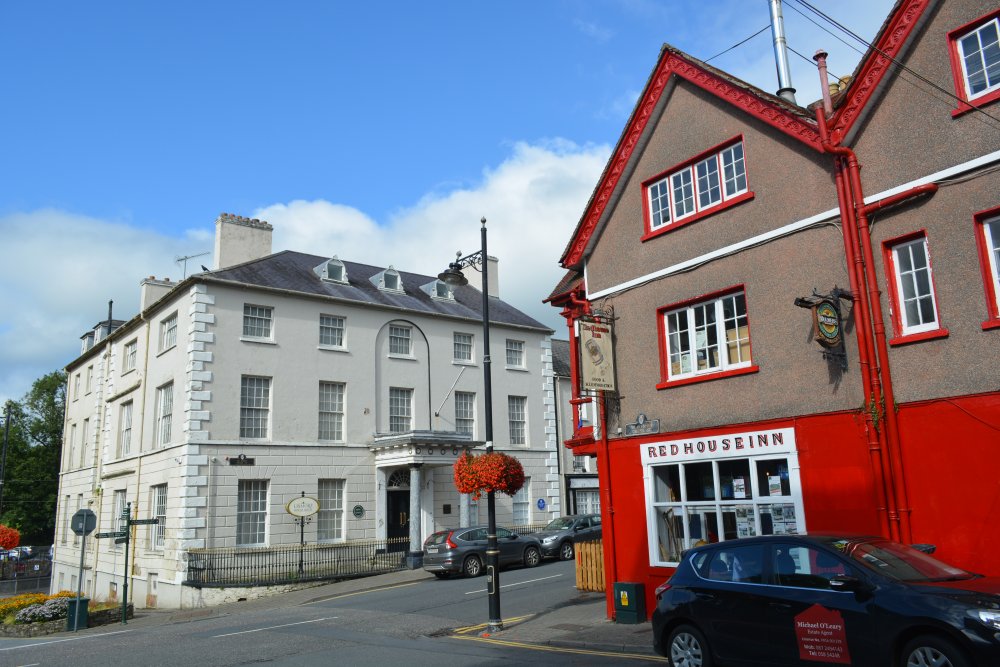
The Red House Inn opposite the Lismore House Hotel on
the Main Street of Lismore.
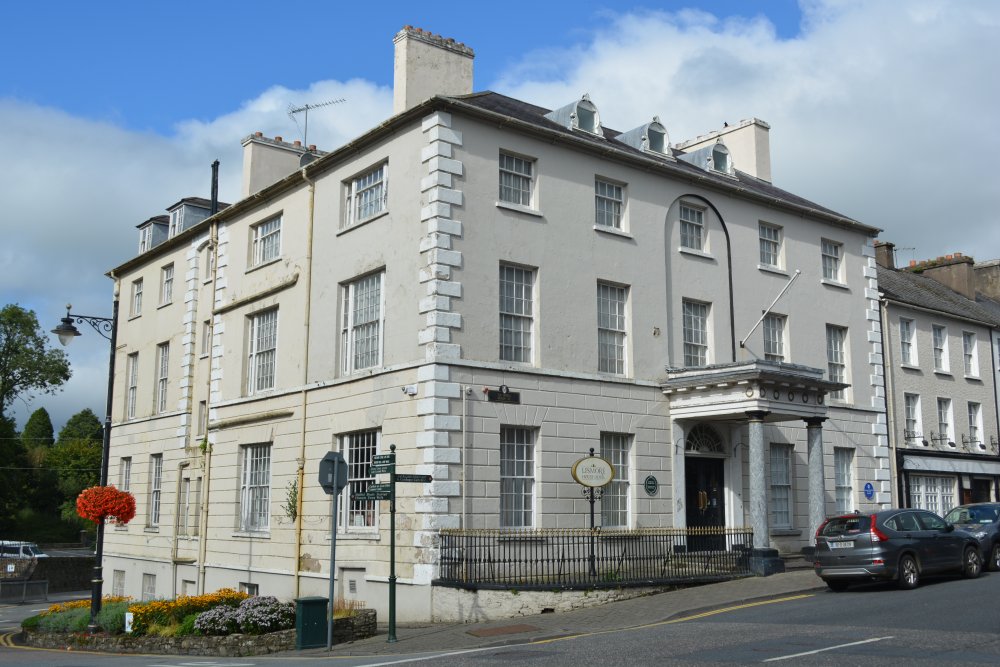
The very handsome Lismore House Hotel in Main Street, the first purpose built hotel
in Ireland with much elegant Georgian architecture.
A beautiful flower garden just down from
Lismore Catholic Cathedral.
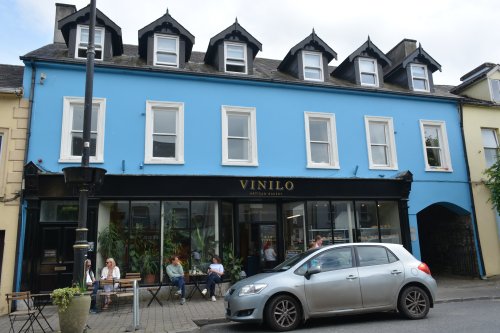
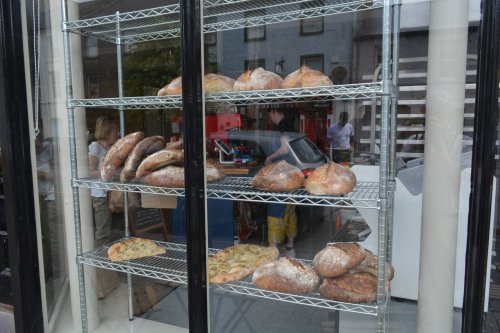
The Vinilo bakery and cafe in Lismore for some great
bread and other delicious food stuff in Lismore. St Carthage's Cathedral (Church of Ireland), Lismore
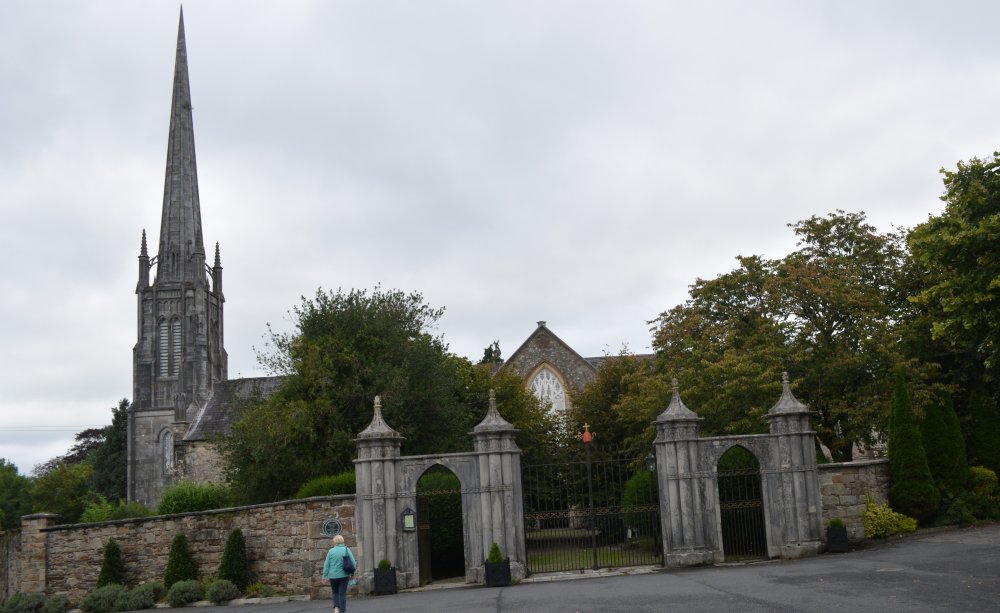
The entrance to the Church of Ireland St Carthage Cathedral, Lismore 1. Church of Ireland – St Carthage's Cathedral (Anglican, Church of Ireland)Overview
Historical Highlights
Architectural Features
Notable Associations
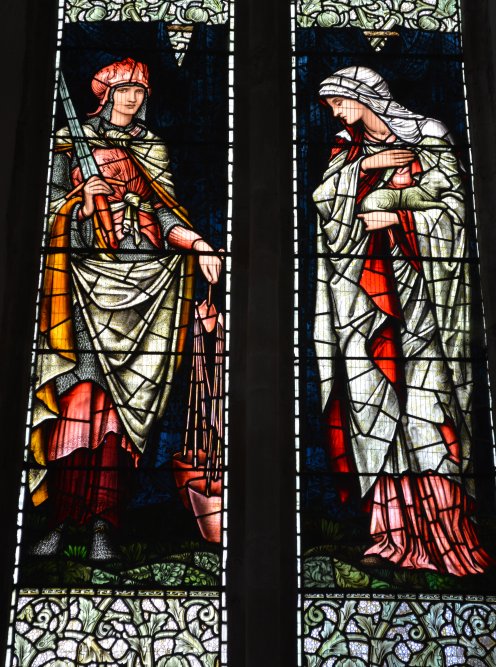
Information on the history of St Carthage Cathedral, Lismore The medieval Lismore Cathedral, dedicated to St Carthage, variously damaged and repaired over the centuries, is notable for its architecture and the stained glass window by the English pre Raphaelite artist, Edward Burne-Jones.
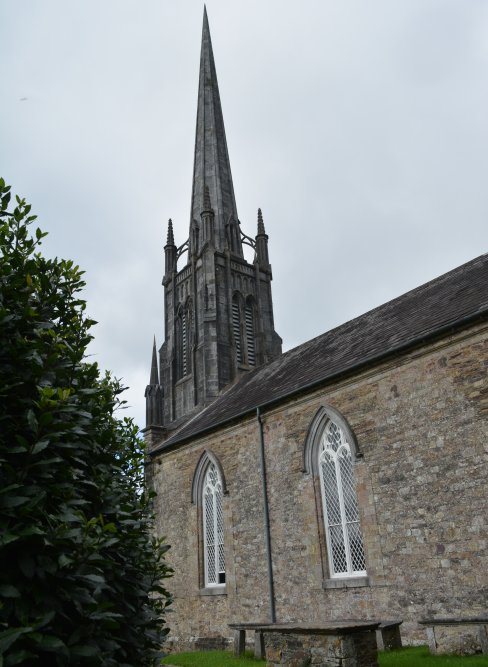
The tower of St Carthage Cathedral, Lismore
Left: The church spire and entrance to St Carthage Cathedral (Church of Ireland), Lismore. Right: Just inside the entrance on the left is a wonderful 'pre-Raphaelite' double stained glass window by Edward Burne-Jones (1833-1898) depicting Justice and Humility, a compassionate work commemorating Francis Curry.
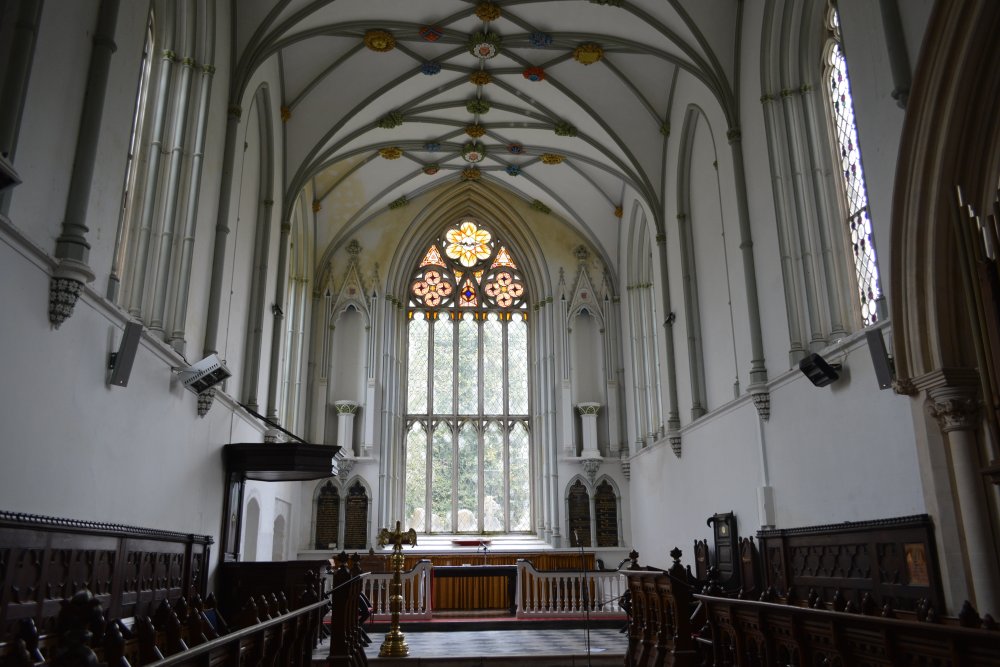
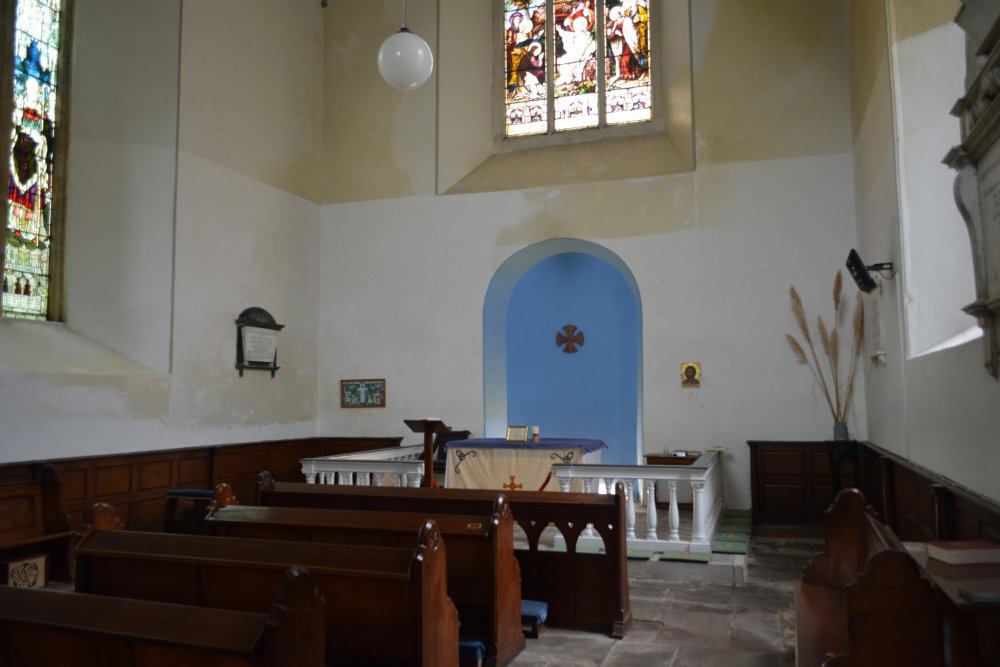
The choir stalls, altar, east window, in the chancel of St Carthage Cathedral, Lismore.
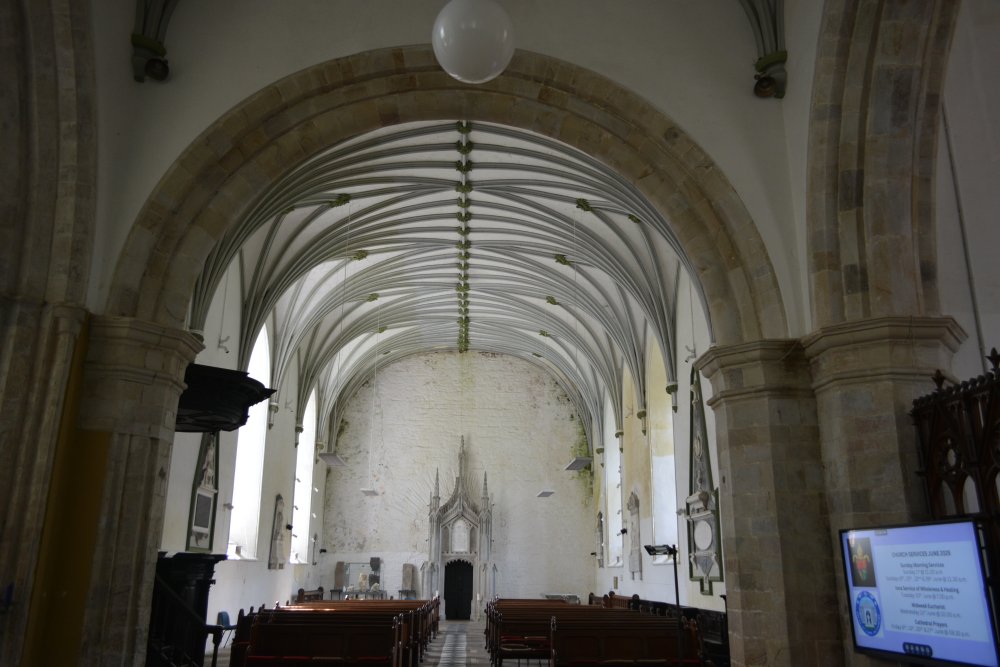
The rebuilt Norman nave and chancel arch of St Carthage's Lismore Cathedral (Church of Ireland) though most of the present structure was mainly built in 1633.
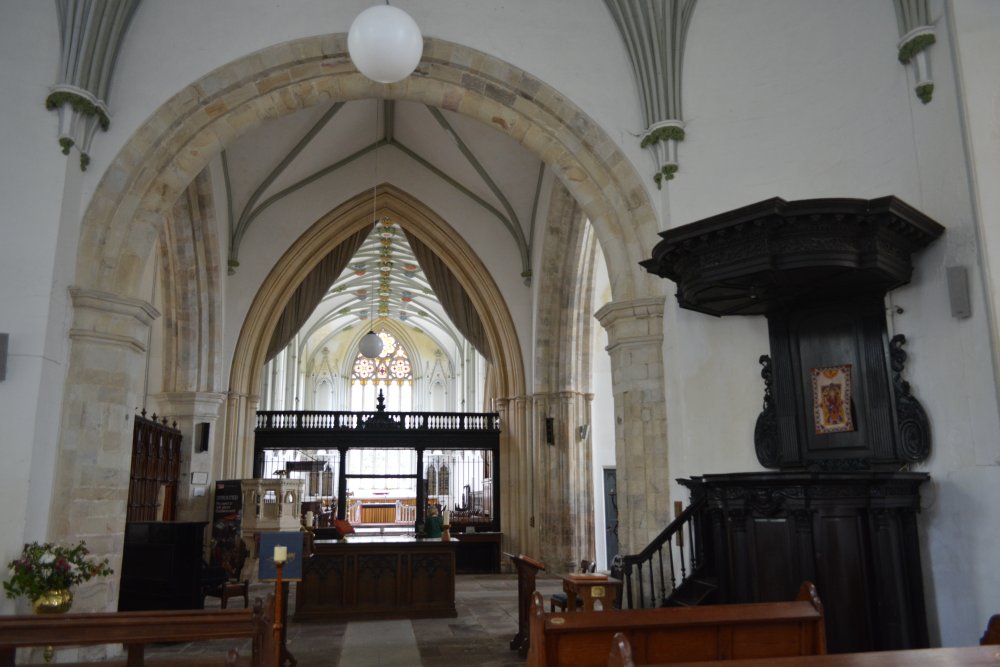
The pulpit and rood screen in St Carthage cathedral, Lismore
The Columba Chapel in the north transept of St Carthage Cathedral, Lismore
The stained glass window above the altar in the Columba Chapel, St Carthage Cathedral, Lismore
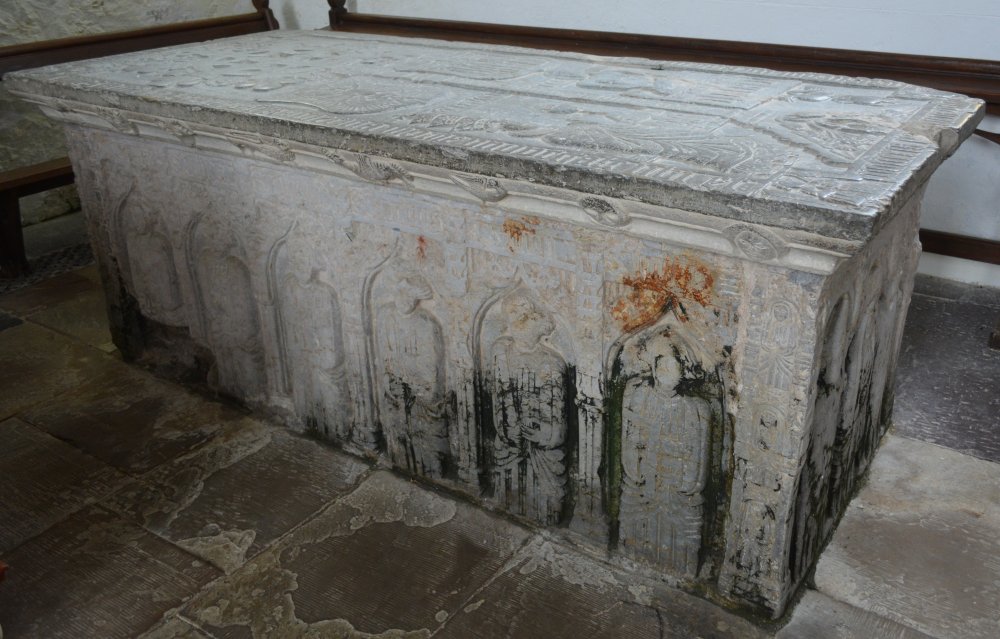
The tomb of John MacCragh and his wife Catherine Prendergast (1557) and Donnell MacCragh (1548) in the nave of St Carthage Cathedral.
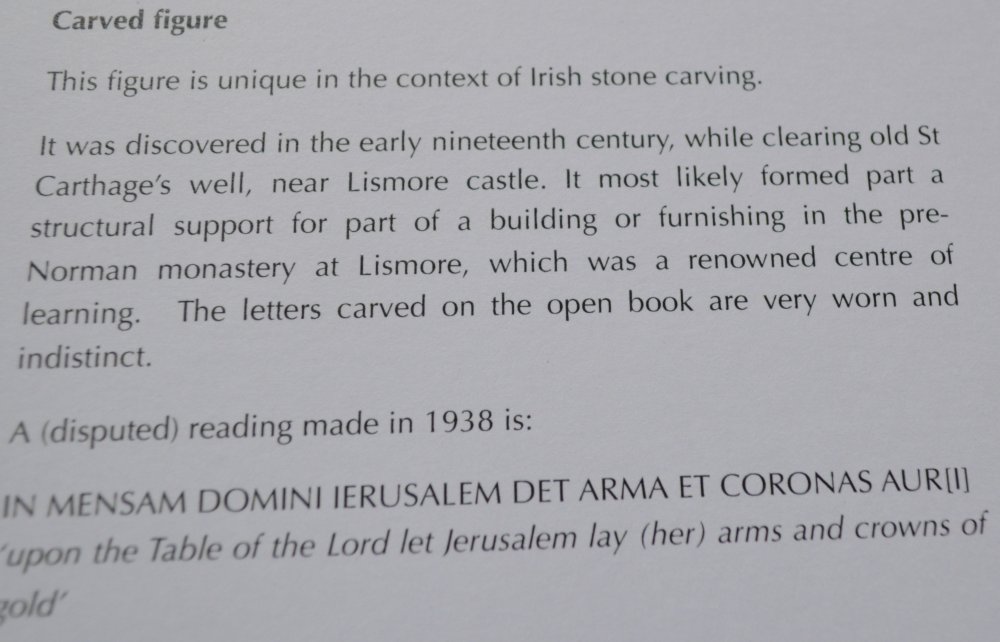
Left: A medieval carved figure in the nave of St Carthage Cathedral, Lismore. Right: A tombstone, cross-slab from a medieval tomb in St Carthage Cathedral, Lismore. St Carthage's Church (Roman Catholic Cathedral), Lismore 2. Roman Catholic – St Carthage’s Cathedral (Catholic)Overview
Historical ContextAfter the Reformation, the medieval cathedral became Anglican. The Catholic community worshipped in smaller chapels until the 19th century, when Catholic emancipation and population growth allowed for a new cathedral. Architectural Features
Significance
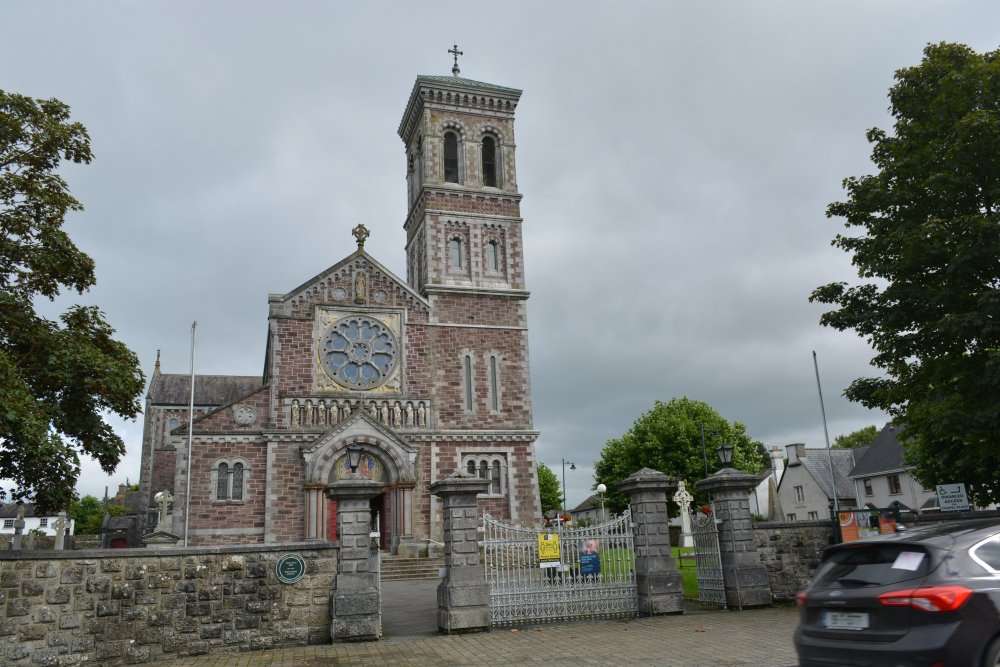
The entrance to St Carthage Church, the Roman Catholic Cathedral in Lismore. The architect of St Carthage's Roman Catholic Church was Walter Doolin (1850-1902)
The Catholic Cathedral in Lismore is built in the 'Italianate' style. ( see the Connelly Street Station in Dublin)
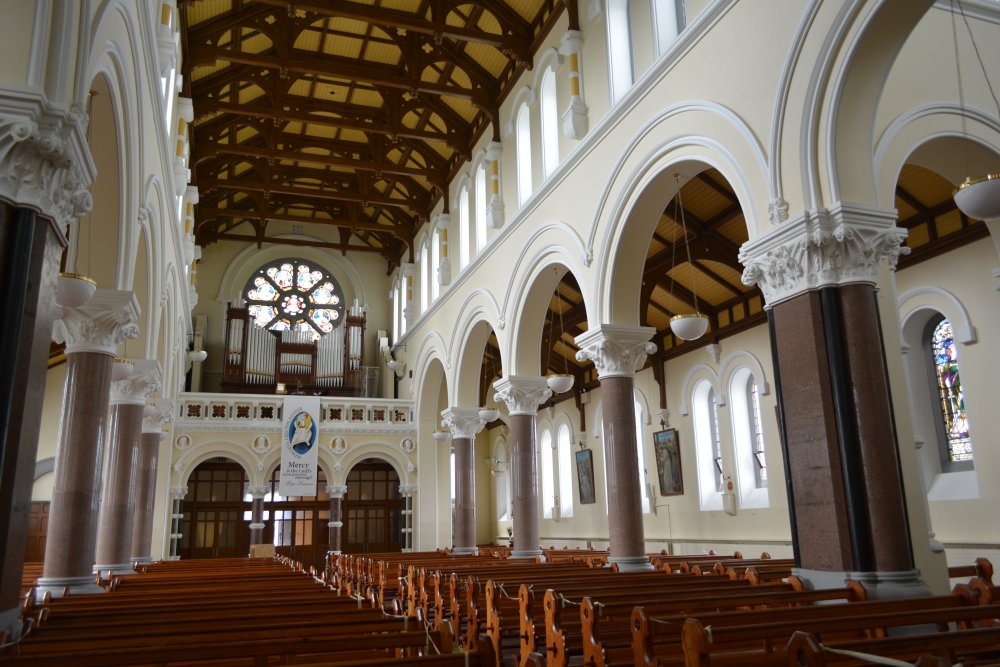
Interior view of St Carthage Roman Catholic Cathedral in Lismore.
Other interior views of St Carthage RC Church, looking towards the entrance.
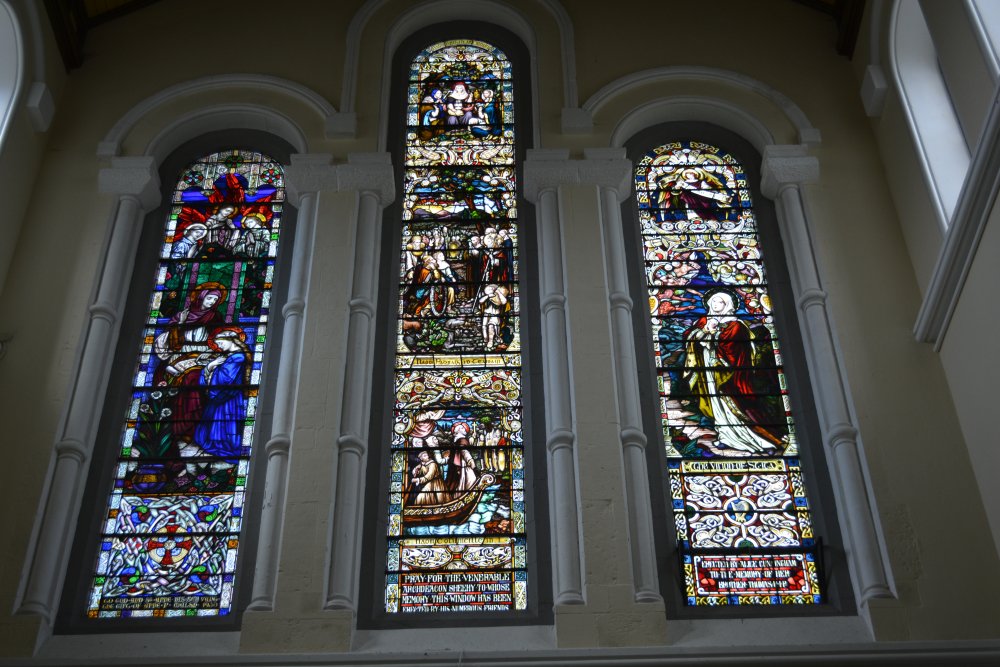
Examples of stained glass windows in St Carthage's RC Cathedral in Lismore.
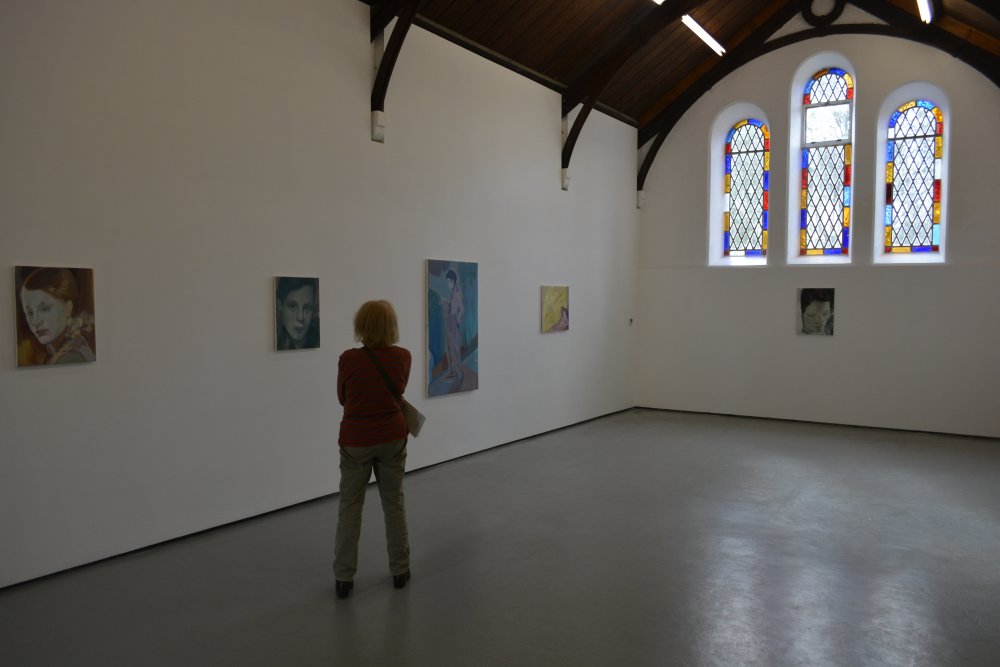
The St Carthage Hall Art Gallery, Lismore
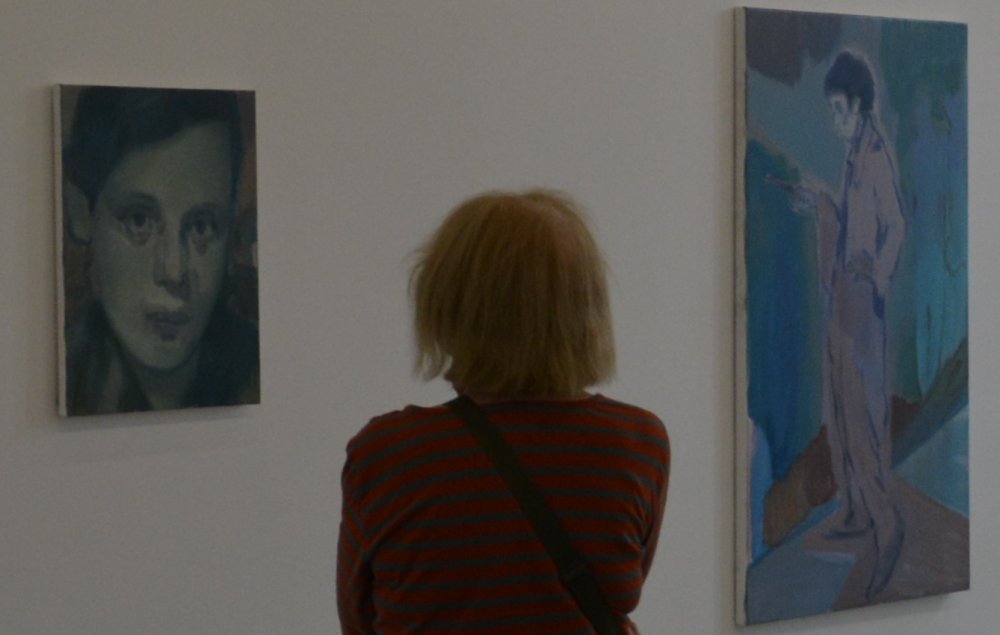
In September 2021 Lismore Castle Arts presented a solo exhibition by Kaye Donachie entitled "Into the Thousand Mirrors". The paintings pay tribute to historical female figures ranging from modernist performers, futurist artists and non-conformist poets. The paintings recognise the allure of these women and there stimulation of Kaye Donachie in her paintings.
Lismore Castle and Gardens Lismore Castle: Eight Centuries of Power, Ruin, and Revival1. Foundation: A Norman Stronghold (1185)The first castle on the site was built in 1185
by Prince John, later King John of England, as part of
the Anglo‑Norman consolidation of Munster. Shortly after, the castle was entrusted to the Church, becoming a bishop’s palace for several centuries. 2. Medieval and Tudor PeriodsThe castle passed through the hands of:
It suffered significant damage during the Desmond Rebellion (1579). 3. Raleigh, Boyle, and the 17th CenturyIn 1589, the castle was briefly
leased to Sir Walter Raleigh, who soon sold it to
Richard Boyle. The castle endured further turmoil during the Confederate Wars, being captured in 1645 and left in ruins by 1650. 4. The Cavendish Era: 18th–19th Century RebirthThe castle entered a new chapter in 1753, when it passed to the Cavendish family, the Dukes of Devonshire. Major rebuilding occurred in the mid‑19th century, giving the castle its current Victorian Gothic appearance. Key contributors included:
The result is a dramatic blend of medieval massing and Victorian romanticism perched above the Blackwater. 5. Lismore Castle TodayThe castle remains the Irish home of the Duke of Devonshire and is privately occupied, though parts of the gardens and the contemporary art gallery (Lismore Castle Arts) are open to the public. Lismore Castle Gardens: Historic Terraces and Victorian GrandeurThe gardens are among the oldest and most celebrated in Ireland. 1. Upper Garden (Medieval Origins)Originally the monastic garden of
Lismore Abbey, this area has been cultivated for over 700 years.
2. Lower Garden (19th Century)Developed during the Victorian remodelling, the lower garden features:
The combination of medieval structure and Victorian landscaping creates a layered, atmospheric garden experience.
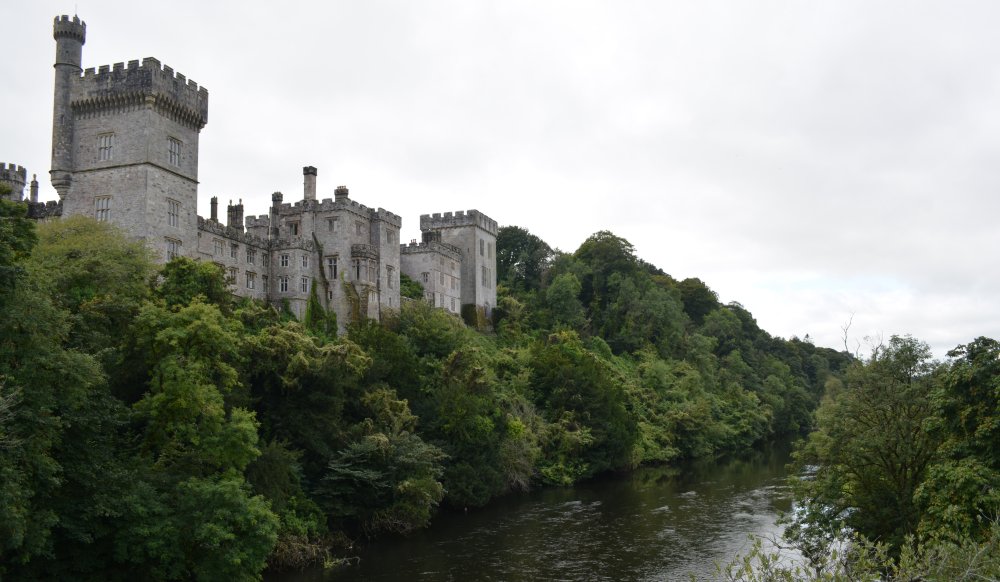
The lovely River Blackwater, above which Lismore Castle and Lismore Town lie. Lismore Castle (Irish: Caisleán an Lios Mhóir) is the Irish home of the Duke of Devonshire. Located in the town of Lismore in County Waterford in the Republic of Ireland, it belonged to the Earls of Desmond, and subsequently to the Cavendish family from 1753. It was largely re-built in the Gothic style during the mid-nineteenth century for The 6th Duke of Devonshire. (Wikipedia)
Lismore Castle set high above the River Blackwater valley, in Lismore. The imposing Lismore Castle, situated on the site of the old monastery since medieval times, lies on a steep hill overlooking the town and the Blackwater valley. It can trace an eight-hundred-year-old history linking the varied historic relations between England and Ireland. Originally built following the arrival of Henry II's son, Prince John, in the twelfth century, the castle was a bishop's palace up to the sixteenth century. Subsequently owned by Sir Walter Raleigh until his demise, it was sold to Richard Boyle, controversial First Earl of Cork, described by historian R. F. Foster, in his Modern Ireland, as an "epitome of Elizabethan adventurer-colonist in Ireland". In 1627 the castle was the birthplace of the First Earl's most famous son, Robert Boyle (of Boyle's Law), known as the "Father of Modern Chemistry". Boyle was chased off his lands in Ireland during the Irish Rebellion of 1641, following which his sons recovered the family estates after suppression of the rebellion. The castle remained in the possession of the Boyle family until it passed to the English Dukes of Devonshire in 1753 when the daughter of the 4th Earl of Cork, Lady Charlotte Boyle, married the Marquess of Hartington, who later succeeded as, in 1755, The 4th Duke of Devonshire, a future Prime Minister of Great Britain and First Lord of the Treasury. (from Wikipedia).
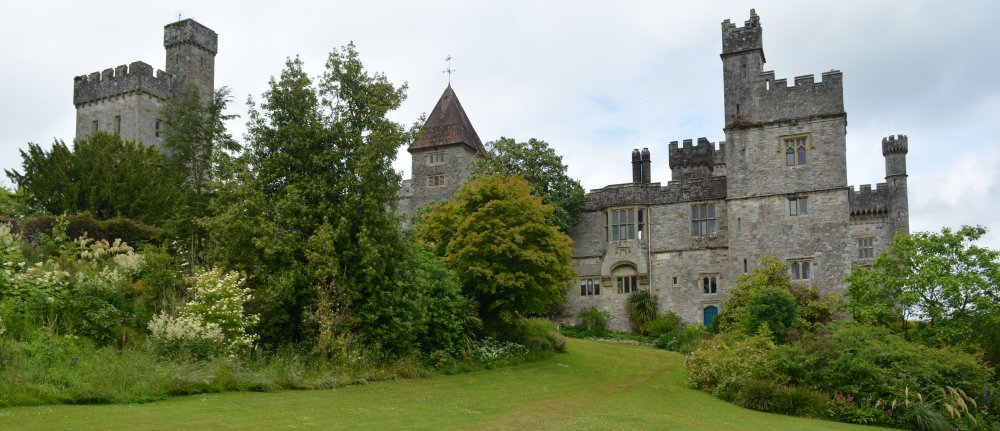
Much of Lismore Castle has been rebuilt in the Gothic style. Some details of the Gothic style of architecture of Lismore Castle.
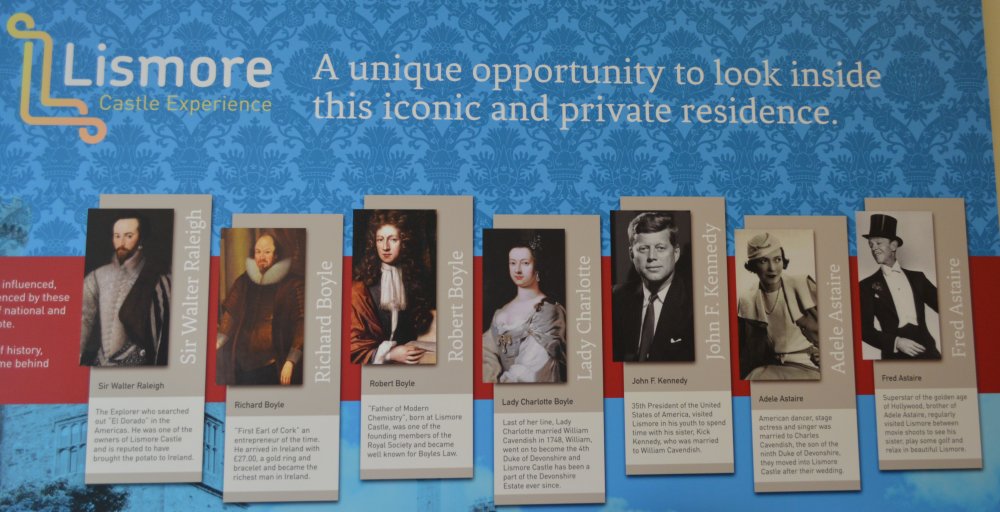
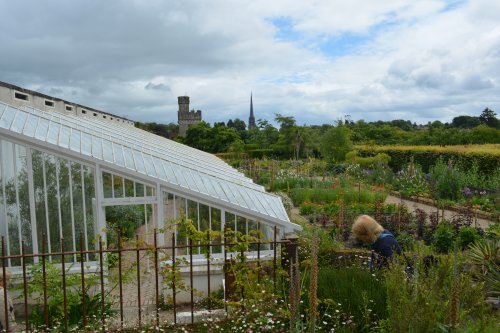
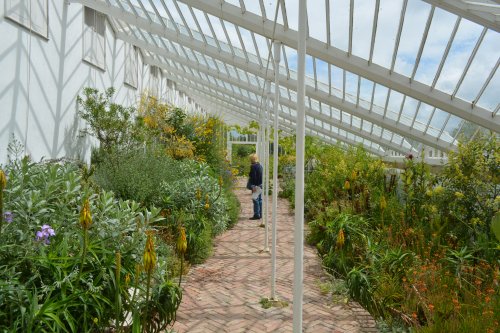
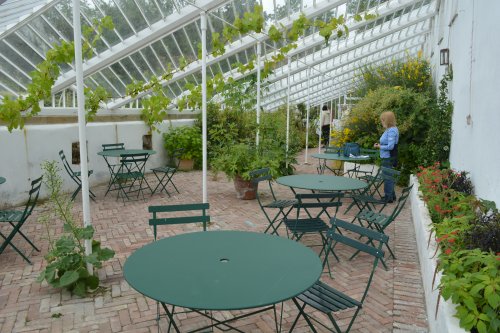
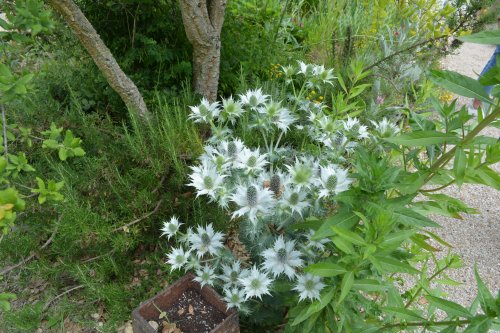
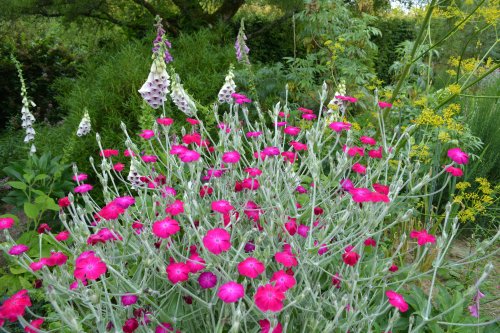
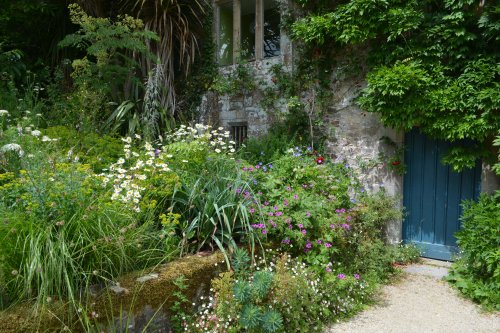
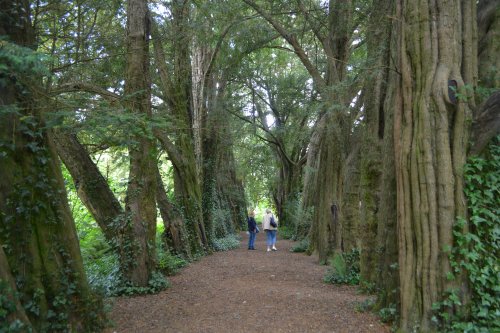
Examples of famous people associated with Lismore Castle (from the tourist information centre in Lismore) Pictures of the lovely Lismore Castle Gardens
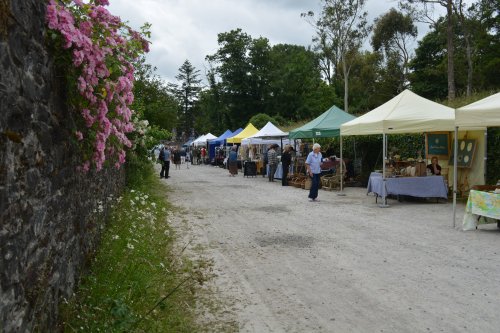
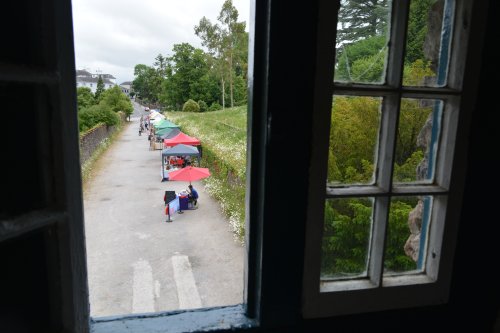
There is a small market on a Sunday near the entrance to the gardens, very nice snacky food available.
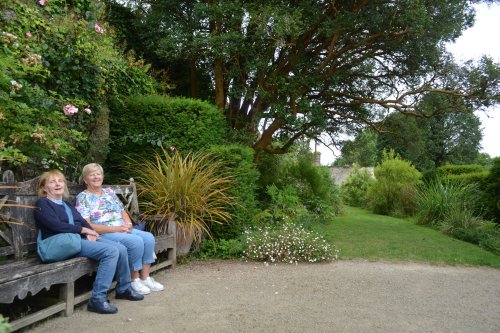
Lismore Castle gives quite a background to the Gardens.
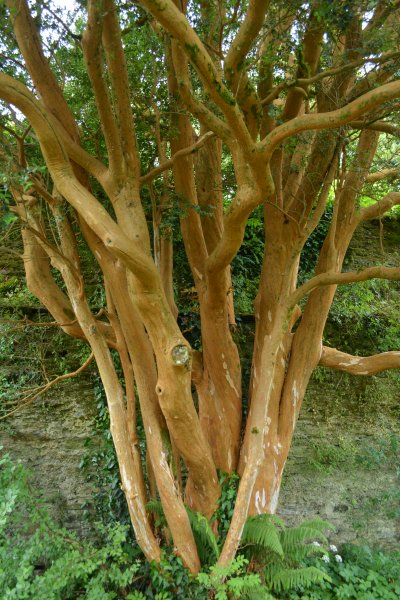
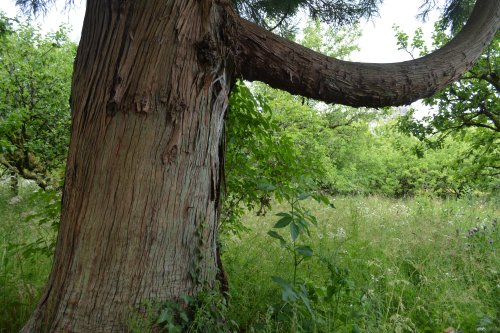
One of the old medieval towers and an interesting tree.
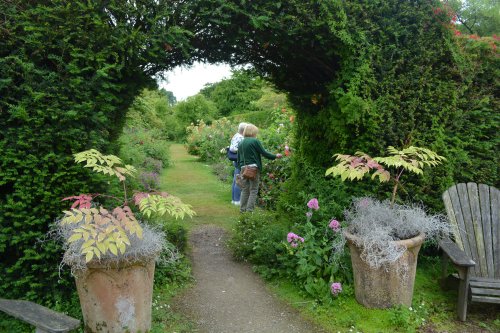
Greenhouse and hedge arched walkways.
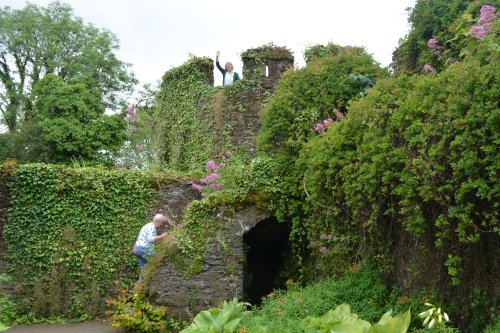
Some parts of the garden are left to relatively wild, to add to the variety of flowers.
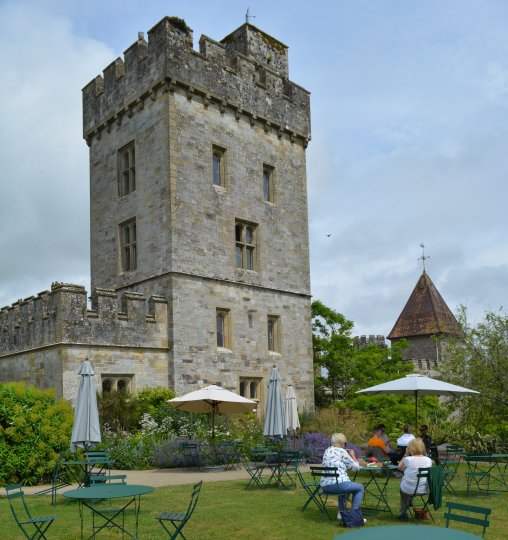
This tower is often a backdrop to views of the gardens.
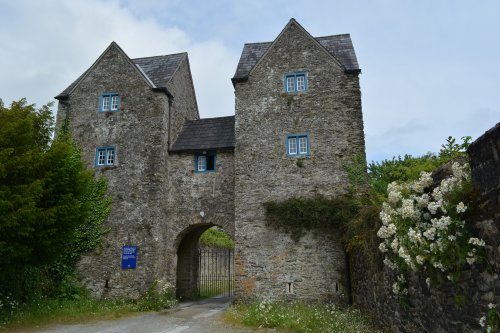
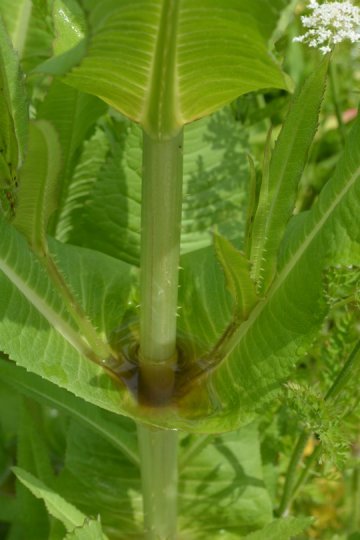
Two towers, but one is designed to trap water the stem. You can get a snack near the 'tower'.
Glencairn Abbey
The church of the Cistercian Nuns at Glencairn Abbey near Lismore, still a thriving community in the 21st century. The Arthur Kiely-Ussher Lodge and the Ballysaggartmore Towers
Left: The Lodge built by Arthur Kiely-Ussher, near Lismore. It, like the towers below, where built to impress his very demanding wife who wished to live in a large house to impress the 'local society'. The cost of this neo-Gothic architecture was so great, they ran out of money, so that the great house was never built. The lodge and towers stand as a 'folly' in every sense of the word! Right: The Ballysaggartmore Towers also built by the Kiely-Ussher's, near Lismore.
Irish holiday tour docspics photos images pics photographs pictures © Phil Brown * Irish holiday tours, touring in Ireland, top tourist attractions, tourism information, luxury hotels, self-catering holiday cottages, airbnb air b and b air B&B accommodation, historic towns & cities in Ireland archaeological sites, museums, cheap flights, get there by flying of Ferry, Irish Ferries, Stena Line, Ryanair Travel, dining out in Ireland, good food guide to Ireland, top Irish restaurants, Irish coach tours, weekend breaks trips to Ireland docspics images photos of Lismore, Co. Waterford © Phil Brown Tourist information on Lismore, Co. Waterford, Walks near Lismore, Co. Waterford, Having holidays near Lismore, Co. Waterford, Ireland, Top tourist attractions near Lismore, Co. Waterford, luxury hotels near Lismore, Co. Waterford, self-catering holiday cottages near Lismore, Co. Waterford, airbnb air B and B near Lismore, Co. Waterford, good B&B near Lismore, Co. Waterford, friendly pubs near Lismore, Co. Waterford, cafes near Lismore, Co. Waterford, eating out in fine restaurants near Lismore, Co. Waterford, weekend breaks near Lismore, Co. Waterford, wining & dining weekends near Lismore, Co. Waterford, walking holidays around Lismore, Co. Waterford, touring coach tours including Lismore, Co. Waterford, pretty villages near Lismore, Co. Waterford, historic towns and pretty village near Lismore, Co. Waterford, museums near Lismore, Co. Waterford, local art galleries near Lismore, Co. Waterford, guided walks from Lismore, Co. Waterford, excellent fell hill walking around Lismore, Co. Waterford, rambling near Lismore, Co. Waterford, exploring the landscape near Lismore, Co. Waterford, good places to eat near Lismore, Co. Waterford, tourist attractions near Lismore, Co. Waterford, tourist information for places near Lismore, Co. Waterford, good places for wining and dining near Lismore, Co. Waterford, good walks near Lismore, Co. Waterford, properties for sale near Lismore, Co. Waterford, renting a flat or house near Lismore, Co. Waterford, property for rent near Lismore, Co. Waterford, houses for sale near Lismore, Co. Waterford, lettings near Lismore, Co. Waterford, places to rent near Lismore, Co. Waterford, holiday cottage accommodation near Lismore, Co. Waterford docspics images photos of Lismore, Co. Waterford Ireland © Phil Brown Tourist information on Lismore, Co. Waterford, Things to do in Lismore, Co. Waterford, What to see in Lismore, Co. Waterford, guided walks in Lismore, Co. Waterford, weekend breaks in Lismore, Co. Waterford holidays in Lismore, Co. Waterford, Top tourist attractions in Lismore, Co. Waterford, luxury hotels in Lismore, Co. Waterford, self-catering holiday cottages in Lismore, Co. Waterford, airbnb air B and B in Lismore, Co. Waterford, good B&B in Lismore, Co. Waterford, friendly pubs in Lismore, Co. Waterford, cafes in Lismore, Co. Waterford, eating out in fine restaurants in Lismore, Co. Waterford, bargain holiday breaks in Lismore, Co. Waterford, wining & dining weekends in Lismore, Co. Waterford, touring coach tours visiting Lismore, Co. Waterford, pretty areas in Lismore, Co. Waterford, historic buildings in Lismore, Co. Waterford, visiting museums in Lismore, Co. Waterford, local art galleries in Lismore, Co. Waterford, guided walks in Lismore, Co. Waterford, history of Lismore, Co. Waterford, architecture of Lismore, Co. Waterford, historic houses in Lismore, Co. Waterford, historic churches in Lismore, Co. Waterford, information centre in Lismore, Co. Waterford, heritage places in Lismore, Co. Waterford, good places to eat in Lismore, Co. Waterford, top tourist attractions in Lismore, Co. Waterford, tourist information for things to do and see in Lismore, Co. Waterford, good places to eat out in Lismore, Co. Waterford, good places to walk to in Lismore, Co. Waterford, tourist attractions properties for sale in Lismore, Co. Waterford, renting a flat of house in Lismore, Co. Waterford, property for rent in Lismore, Co. Waterford, houses for sale in Lismore, Co. Waterford, lettings in Lismore, Co. Waterford, places to rent in Lismore, Co. Waterford, holiday cottage accommodation in Lismore, Co. Waterford |