|

 18.
Ripley Town (size of a village), Church and Castle
Scenes in
North Yorkshire 18.
Ripley Town (size of a village), Church and Castle
Scenes in
North Yorkshire

INDEX
Ripley Town, the village buildings *
All Saints
Church *
Ripley Castle * Information adapted from
Wikipedia

The Ripley
Town Buildings Ripley is a town and civil parish in
North Yorkshire in England, a few miles north of Harrogate on the
A61 road towards Ripon. The town name derives from Old English and
is believed to mean wood of the Hrype or Ripon people Ripley was
historically part of the West Riding of Yorkshire until 1974.
The
town and castle are privately owned. A castle dating from the 15th
century, Ripley Castle, has been the home of the Ingilby family for
700 years. The present owner is Sir Thomas Ingilby, 6th Baronet, the
28th generation. The castle, which has a priest hole, is open for
public tours. The landscaped castle grounds and ornamental lakes are
also open to the public.
Ripley has 55 Grade II Listed buildings
including Ripley Town Hall and two that are Grade I Listed: Ripley
Castle and the Gatehouse Approximately 80 Metres South of Ripley
Castle. A 19th century Ingilby tore down the old village, except for
the castle and the church, and modelled it after an Alsatian village
with Ripley Town Hall designed in the style of a French "hôtel de
ville".
There is a cycle path between Ripley and Harrogate called
the Nidderdale Greenway which is part of the National Cycle Route
67. In March 2017, the town was named number 17 out of the 20 Best
Villages in Britain to live in (one of only two in the North of
England).
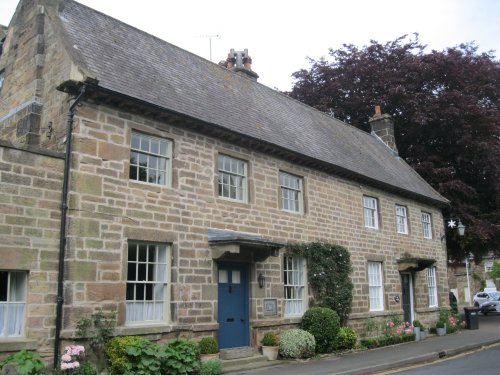

Some of the listed buildings in Ripley.

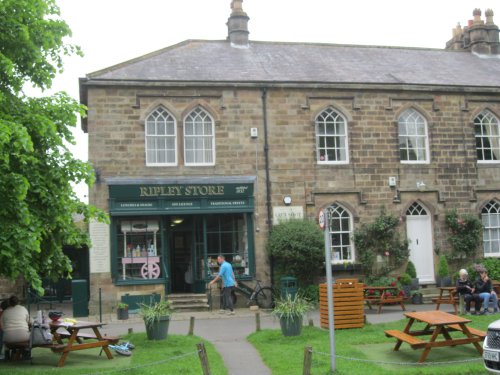
Left: Boar's Head pub, an old coaching inn in Ripley
Right: The Ripley Stores shop in Ripley
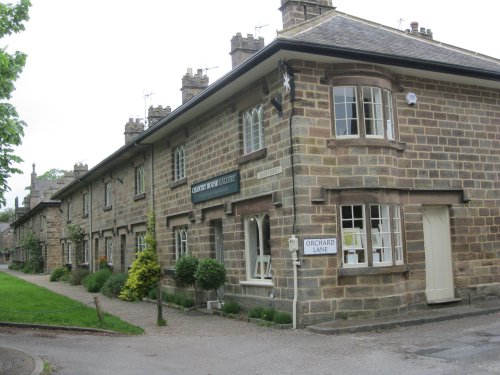

Left: Chantry House art gallery
in Ripley
*
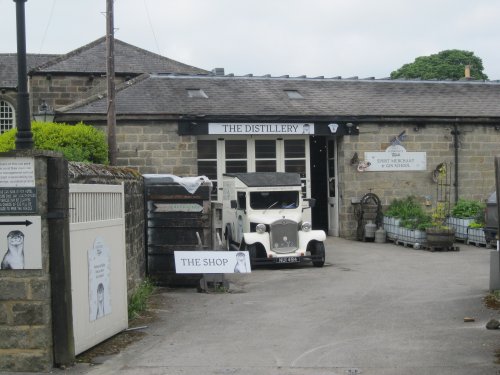
Left: The Harrogate Tipple, The Distillery and Shop in
Ripley
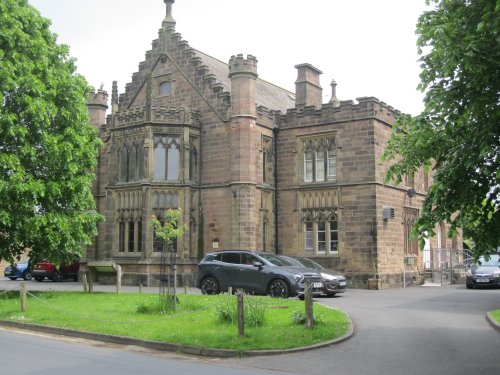
Right: The Town Hall of Ripley
Ripley Town Hall is a municipal
building in Main Street, Ripley, North Yorkshire, England. The
structure, which is used as an events venue and as a post office, is
a grade II listed building. History: In the mid-19th century the
lord of the manor, Sir William Amcotts-Ingilby, developed a plan to
redevelop Ripley in the style of an Alsatian village; the final
building in his plan was the town hall which he wanted to resemble a
French "Hôtel de Ville".
The new building was designed in the Gothic
Revival style, built in ashlar stone and was completed in late 1854.
The design involved a symmetrical main frontage with three bays
facing onto Main Street; the central bay featured a two-tier canted
bay window with tracery and a crenelated parapet inscribed with the
words "Hôtel de Ville 1854". The central bay was flanked by corner
turrets and was surmounted by a stepped gable with a commemorative
plaque, held in place by the figure of an angel. The plaque recorded
the fact that, while Amcotts-Ingilby initiated the project, his wife
completed it following his death in May 1854. The outer bays, which
were recessed and crenelated, featured three-light windows with
tracery on both floors. Internally, the principal rooms were the
main assembly hall and an ante-room.
In the 19th century, the
building was used as venue for public meetings and for meetings of
the local literary institution. It continued to operate as a
community events venue for throughout the 20th century, and an upper
floor was installed in the building in the 1960s to allow more
social functions to take place. A post office was also established
in the right-hand side bay. Activity significantly increased after
the local promotor, Andy Herrington, established the Ripley Blues
Club there in the late 1990s: one of the first performers he
attracted was the blues band, Nine Below Zero, in September 1999. An
extensive programme of refurbishment works, financed by bodies which
included the Heritage Lottery Fund, was completed in 2004. The works
received recognition from the Duke of York's Community Initiative
Award in 2007 and, following the re-opening of the town hall, later
performers there included the American singer-songwriter, Steve
Cropper, in November 2014, the rock band, Magna Carta, in September
2017 and the pub rock band, Dr. Feelgood, in December 2017.
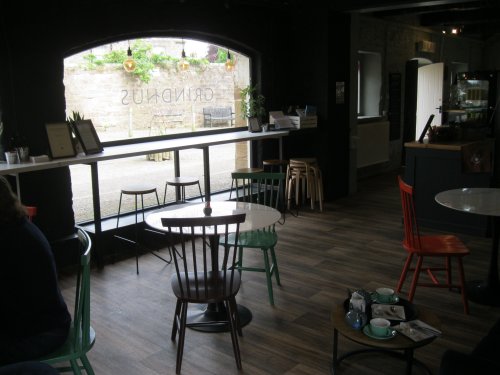
The coffee shop, across from the Castle
Tearoom cafe by Ripley Castle
All Saints
Church, Ripley
A 14th century church adjacent to
Ripley Castle ,the home of Sir Thomas Ingilby in a village between
Harrogate and Ripon. Sometime around the year 1395 Sir Thomas
Ingilby of Ripley Castle, near Harrogate, built a church opposite
his castle to replace an earlier chapel half a mile to the south
that was suffering from subsidence. The chapel's condition had
become so desperate that it became known as the 'Sinking Chapel'.
Sir Thomas reused carved stones from the earlier chapel and created
a very simple building with a nave, north aisle, chancel, a
two-storey chantry, and a stumpy west tower. Within a few decades, a
south aisle and north chapel were added along with a small chantry.
The church remained unaltered until 1567 when Sir William Ingilby
(1518-1578) had the tower heightened. He gave the tower its
distinctive external turret stair and added a clerestory to the
nave. Inside the church the Ingilby Chapel thought to date from
before 1547 with fine pews carved for the Ingilby family. On the
east wall are bullet holes where Royalist prisoners were shot by
Cromwell's men during the civil war. Against the exterior of the
south wall are gravestones salvaged from the Sinking Chapel. With
the gravestones is a stone coffin now used as a flower bed. The
churchyard has a Weeping Cross and is a unique survivor of many such
crosses in England.

The graveyard of All Saints Parish Church, Ripley

General view of the external architecture of All Saints Church, Ripley

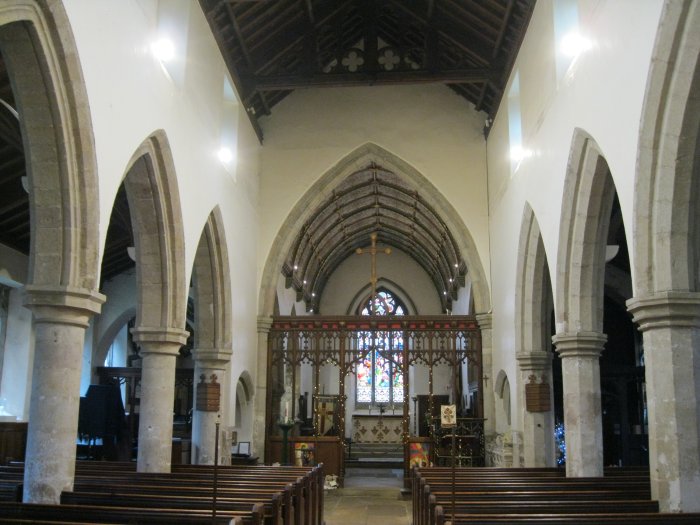
General view down the nave to the chancel and altar of the internal
architecture of All Saints Church, Ripley
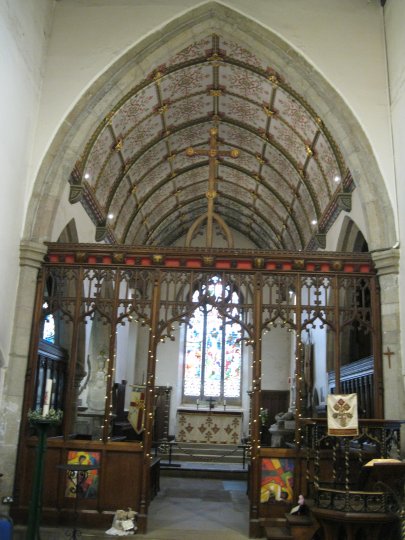
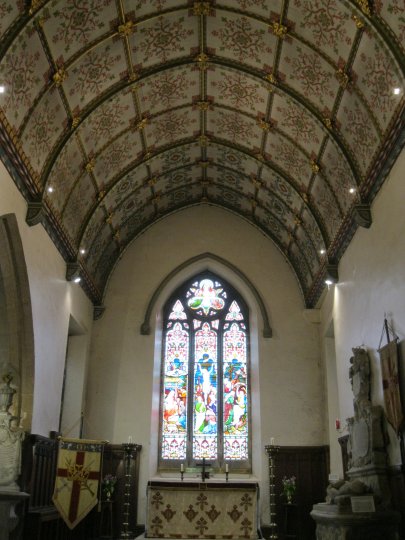
The chancel, choir, altar and east window of All Saints Church, Ripley

The tomb of Sir Thomas Ingilby (1290-1369) and his wife, All Saints
Church, Ripley

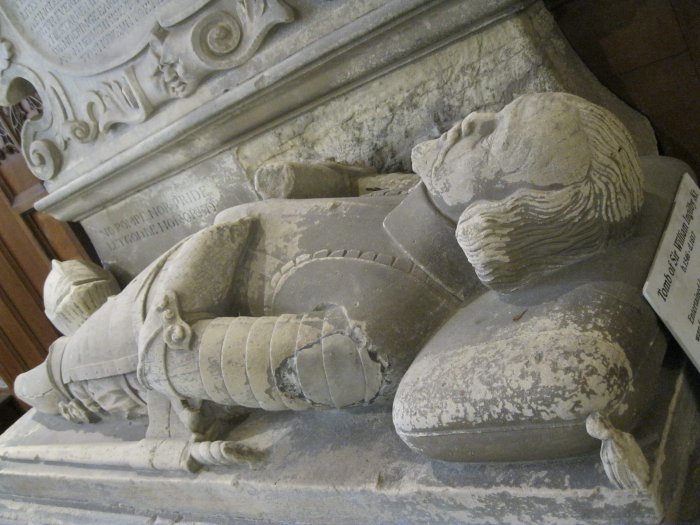
The tomb of Sir William Ingilby (1546-1617) in All Saints
Church, Ripley


The weeping cross in the graveyard of All Saints Church,
Ripley
Ripley
Castle
Ripley Castle is a Grade I listed
14th-century country house in Ripley, North Yorkshire, England, 3
miles (4.8 km) north of Harrogate. The house is built of coursed
squared gritstone and ashlar with grey slate and stone slate roofs.
A central two-storey block is flanked by a tower at one end and a
three-storey wing at the other. A gatehouse which stands some 260
feet (80 m) to the south of the main buildings is also Grade I
listed, whilst the two weirs over Ripley Beck (and the bridges that
straddle them) are grade II listed and the grounds and gardens are
also listed at grade Lithe castle has been the seat of the Ingilby
baronets for centuries. In June 2024 it was announced that it was to
be sold.
Sir Thomas Ingleby (c. 1290–1352) married the heiress
Edeline Thwenge in 1308/9 and acquired the Ripley Castle estate with
its medieval manor house as her dowry. His oldest son, also called
Thomas (1310–1369), saved the king from being gored by a wild boar
whilst on a hunting expedition and was knighted in return with the
boar's head symbol as his crest. His descendant Sir John Ingleby
(1434–1499) inherited the estate at the age of five from his father
William and built the castle gatehouse, before becoming a monk at
Mount Grace Priory, near Northallerton, and later the Bishop of
Llandaff. His son Sir William Ingleby was raised by his deserted
mother.
Sir John's grandson, Sir William Ingleby (1518–1578), was
High Sheriff of Yorkshire in 1564–65. Sir William added the tower to
the building in 1548. Two of his sons were fervent Catholics on the
run from the authorities. Francis, a priest, was caught, sentenced
and hanged, drawn and quartered in York in 1586; David escaped to
die on the Continent. Stephen Proctor captured another priest,
Christopher Wharton, in the park at Ripley in 1598. Wharton was
executed at York. Sir William Ingleby (1546–1618) was knighted by
James VI of Scotland when the king was en route to his coronation as
James I of England in 1603.
Later that year he captured one of the
fugitive brothers of the Earl of Gowrie at Kirkby Malzeard. In 1605
he was involved in the Gunpowder Plot, allowing the plotters to stay
at Ripley whilst they procured horses. One of the conspirators,
Robert Winter was his nephew. Ingleby was arrested and charged with
treason, but acquitted. Sir William Ingleby (1594–1652) supported
Charles I during the Civil War, and was made Baronet Ingleby in
1642. He fought at Marston Moor in 1644, when the King's forces were
totally routed, making his escape to Ripley and hiding in a priest
hole while Oliver Cromwell billeted himself there for the night,
held at gunpoint in the library by Sir William' sister, Jane Ingleby.
On the death of the 4th Baronet in 1772 the baronetcy became extinct
but was revived in 1781 for his illegitimate son John (1758–1815).
Sir John undertook a major rebuild of the castle in 1783–86 by
William Belwood but got into debt and fled overseas in 1794 for
several years. During this time the estate was managed by its
long-serving steward, Ralph Robinson, who sold timber from the
estate to raise money.
Sir John was High Sheriff for 1782–83 and MP
for East Retford from 1790 to 1796. His son William (1783–1854) was
a great eccentric, drinker and gambler and Member of Parliament (MP)
for East Retford from 1807 to 1812 and High Sheriff in 1821. He
adopted the surname of Amcotts-Ingilby (his mother was Elizabeth
Amcotts) and demolished and rebuilt the village of Ripley, complete
with a Continental-style hôtel de ville.
Having no heir he left the
Ripley estate to his first cousin, Henry John Ingilby. The baronetcy
was extinguished a second time. Henry was created 1st Baronet
Ingilby of the third creation in 1866. Ripley then descended to the
present 6th Baronet. The castle is still privately owned, now by the
6th Baronet and his wife, Emma, Lady Ingilby, but open to the public
for guided tours. In June 2024, it was announced that the castle and
estate were to be put on the market in the autumn.

The Gatehouse entrance of Ripley Castle

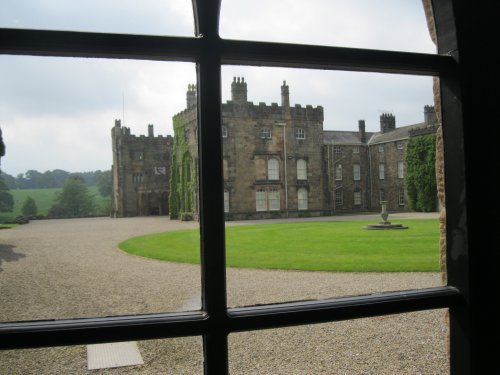
General view of the lake and Ripley Castle

The external architecture of Ripley Castle

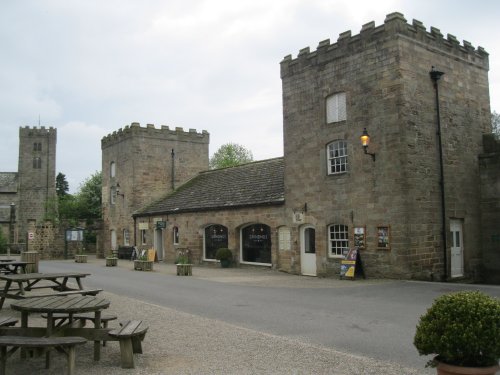
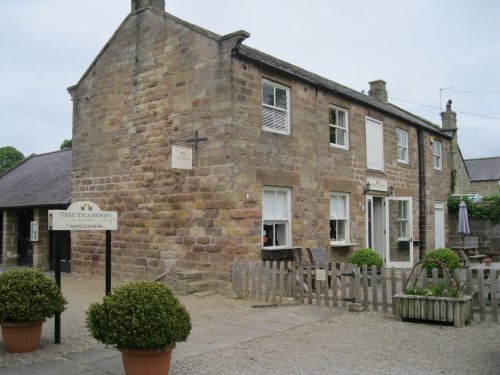
The Coffee Shop and visitor entrance to Ripley Castle and
the Castle Tea Room cafe
West Yorkshire Index
docspics images photos of Ripley Town Village North Yorkshire © Phil
Brown Tourist information on Ripley Town Village, Things to do in Ripley
Town Village, What to see in
Ripley Town Village, guided walks in Ripley Town Village, weekend breaks in
Ripley Town Village holidays in Ripley Town Village, Top
tourist attractions in Ripley Town Village, luxury hotels in Ripley Town
Village, self-catering holiday
cottages in Ripley Town Village, airbnb air B and B in Ripley Town
Village, B&B in Ripley Town Village, friendly pubs in
Ripley Town Village, cafes in Ripley Town Village, eating out in fine restaurants in
Ripley Town Village, bargain
holiday breaks in Ripley Town Village, wining & dining weekends in
Ripley Town Village, touring coach
tours visiting Ripley Town Village, pretty areas in Ripley Town Village, historic buildings in
Ripley Town Village,
visiting museums in Ripley Town Village, local art galleries in Ripley
Town Village, guided walks in
Ripley Town Village, history of Ripley Town Village, architecture of
Ripley Town Village, historic houses in Ripley Town Village,
historic churches in Ripley Town Village, information centre in Ripley
Town Village, heritage places in
Ripley Town Village, good places to eat in Ripley Town Village, top tourist attractions in
Ripley Town Village, tourist
information for things to do and see in Ripley Town Village, good places to eat out in
Ripley Town Village, good places to walk to in Ripley Town Village, tourist attractions properties for
sale in Ripley Town Village, renting a flat of house in Ripley Town
Village, property for rent in Ripley Town Village,
houses for sale in Ripley Town Village, lettings in Ripley Town Village, places to rent in
Ripley Town Village, holiday
cottage accommodation in Ripley Town Village North Yorkshire docspics images photos of
Ripley Castle © Phil Brown Tourist information on
Ripley Castle, Walks near Ripley Castle, Having holidays near Ripley
Castle, North Yorkshire, Top
tourist attractions near Ripley Castle, luxury hotels near Ripley Castle, self-catering
holiday cottages near Ripley Castle, airbnb air B and B near Ripley
Castle, quality B&B near
Ripley Castle, friendly pubs near Ripley Castle, cafes near Ripley
Castle, eating out in fine
restaurants near Ripley Castle, weekend breaks near Ripley Castle, wining & dining weekends
near Ripley Castle, walking holidays around Ripley Castle, touring coach tours including
Ripley Castle, pretty villages near Ripley Castle, historic towns and pretty village near
Ripley Castle, museums near Ripley Castle, local art galleries near
Ripley Castle, guided walks from
Ripley Castle, excellent fell hill walking around Ripley Castle, rambling near
Ripley Castle,
exploring the landscape near Ripley Castle, good places to eat near
Ripley Castle, tourist
attractions near Ripley Castle, tourist information for places near
Ripley Castle, good
places for wining and dining near Ripley Castle, good walks near Ripley
Castle, properties
for sale near Ripley Castle, renting a flat or house near Ripley Castle, property for rent
near Ripley Castle, houses for sale near Ripley Castle, lettings near
Ripley Castle, places to rent
near Ripley Castle, holiday cottage accommodation near Ripley Castle
|




 Enter place, walk, village, church, museum, gallery, historic feature, historic building, anything of interest!