|
Chester (3) Chester Cathedral A history of Chester Cathedral Lots of images of Chester Cathedral below Chester Cathedral: Once a great Abbey - The site of the Cathedral as a place of religious significance probably goes back 2000 years. Legend has it that a prehistoric Druid temple existed on the site followed by a Roman temple dedicated to Apollo until when Christianity became the state religion of Rome in the fourth century AD. Perhaps the pagan temple to Apollo become a Christian church? It is known that a Christian church was founded here in 660, and in 875 the relics of St Werburgh were brought to Chester to protect them from attacks by the Vikings. After this a church was built by King Alfred’s daughter, Queen Ethelfelda (‘The Lady of The Mercians’) in 907 specifically to house her remains. PLEASE LEAVE A DONATION TO HELP FUND THIS FINE HISTORIC MEDIEVAL BUILDING EMAIL chem55555@hotmail.com [Author and photographer © Dr Phil Brown PhD plus notes help from AI these days, page updated May 20th 2026]
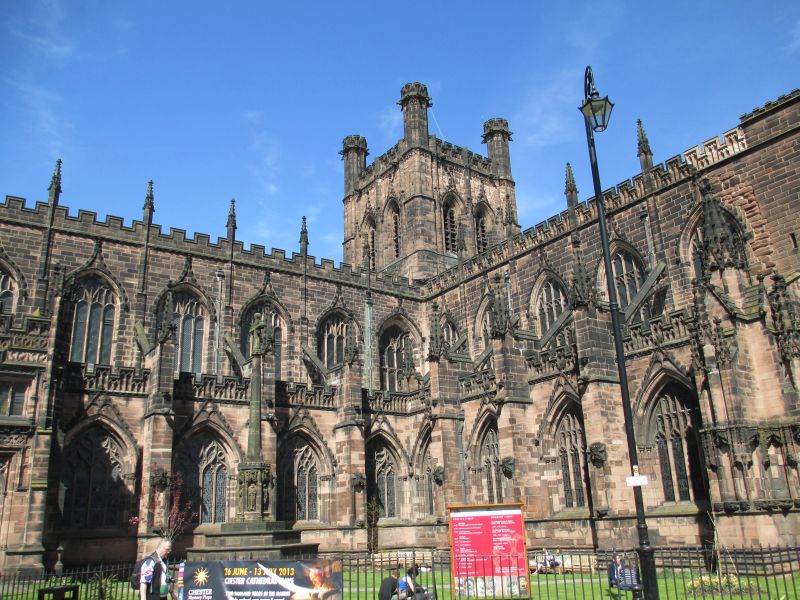
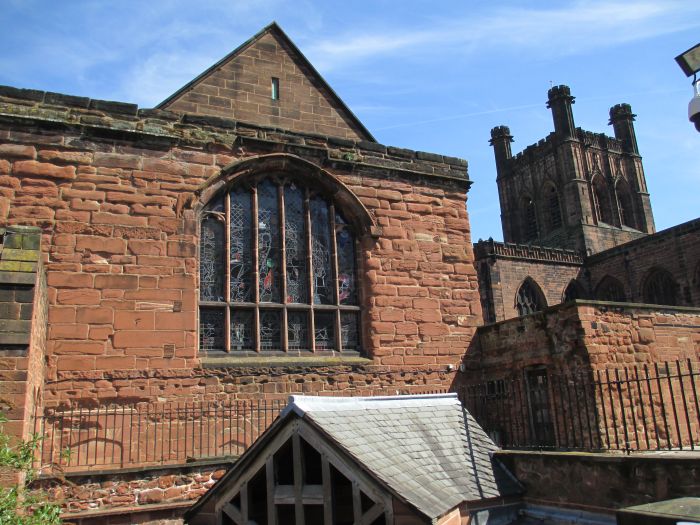
Chester Cathedral: Built of red sandstone, somewhat darkened by the industrial revolution, the main body of the church, on the left the nave and south aisle, the central tower at the crossing and on the right the south transept. After the Norman Conquest of 1066 a Norman monastery was built in 1092 by the Norman Earl of Chester, Hugh Lupus (known as ‘The Wolf’) in the centre of his capital, Chester with the support of Anselm, the Abbot of Bec in Normandy. However by the 1250s the church in the early Norman Romanesque style of architecture was considered old fashioned and unfashionable and the monks decided to rebuild their church in the more 'up market' date Gothic style, so from ~1260 beginning at the east end with the construction of the Lady Chapel, the project proceeded. Further rebuilding or 'new build' work continued until ~1490 and most of what you see today dates from this later medieval period.
Chester Cathedral:
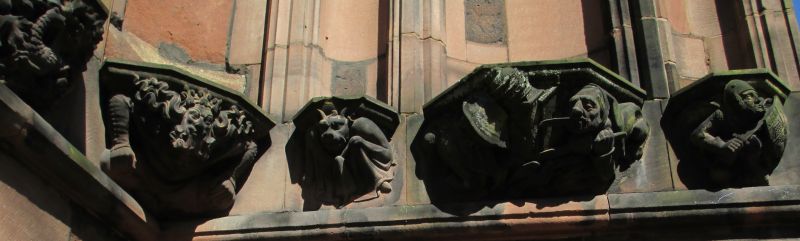
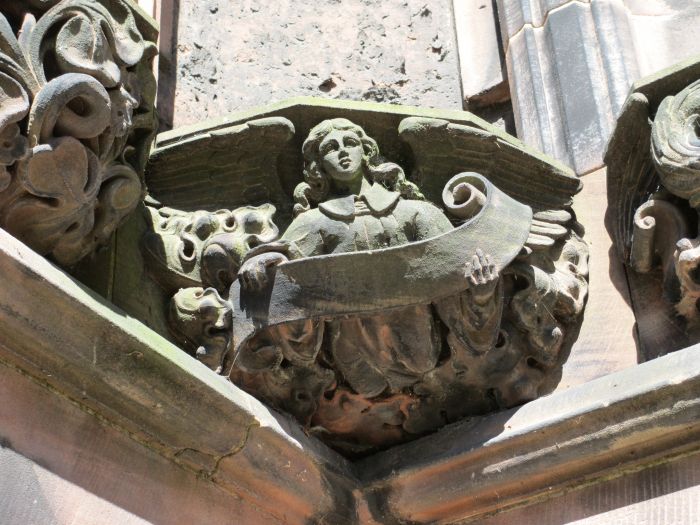
Chester Cathedral: Some of the modern day carvings on the outside cathedral walls, beautifully mimicking the stone carving skills of the medieval stone masons - who very fond of grotesque heads!
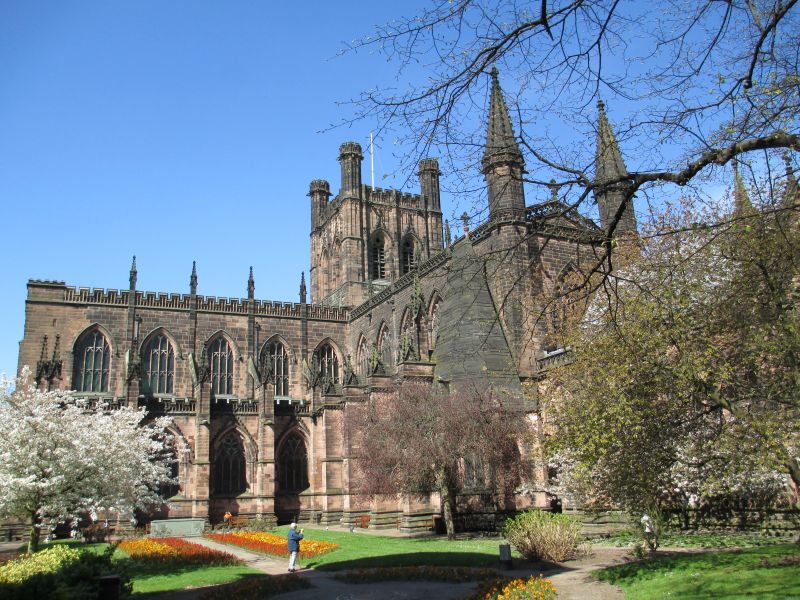
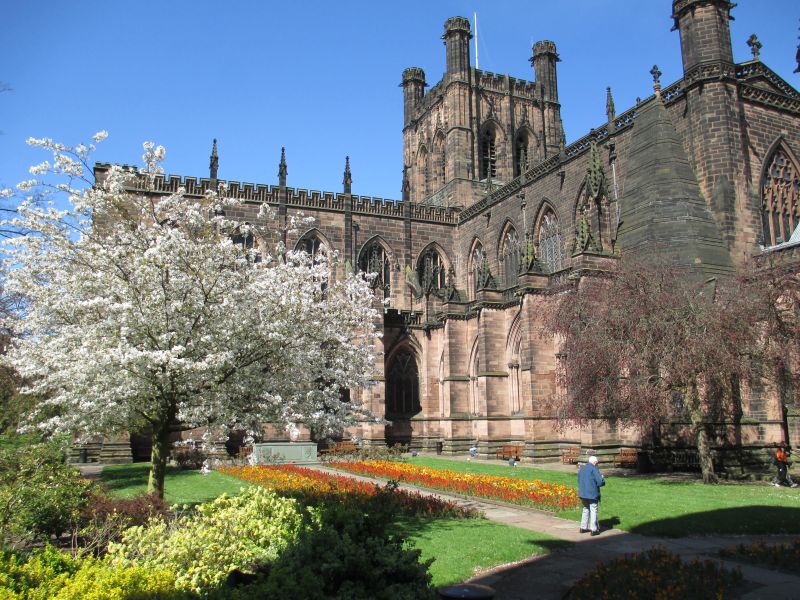
Chester Cathedral: The beautifully laid out Cheshire Garden of Remembrance.
Chester Cathedral: The Cheshire Garden of Remembrance, and the lovely blossom on the trees.
Chester Cathedral: Some of the modern carvings on the exterior of the Cathedral, paying homage to the medieval stone masons whose great craft you see inside as well as outside.
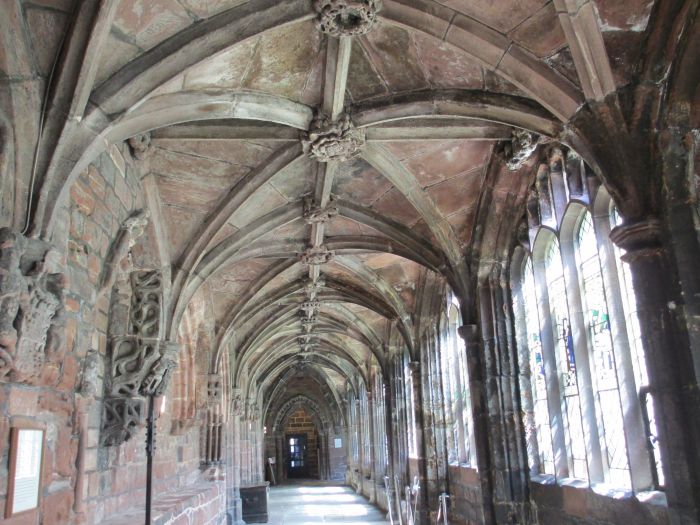
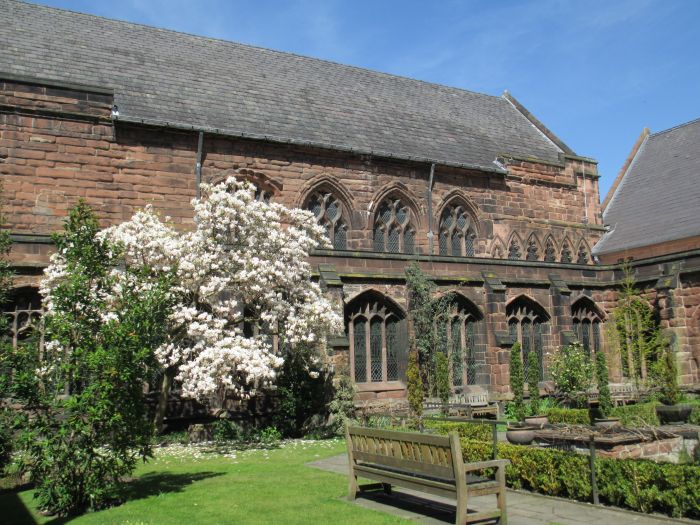
Chester Cathedral: The windows and vaulting of the cloisters. The cloisters and the domestic buildings like the Chapter House were completed by about 1250 by which time the architectural style had changed to Gothic pointed arches and ribbed vaulted ceilings.
Chester Cathedral:
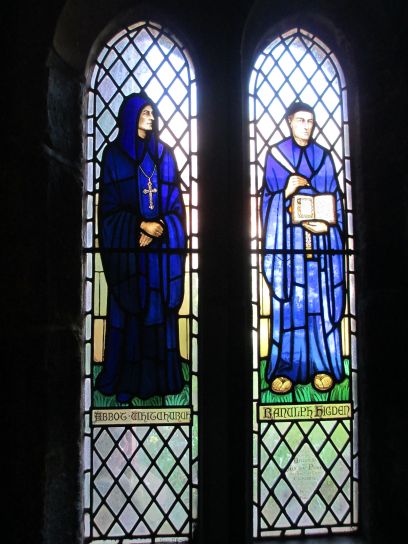
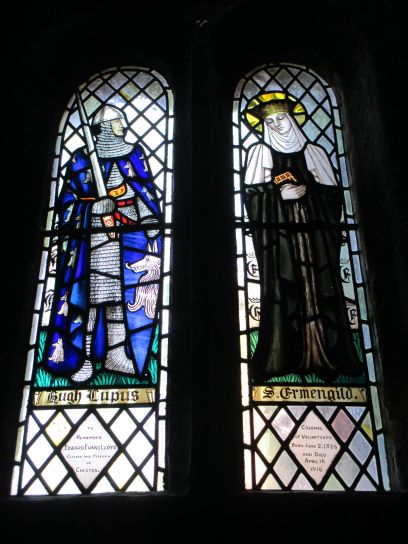
Chester Cathedral: Some of the stained glass windows in the cloisters.
Chester Cathedral: The garden in the cloisters.
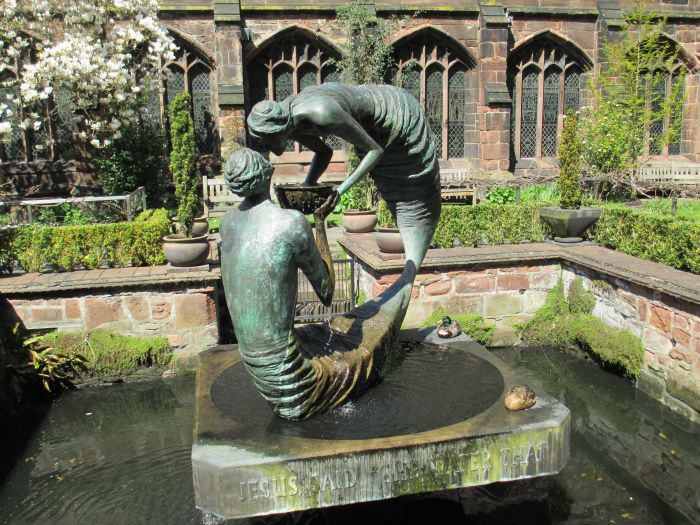
Chester Cathedral: The 'Water of Life' statue sculpture in the pond of the Garth Garden enclosed by the cloisters.
Chester Cathedral: In the cloisters is a stone (the 'Simon Ripley Stone') that once covered part of a medieval grave. It has the monogram S. R. of Abbot Simon Ripley 1485-1493 who was responsible for the building of the nave and central tower. In the coffin was a skeleton wrapped in leather. 18th century antiquarians thought the wolf's head represented Hugh Lupus who died in 1101, maybe his grave?
Chester Cathedral: A medieval tombstone, probably of a knight or high status cleric?
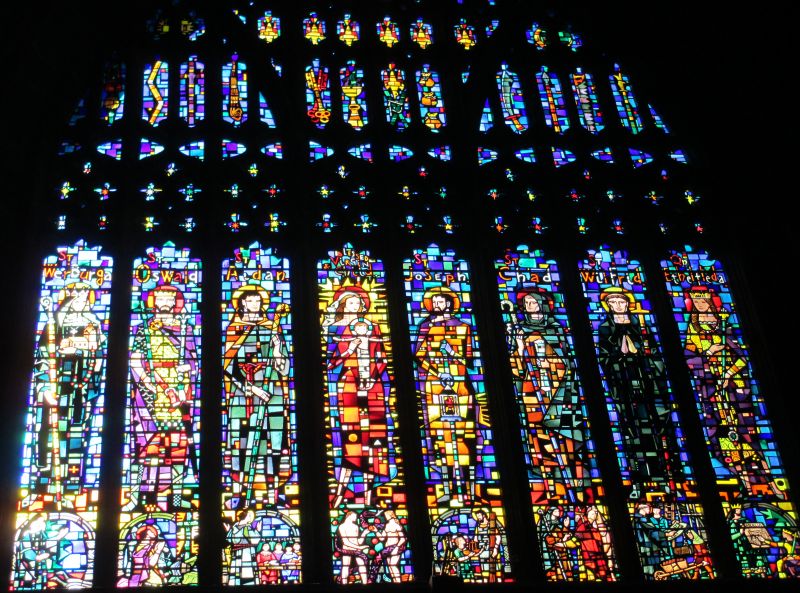
Chester Cathedral: The eight lights of the great west window of many stained glass panels
Chester Cathedral: The late afternoon sunlight, after passing through the west window, casts lovely colours on the floor of the nave.
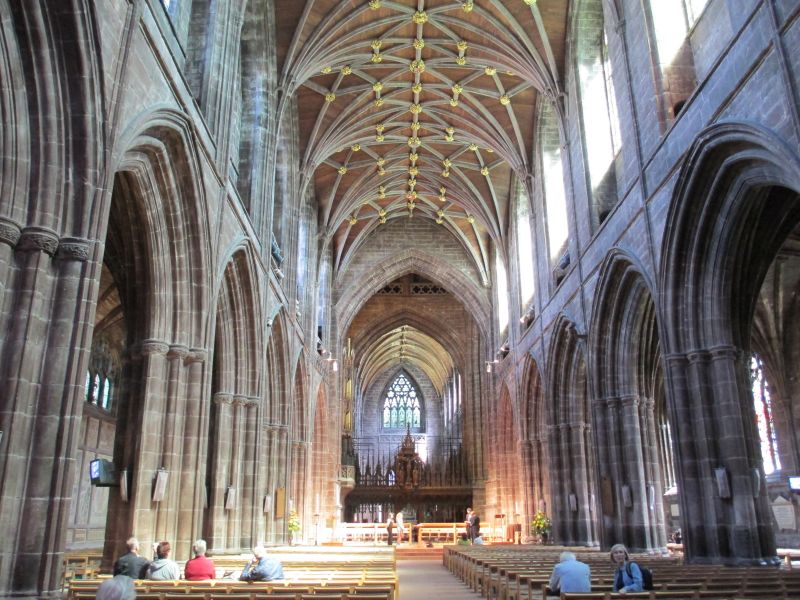
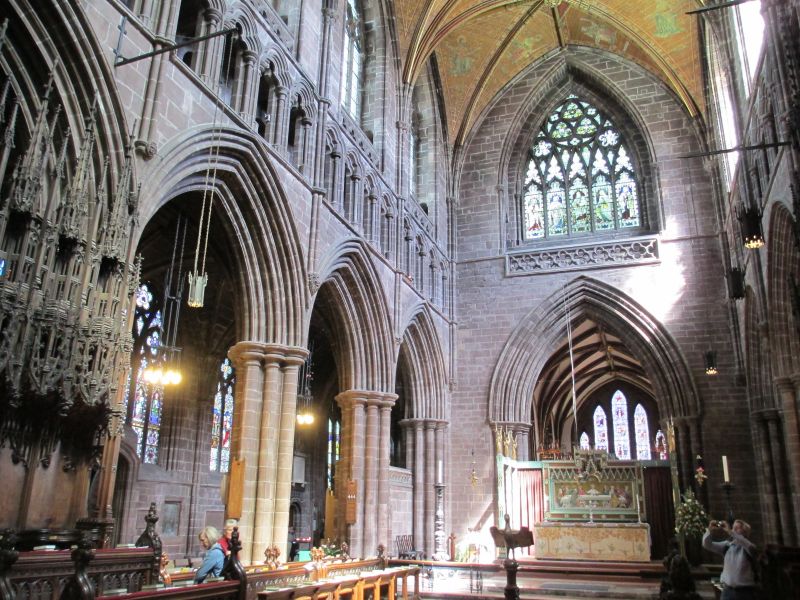
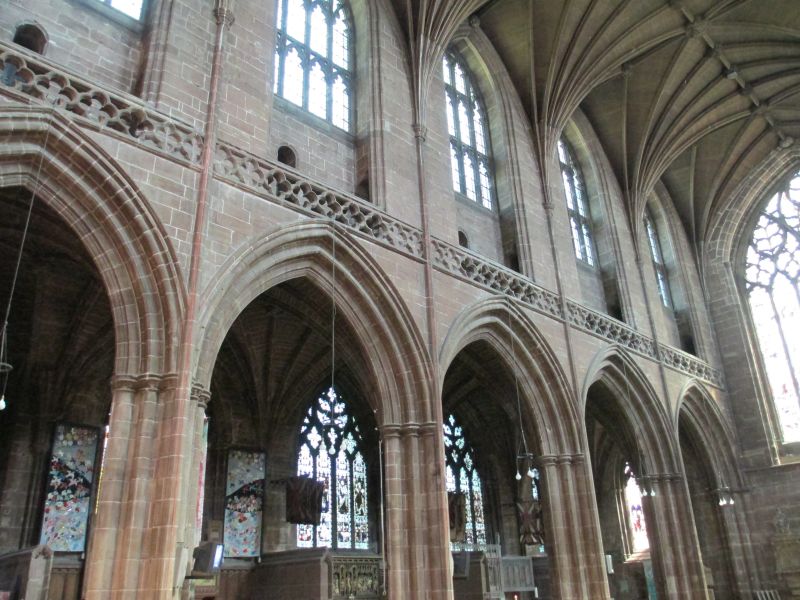
Chester Cathedral: General view of the nave looking down to the rood screen and beyond the chancel and east window. The building of the monastery began at the east end in 1092 in the Romanesque style with round headed arches and solid masonry. When the east end was finished and consecrated work began on the cloisters, part of the monastic domestic buildings, and building continued towards the western end of the church.
Chester Cathedral: The organ at the crossing.
Chester Cathedral:
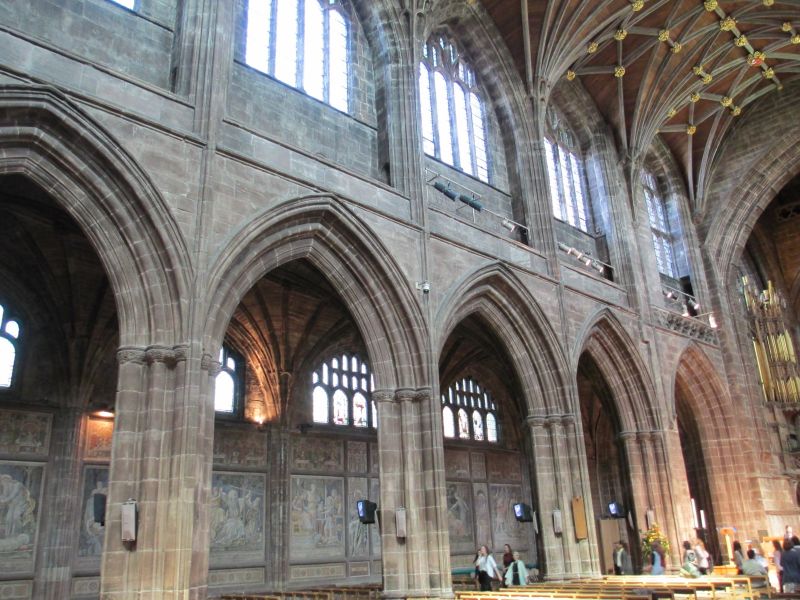
Chester Cathedral: Looking across the nave to the north aisle with its grand 'frescoes'.
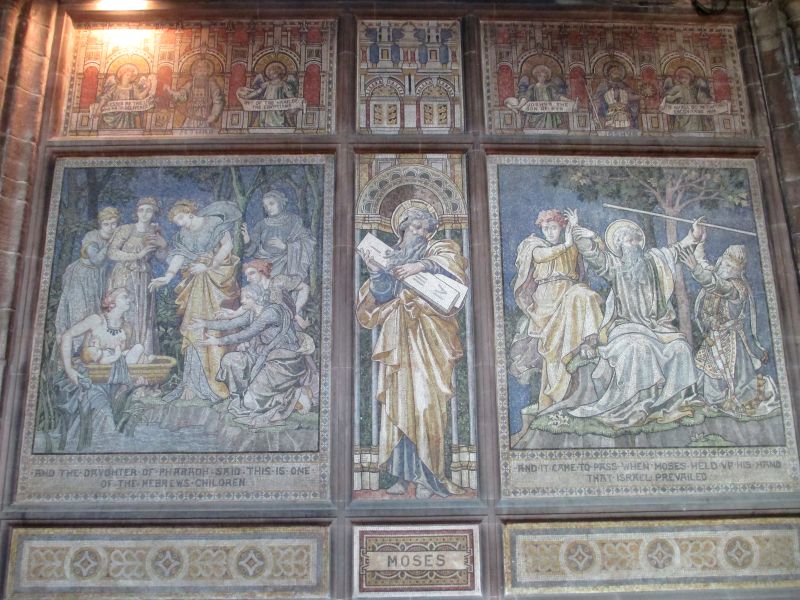
Chester Cathedral: The MOSES fresco
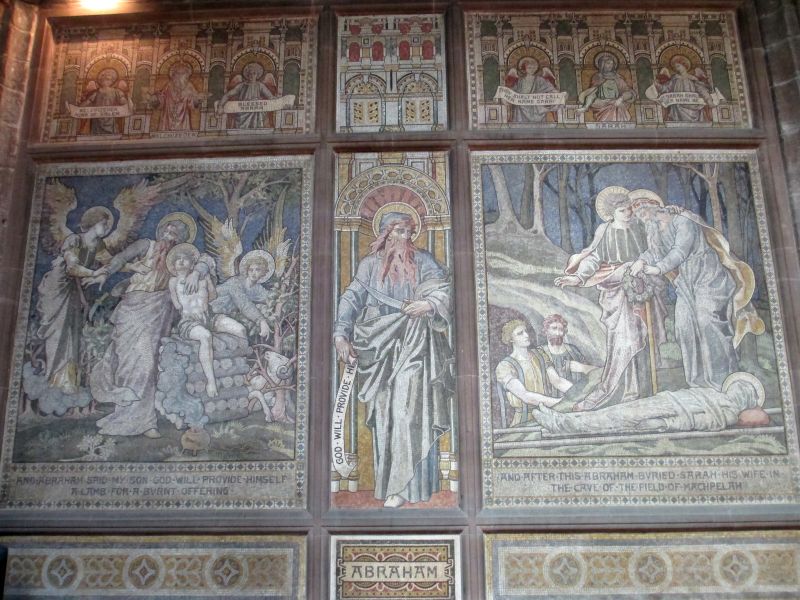
Chester Cathedral: The ABRAHAM fresco
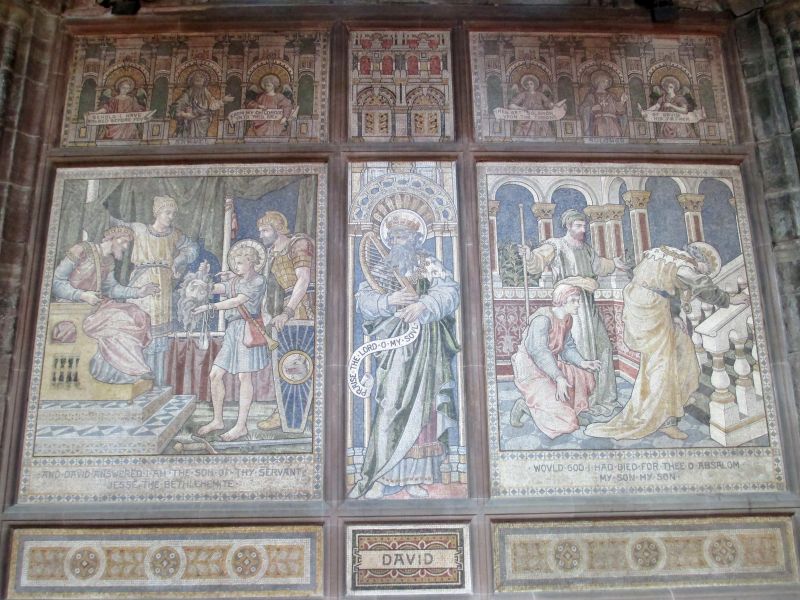
Chester Cathedral: The DAVID fresco
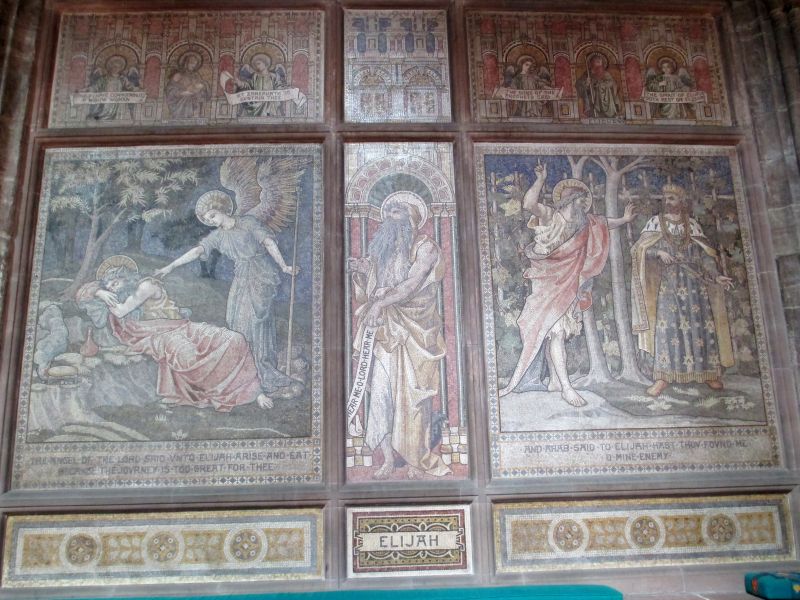
Chester Cathedral: The ELIJAH fresco
Chester Cathedral:
Chester Cathedral: stained glass window
Chester Cathedral: The stained glass windows in the ? chapel
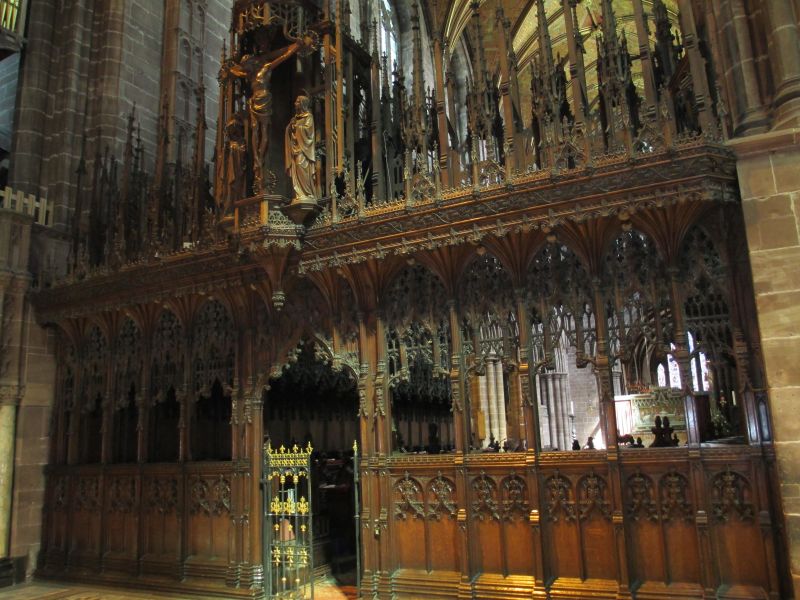
Chester Cathedral: The rood screen separating the choir from the nave
Chester Cathedral:
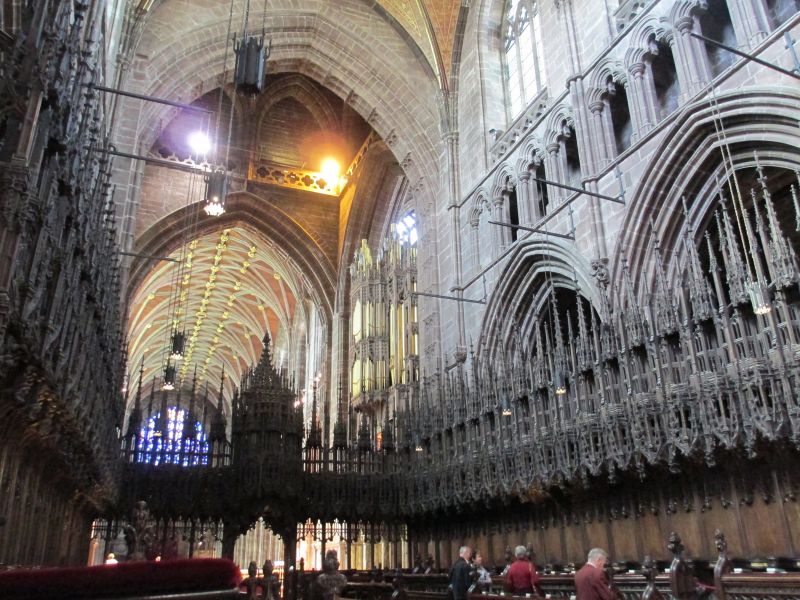
Chester Cathedral: The choir stalls
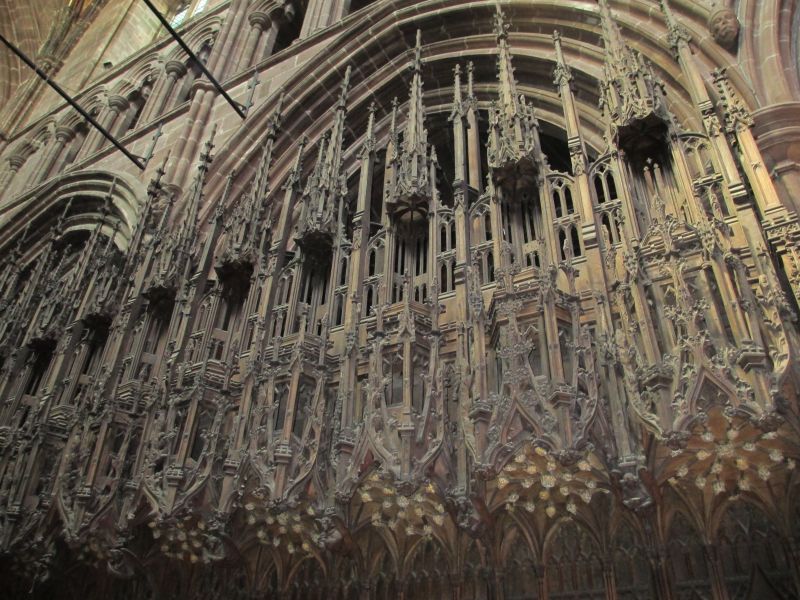
Chester Cathedral: Details of the finely carved canopies of the choir stalls.
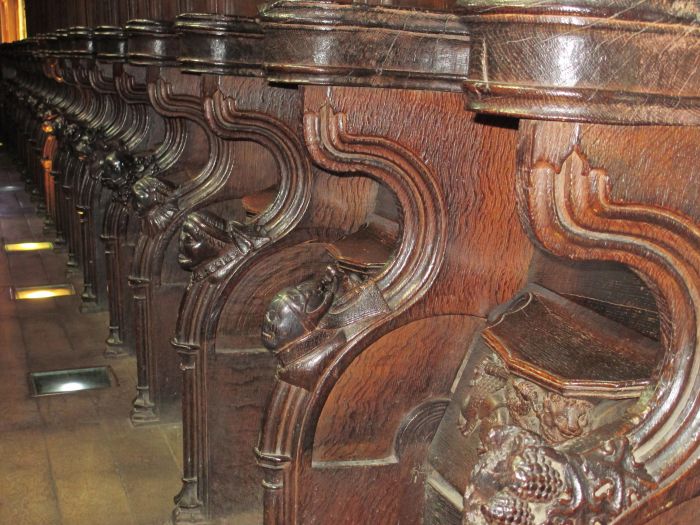
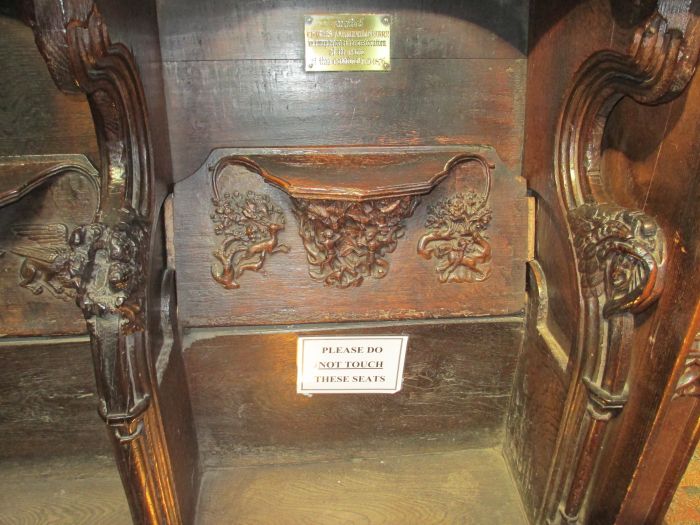
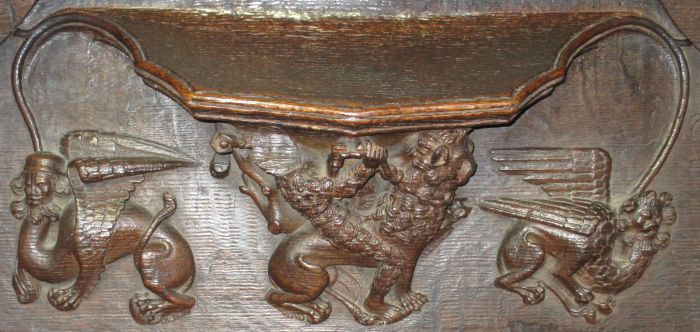
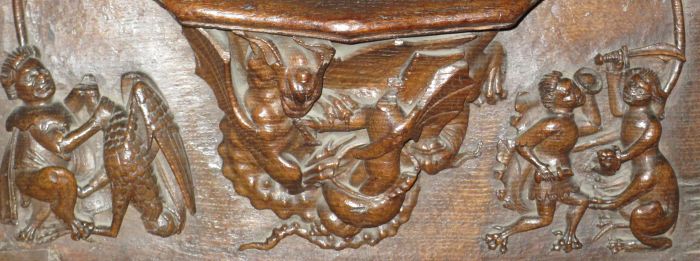
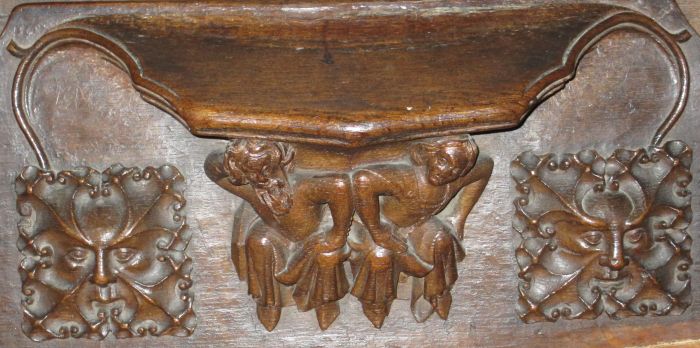
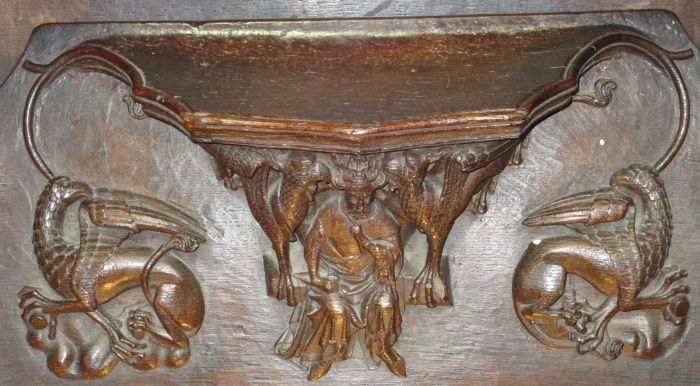
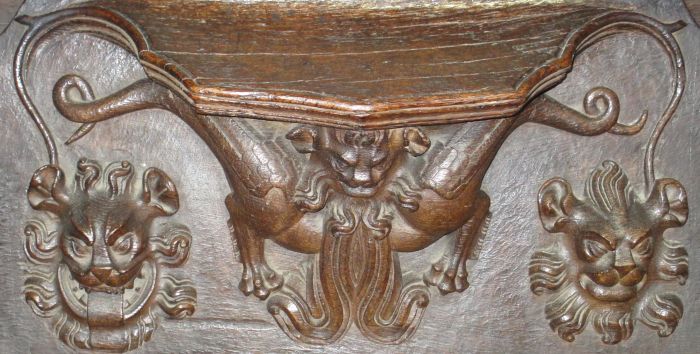
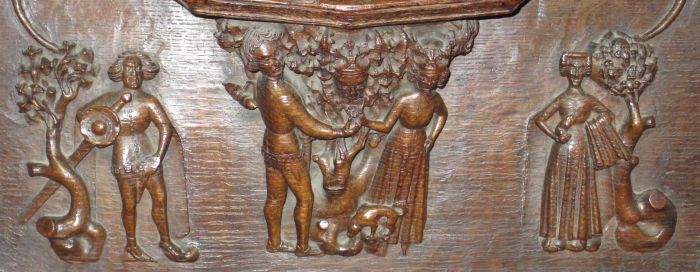
Chester Cathedral: The carved misericords in the choir stalls, a selection of these wonderful carvings is presented below.
Chester Cathedral:
Chester Cathedral:
Chester Cathedral:
Chester Cathedral:
Chester Cathedral:
Chester Cathedral:
Chester Cathedral:
Chester Cathedral:
Chester Cathedral:
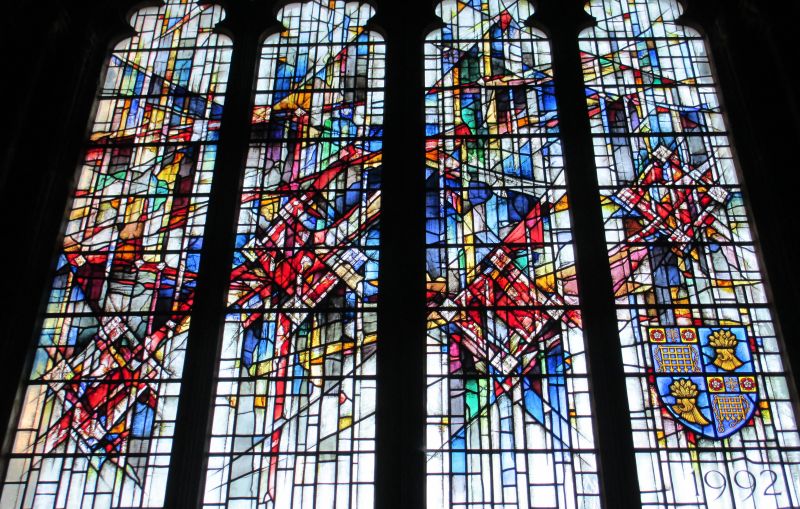
Chester Cathedral: Rather more modern stained glass windows in the south aisle of the nave where they well illuminated in the sunlight.
Chester Cathedral:
Chester Cathedral:
Chester Cathedral: View of the Cathedral as you descend the steps to the refectory cafe, cloisters and garden.
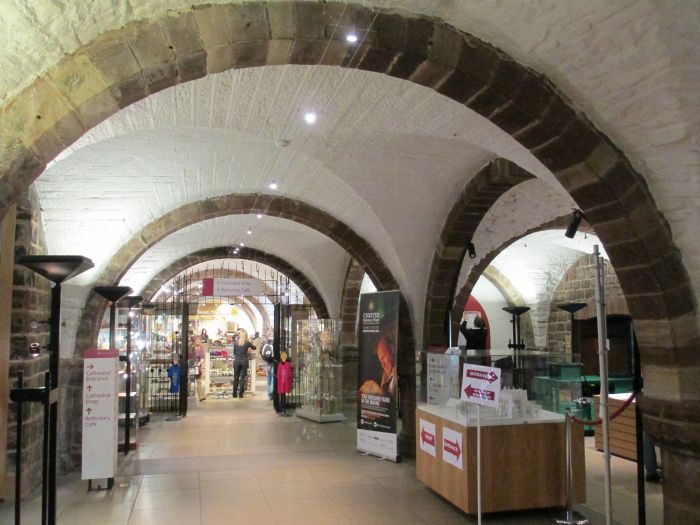
Chester Cathedral: The gift shop in the undercroft.
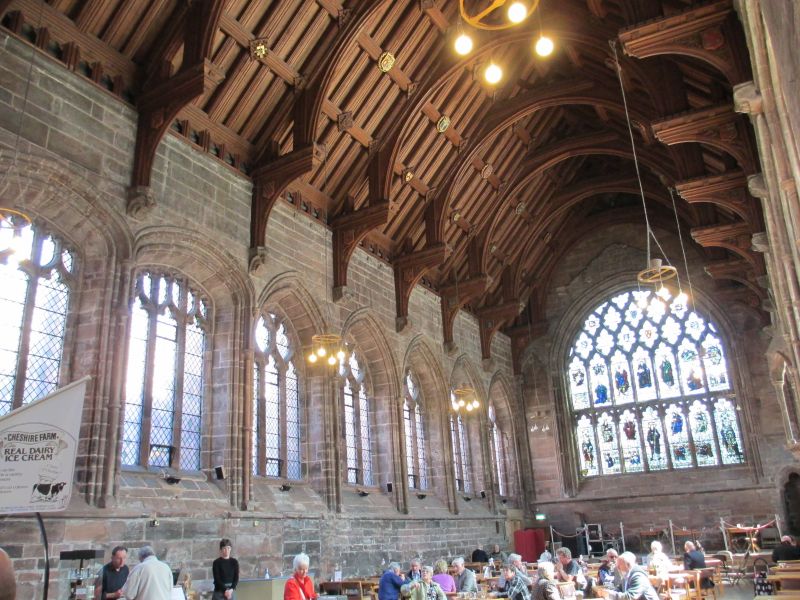
Chester Cathedral: The old Refectory, now suitably converted into a cafe for the thousands of tourists who yearly visit the Cathedral and what a magnificent stained glass window to eat to! The wonderful hammerbeam ceiling supports date from the 1920s, but get again, well in keeping and homage to the master carpenters of medieval times, as is the 'Creation Window' at the east end. The Refectory was built in the 13th century as the dining hall for the 40 monks who belonged to the community at the time. The Refectory cafe is open from 9:30 - 4:30 and a delicious lunch menu of snacks and fabulous cakes is available (and free WiFi too!). Chester founded by the Romans 75 AD
with a simple fort Romanesque cathedral
rebuilt from ~1260 onwards in the 'new' Gothic style. CHESTER INDEX Chester (1) Walk from Blacon into Chester & Canals Chester (2) Chester Street Scenes and building architecture Chester (3) Chester Cathedral Chester (4) Fragments of Medieval Chester and later 'bits' Chester (5) St John's Church, Chester Chester (6) Roman Chester, Roman Gardens A history of Chester Cathedral Chester Cathedral is one of the most architecturally layered and historically revealing cathedrals in England — a building where Roman legionaries, Anglo‑Saxon monks, Norman masons, medieval sculptors, Tudor reformers, Victorian restorers, and contemporary artists all leave visible traces. And yes — its café is part of that story too, because Chester is one of the few cathedrals where the monastic refectory survives and is still used for eating today. Origins and Early History (Roman → Anglo‑Saxon → Norman)Roman beginnings
Anglo‑Saxon minster (c. 660–907)
Norman Benedictine Abbey (1092–1538)
Medieval Architecture (12th–16th centuries)Chester Cathedral is a textbook of English Gothic, but with a distinctive reddish‑brown New Red Sandstone that gives it a warm, almost soft appearance. Early English Gothic (c. 1250–1280)
Decorated Gothic (c. 1280–1350)
Perpendicular Gothic (c. 1380–1500)
Dissolution (1538)
Post‑Reformation and Georgian Period16th–18th centuries
Victorian Restoration (1868–1906)This was the era that gave Chester much of its present appearance. Key figures:
Major works:
Victorian work at Chester is sometimes criticised for being heavy‑handed, but it stabilised a building that was close to collapse. Modern and Contemporary FeaturesStained Glass
Sculpture and Art
Astronomical Clock (2010)
Architectural Highlights (Room‑by‑Room)Nave
Quire
Lady Chapel
Cloisters
Chapter House
Refectory
The Refectory Café (and why it matters)The Refectory Café is not just a café — it is part of the medieval abbey itself. Why it’s special:
What it offers:
It’s one of the few places where you can literally have lunch in a functioning medieval refectory. Chester Cathedral Today
North West of England's Historic Chester County of Cheshire docspics images pictures © Phil Brown * Chester holidays Bargain Weekend Breaks dining out in Chester eating out in Chester cafes pubs restaurants in Chester to suit all budgets and plenty of tourist attractions in the historic City of Chester, Cheshire Chester museums art gallery Chester galleries accommodation luxury hotels in Chester, B&B, self-catering holiday cottages in Cheshire, hostels budgets rooms in Chester, Historic City of Chester Shops tourism destinations in Chester holidays Chester tourist information top tourist attractions best luxury hotels in Chester B&B, cafes in Chester, eating out in Chester restaurants, dining in Chester, historic churches, museums, art galleries, Chester travel lodges, Chester's medieval buildings, Chester's modern shopping centres, Chester market stalls, properties for sale in Chester, renting property in Chester, renting a student house/flat in Chester, estate agents, public transport in Chester, churches in Chester, cheap train tickets to Chester |















 Enter place, walk, historic feature, museum, anything of interest!