|
63b. Kilkenny Town, main shopping streets and interesting buildings e.g. Rothe House and garden, Shee Almshouse Extra notes on these tourist attraction
SCENES
from IRELAND - County Kilkenny
Email:
chem55555@hotmail.com
[Author
and photographer
63a. Kilkenny Castle and Design Centre 63b. Rothe House * 63c. Kilkenny Cathedral
63d.
The 'Black Abbey'
* 63e.
St
Mary's Medieval Mile Museum * 63f
St
Mary's Catholic Cathedral
*
Kilkenny grew from a 6th‑century monastic
settlement into a fortified Norman merchant town and later a prosperous
medieval and early modern city centered on Kilkenny Castle and St
Canice's Cathedral; its layered history is visible in surviving walls,
churches, castles, and civic records. Kilkenny's origins lie in an early
sixth‑century ecclesiastical foundation around a church
dedicated to St Canice (Cill Chainnigh), which became a
major monastic centre and the focal point of the settlement that later
became Irishtown. Archaeology shows intermittent prehistoric activity in
the area, but the city's recorded history begins with these monastic
roots and later entries in medieval annals. After the Norman invasion Kilkenny developed rapidly
as a Norman borough. William Marshal
and his successors established Englishtown, built Kilkenny
Castle (a seat of the Butler family), and laid out streets and
walls; a town charter and municipal government date from the early 13th
century, with the first council recorded in 1231. The
city became a regional administrative and commercial hub for the kingdom
of Ossory and a centre for crafts, markets, and law. From the late medieval into the early modern era the
Butler dynasty (Earls and Dukes of Ormonde) dominated
Kilkenny's political and architectural life, funding churches, civic
buildings, and the castle complex. Kilkenny's civic institutions,
guilds, and religious houses shaped urban life; the city also played
roles in national conflicts, notably during the Confederate period in
the 1640s when Kilkenny served as the Confederate capital for a time. The 18th century saw continued urban development,
Georgian houses, and commercial growth. By the 19th century Kilkenny
adapted to industrial and administrative changes while retaining its
medieval core; municipal records, maps, and the Liber Primus
Kilkenniensis preserve detailed civic history from this period.
The city's economy shifted with improvements in transport and the
decline of some traditional crafts, but Kilkenny remained a county
centre and market town. In the 20th century Kilkenny balanced conservation
with modernization. Heritage preservation, tourism, and cultural
festivals (notably arts and medieval re‑enactments) have revitalised the
city, making Kilkenny Castle, St Canice's Cathedral, and the
medieval streetscape major attractions while the city continues
to function as a regional administrative and cultural centre. Kilkenny's significance
comes from its continuous municipal record since the 13th century, its
exceptional survival of medieval architecture, and the way successive
eras—monastic, Norman, Butler‑dominated, Georgian, and modern—are all
legible in the city fabric. The Shee Almshouse - Kilkenny Tourist Information Centre
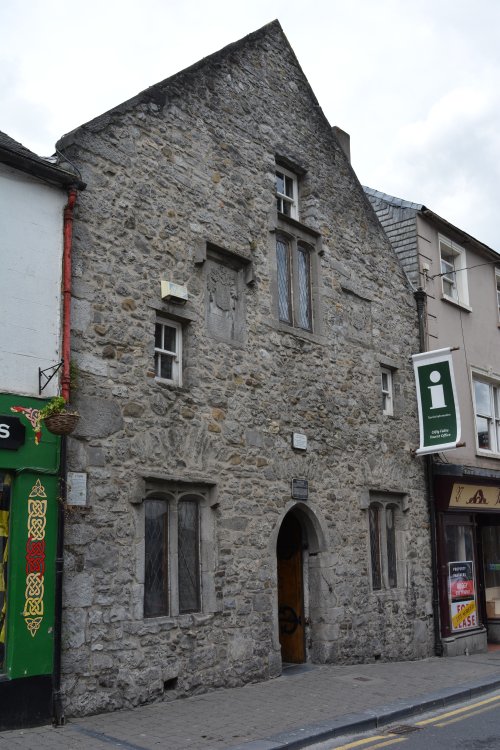
Kilkenny: The Shee Almshouse was built by Sir Richard Shee in 1581 for the poor of Kilkenny and was endowed by his last will in 1603. His son Lucas Shee, obtained a royal charter for the Almshouse in 1609 and the house was used as accommodation for the poor until the early 19th century when it fell into ruin. It was restored and renovated around 1871 by Sir Nicholas Power O'Shee of Gardenmorris, Co. Waterford, a descendant of the original founder. In recent times it has since been converted into Kilkenny's main Tourist Information Centre.
Kilkenny: Inside the Kilkenny Tourist Information Centre.
Kilkenny: The back entrance to the Shee Almshouse, now the tourist information centre.
Some Streets and Buildings of Kilkenny
Kilkenny: One of the main shopping streets, Parliament Street, in the centre of Kilkenny Town.
Kilkenny: The arched arcade of The Tholsel in High Street
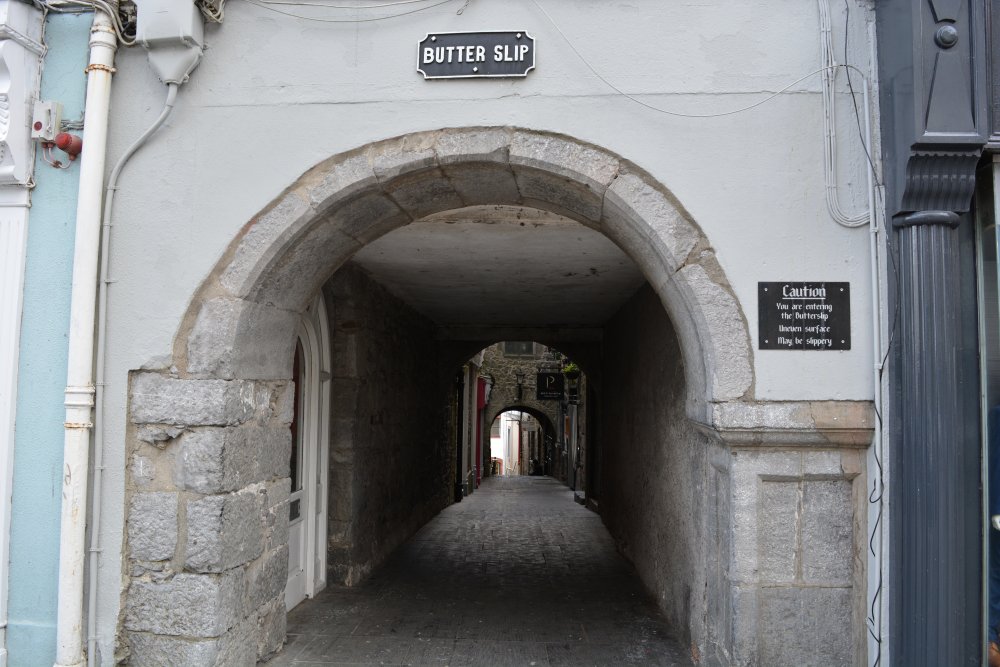
The Butter Slip off the High Street of Kilkenny City
From High Street to St Kieren Street down the Butter Slip.
Kyteler's Inn, once the house of Alice Kyteler,
Kilkenny City
Kilkenny: Rothe House
Kilkenny: Rothe House was built by a wealthy merchant of Kilkenny, John Rothe and was well furnished townhouse for its time. John Rothe built the first house on this site in 1594 on land once owned by Cistercian monks and came into possession of the Rothe family after the dissolution of the monasteries between 1538 and 1540. As his family and prosperity grew, he then built a second house and then a third house by 1610. Therefore John Rothe built three adjoining houses between 1594 and 1610 as he went up in the world and society of Kilkenny.
Kilkenny: The inner courtyard and balcony of Rothe House
Typical interior of Rothe House from later generations.
These pewter plates would be similar to those listed in John Rothe's will of 1619, other items included brass, batry, iron ...
Rothe House: This medieval pottery jug is a rare example of a complete medieval jug and was found at Castleinch, Co. Kilkenny by farmer while building a cattle shed near the site of the castle. It was made on a potter's wheel and their thumb created the frill decoration on the base. It was made locally and covered in lead glaze before firing in a kiln around AD1250-1350.
Rothe House: This fireplace contains kitchen utensils that could have been used anywhere between 1840 and 1940 e.g. griddle, pot crook, pot hooks, trivet, toasting rack, skillets and pot oven. The fire was never left to die out and fuelled with coal (local coalmines) or wood.
The amazing sturdy wooden beams supporting one of the roofs of Rothe House.
Some museum exhibits
Rothe House: This decorated bronze age burial pottery vessel is a type common in early bronze age graves and known as a 'tripartite bowl'. It was found at Killinane, Co. Carlow in a simple grave known as a cist - a rectangular stone box sunk into the ground. Two people had been cremated and buried in the cist.
Rothe House: An oil on canvas portrait of Richard Power (died 1824) by J.P. Haverty, R.H.A. Richard was brother to John Power the 1st Baronet and an excellent actor by all accounts. In the portrait he dressed in an 'inky cloak' of Hamlet, a role he played in three seasons of the Kilkenny Theatre between 1803 and 1818. Richard Power was the founder of the Private Theatre in Kilkenny in 1802.
The back of Rothe House, still undergoing restoration.
The Rothe
House Family Garden,
Kilkenny City
A the back of the 16th-17th century housing complex is a lovely quiet garden and orchard.
This is a reconstruction of an early 17th century garden. The Rothe family garden was laid out to the rear of the third house. The garden would furnish John Rothe's family and servants with food to eat, a private meeting place for business colleagues and like ourselves, provide a garden for children to play in and adults to relax!
Kilkenny: The paved alleyway along the side of Rothe House and the Rothe Family Garden, it has a real medieval feel about it! Some other streets in Kilkenny town centre
Looking up James Street (off High Street) towards St Mary's RC Cathedral.
The old Courthouse in Parliament Street with . Down by the River Nore
Views from the main road bridge across the River Nore below the Castle
The statue of hurlers - the Kilkenny 'Cats' have a great reputation as regular All Ireland hurling champions. Near the start of the canal walk by the bridge over the River Nore in Kilkenny which parallels the river and passes under the cliff Kilkenny Castle is built on. Extra notes on these tourist attractions Kilkenny's historic shopping streets form the spine of the Medieval Mile, linking Kilkenny Castle to St Canice's Cathedral. Along this route sit some of Ireland's finest surviving merchant buildings — most notably Rothe House & Garden and the Shee Almshouse — which together illustrate the city's evolution from a medieval trading hub to a modern heritage destination. Below is a structured, detailed guide synthesising history, architecture, and tourism roles, grounded in the search results you provided. The Main Historic Shopping Streets of KilkennyHigh Street, Parliament Street, and St
Kieran's Street form the core of
Kilkenny's traditional commercial district. High Street
Parliament Street
St Kieran's Street
Rothe House & GardenIreland's only surviving example of a 16th–17th‑century merchant townhouse complex. Historical Significance
Architectural Features
The Garden
Tourism Role
Shee AlmshouseA rare surviving 16th‑century charitable institution in the heart of the shopping district. (Note: Your search results did not return information on the Shee Almshouse. The following is based on well‑established historical knowledge, clearly marked as internal knowledge.) Historical Background
Architectural Features
Tourism Role
How These Sites Shape the Visitor ExperienceA Walkable Medieval Commercial Core
Architectural Continuity
Cultural and Economic Role
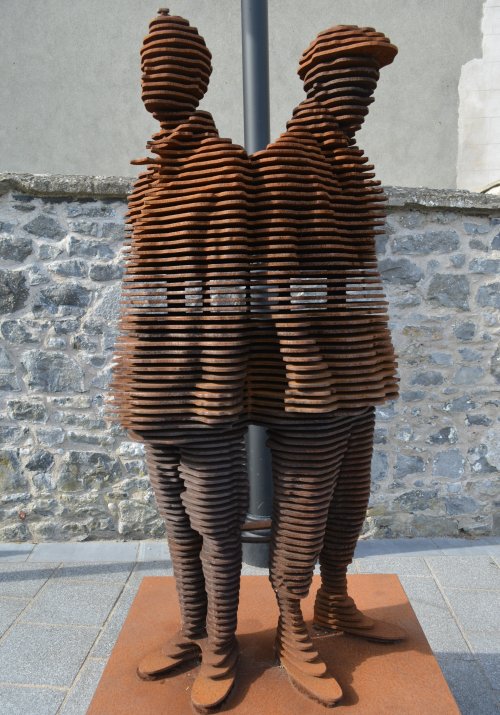
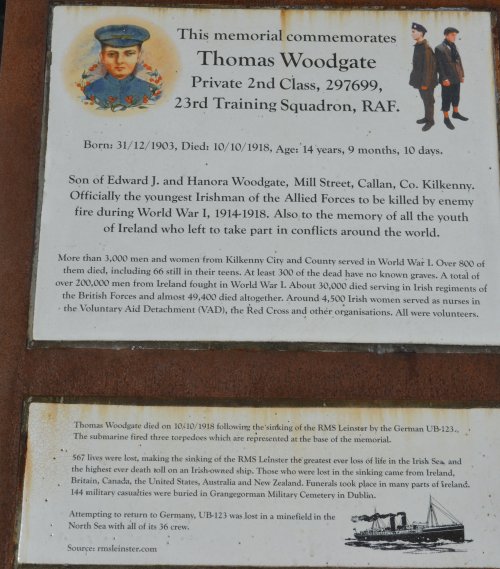
The Thomas Woodgate Memorial The Thomas Woodgate Memorial is a public sculpture located at the Courthouse on Parliament Street in Kilkenny, Ireland. It commemorates Thomas Joseph Woodgate, a 14-year-old boy from Callan, who is believed to be the youngest official Irish casualty of World War I. The Background Story of Enlistment: In September 1918, Thomas Woodgate lied about his age to enlist in the Royal Air Force (RAF) by claiming he was 18 years old. The Tragedy: En route to a training squadron in Egypt, he sailed on the passenger steamship RMS Leinster. On October 10, 1918, the ship was torpedoed and sunk by a German submarine just off the coast of Dublin, resulting in the deaths of over 560 people, including young Thomas. Discovery: The truth about his actual age (14) was recently uncovered by historians, as his tombstone in Grangegorman Military Cemetery had incorrectly stated he was 18. The Memorial Design: The monument features two life-size figures crafted from Corten steel set on an iron plinth. Symbolism: At the base, three torpedo-like forms represent the fateful U-boat attack on the RMS Leinster.
63a. Kilkenny Castle and Design Centre 63b. Rothe House * 63c. Kilkenny Cathedral * 63d. The 'Black Abbey'
63e.
St
Mary's Medieval Mile Museum * 63f
St
Mary's Catholic Cathedral Irish holiday tour docspics photos images pics photographs pictures © Phil Brown * Irish holiday tours, touring in Ireland, top tourist attractions, tourism information, luxury hotels, self-catering holiday cottages, airbnb air b and b air B&B accommodation, historic towns & cities in Ireland archaeological sites, museums, cheap flights, get there by flying of Ferry, Irish Ferries, Stena Line, Ryanair Travel, dining out in Ireland, good food guide to Ireland, top Irish restaurants, Irish coach tours, weekend breaks trips to Ireland docspics images photos of Kilkenny © Phil Brown Tourist information on Kilkenny, Walks near Kilkenny, Having holidays near Kilkenny, Ireland, Top tourist attractions near Kilkenny, luxury hotels near Kilkenny, self-catering holiday cottages near Kilkenny, airbnb air B and B near Kilkenny, good B&B near Kilkenny, friendly pubs near Kilkenny, cafes near Kilkenny, eating out in fine restaurants near Kilkenny, weekend breaks near Kilkenny, wining & dining weekends near Kilkenny, walking holidays around Kilkenny, touring coach tours including Kilkenny, pretty villages near Kilkenny, historic towns and pretty village near Kilkenny, museums near Kilkenny, local art galleries near Kilkenny, guided walks from Kilkenny, excellent fell hill walking around Kilkenny, rambling near Kilkenny, exploring the landscape near Kilkenny, good places to eat near Kilkenny, tourist attractions near Kilkenny, tourist information for places near Kilkenny, good places for wining and dining near Kilkenny, good walks near Kilkenny, properties for sale near Kilkenny, renting a flat or house near Kilkenny, property for rent near Kilkenny, houses for sale near Kilkenny, lettings near Kilkenny, places to rent near Kilkenny, holiday cottage accommodation near Kilkenny docspics images photos of Kilkenny Ireland © Phil Brown Tourist information on Kilkenny, Things to do in Kilkenny, What to see in Kilkenny, guided walks in Kilkenny, weekend breaks in Kilkenny holidays in Kilkenny, Top tourist attractions in Kilkenny, luxury hotels in Kilkenny, self-catering holiday cottages in Kilkenny, airbnb air B and B in Kilkenny, good B&B in Kilkenny, friendly pubs in Kilkenny, cafes in Kilkenny, eating out in fine restaurants in Kilkenny, bargain holiday breaks in Kilkenny, wining & dining weekends in Kilkenny, touring coach tours visiting Kilkenny, pretty areas in Kilkenny, historic buildings in Kilkenny, visiting museums in Kilkenny, local art galleries in Kilkenny, guided walks in Kilkenny, history of Kilkenny, architecture of Kilkenny, historic houses in Kilkenny, historic churches in Kilkenny, information centre in Kilkenny, heritage places in Kilkenny, good places to eat in Kilkenny, top tourist attractions in Kilkenny, tourist information for things to do and see in Kilkenny, good places to eat out in Kilkenny, good places to walk to in Kilkenny, tourist attractions properties for sale in Kilkenny, renting a flat of house in Kilkenny, property for rent in Kilkenny, houses for sale in Kilkenny, lettings in Kilkenny, places to rent in Kilkenny, holiday cottage accommodation in Kilkenny |


 Early modern period and the Butlers




 The City Town Hall, Kilkenny City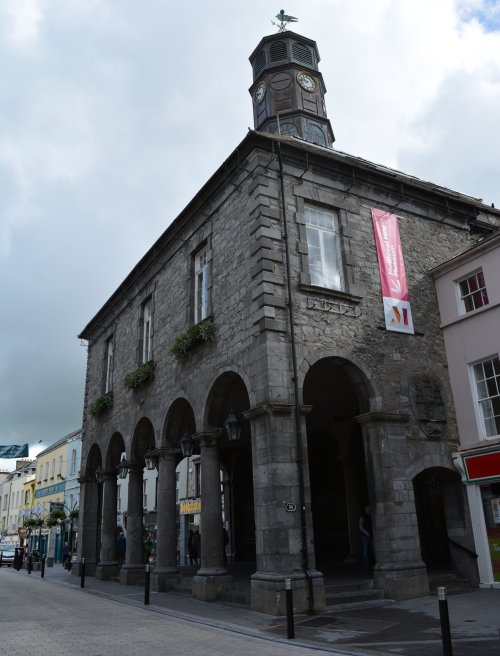







 Enter place, heritage site, feature, walk, town, village, city, museum, historic building,
mountain, island, anything of interest in Ireland!
Enter place, heritage site, feature, walk, town, village, city, museum, historic building,
mountain, island, anything of interest in Ireland! |